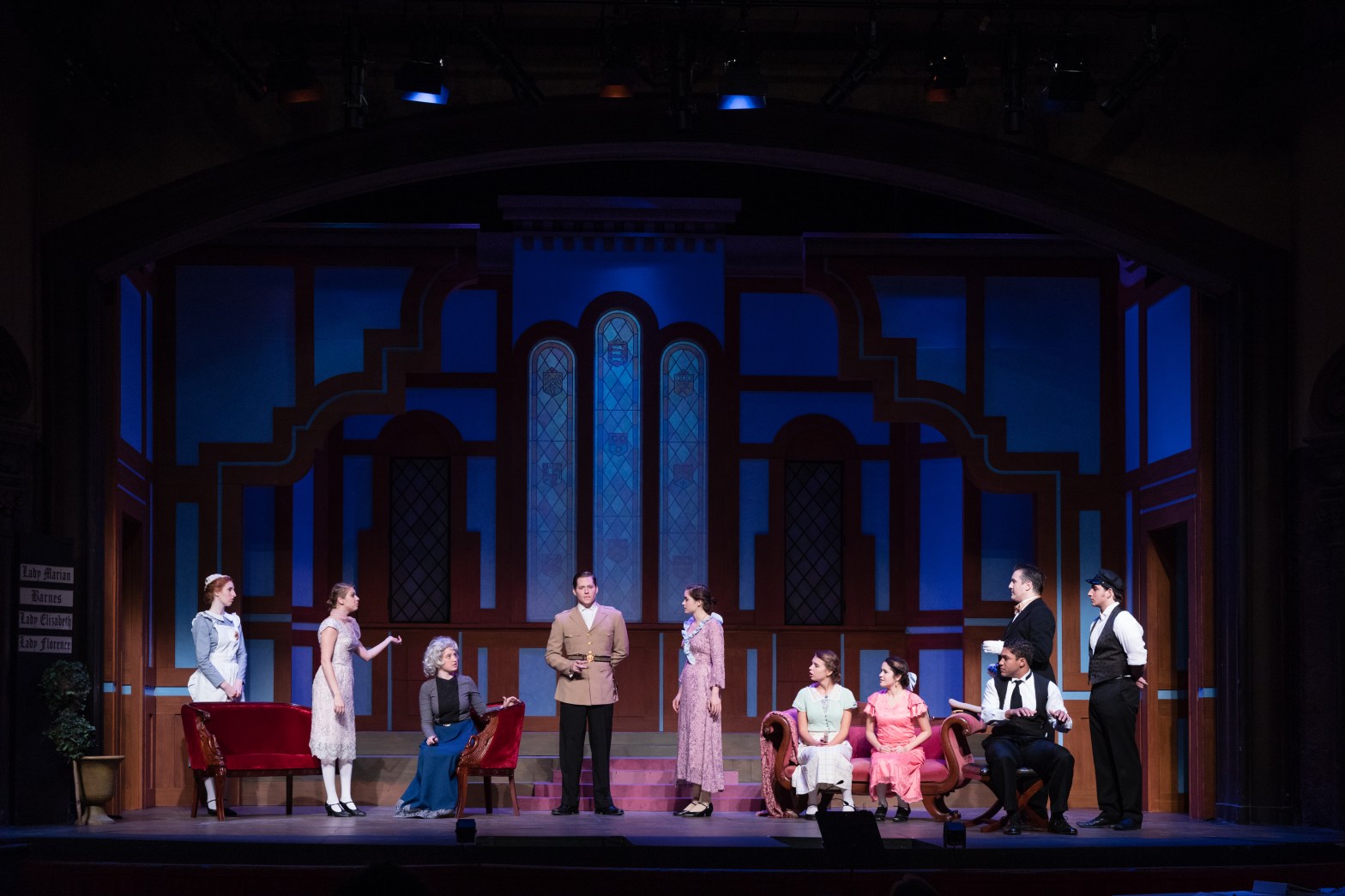
“Let us be very clear on this. Theatre cannot be dependent on the frills and trappings which surround it. Drama is born with force and beauty in any empty space whether square, rectangular or circular. “
Safdar Hashmi, “The Right to Perform.” Radical Street Performance. An International Anthology. Ed. Jan Cohen-Cruz. London: Routledge, 1998. 31-37.
Definition
This entry finds inspiration in part from discussions with my two Aussie Nicks (sounds like a shaving accident) during a life-changing Improvention conference in Canberra. The term Beauty perhaps conjures hopelessly romantic images. And while there is certainly room for this type of material and energy in improv, I’m using the word here to describe a more holistic approach to our craft – an attitude that seeks on some level to elevate and prioritize humanity’s more admirable instincts and creations rather than needlessly and repeatedly dwelling in the stench and muck. Which isn’t to argue that the grimier hues of life don’t also belong in our performances. (Although, through the lens of beauty, perhaps even these can be handled with an eye toward revealing a light and lightness.)
Example
A character finds themselves relentlessly bullied through the course of a dramatic action. At the end of the show, the company finds some glimmer of hope, comfort, or redemption for their story (as opposed to leaving them in an ugly state of despair).
In Pursuit of the Beautiful.
1.) Beware of cynicism. Most weekends, when I’m not engaged in other projects, I’m performing short-form in front of family audiences. This demographic poses a particular challenge in terms of content. It’s not an uncommon observance during intermission that our scene work has inadvertently veered into gruesome tones, perhaps stinging or somber endings or plot twists having become the norm. It often seems that improvisers are drawn to these macabre revelations and reversals, while more general audiences (especially those containing younger patrons) do not always share the same morbid fascination. When the distasteful or sour move starts to dominate the performance, a general sense of cynicism frequently takes hold. Arguably, this mood accurately reflects our greater world, and it’s worthwhile to interrogate theatre modes that aspire to nothing more than trivial escapism. However, replicating the uglier aspects of life again and again can wear heavily on everyone involved, and if you’re aspiring to produce an entertaining or uplifting evening of improv, audiences might quickly tire of a performance style that disproportionately lingers in the cruel, mean-spirited, or obscene. Beauty in this context, acknowledges that good can exist even in rather disheartening conditions and finding moments to illustrate this hopeful fact.
2.) Beware of anger. And violence. And unbridled hate. In our search for energy, improvisers can over-rely on big (but essentially negative) emotions that often have an attacking or diminishing edge. Again, sure, these energies exist in the real world and if we’re “holding up a mirror to nature” they also belong in our performances to some degree. But there is little beauty to be found in characters repeatedly yelling and fighting without any sense of growth, or change, or compromise. (Sadly, this is probably yet another commentary on how many of us experience our day-to-day lives and the modern political landscape…) When such scenic interactions become bullish noise devoid of any love, nerves can become jarred and jaded. (I consider the importance of love as an entry in its own right here.) Less experienced improvisers can tend towards these rough energies as, sadly, vulnerability and affection oddly feel more uncomfortable and dangerous. Beauty, viewed through this lens, recognizes the value in exploring what brings us together rather than only recreating the patterns of fear that seek to drag us apart.
3.) Beware of victimizing. In our efforts to seek fidelity that gains inspiration from the world around us, it can become easy to replicate cruelties and injustices without any consideration as to what such re-presentations might do to those amongst us who have felt these injuries firsthand. My example above offers just such a situation where relentless bullying left unattended may land heavily on audience members (and fellow players) who have experienced (or are currently experiencing) this very dynamic. Admittedly, always letting the underdog win or overturning the bully will start to feel inauthentic, simplistic, or fantastical, but when narratives of inequality and oppression are routinely displayed without any consideration of those playing the roles of the victim, stories can become empty vessels for a regressive status quo. Small moves – such as allowing disadvantaged characters to speak and show their truth or offering up different character combinations that allow different previously unseen facets of key relationships and dynamics to shine – can go a long way to complicating portrayals without dragging everything into the realm of fairytales. Beauty, in these situations, posits that glimmers of light can occur in even rather bleak conditions.
4.) Beware of easy. Finally, crassness and hopelessness can tend to be the easy or obvious choice when faced with nuanced problems and dynamics. In such instances, seeking the beautiful becomes synonymous with taking the road less traveled. In doing so, one might uncover a connection or wrinkle in a contrary stance or belief, unlock empathy for someone previously considered an “other,” or embrace commonality with a community that feels alien or dangerous at first glance. Comedy, in particular, can settle for the laughter of the lowest common denominator if left to its own unquestioned devices. (While tragedy or drama, similarly, can reify old enemies and cliches as it revisits inherited tropes and dynamics.) Searching for the beautiful against a tide of easy laughs or gimmicks invites improvisers to look (and play) deeper. Beauty, from this vantage point, consists of the resulting vibrant messiness.
Final Thought
Why replicate ugliness when we can use our art to magnify and reveal hidden potentials for change, growth, and connection?
Related Entries: Content, Love Antonyms: Injury, Simplicity, Stereotypes, Ugliness Synonyms: Care, Complexity, Grotesque
Cheers, David Charles.
www.improvdr.com
Join my Facebook group here.
Photo Credit: Scott Cook
© 2026 David Charles/ImprovDr
Improv Dictionary Expansion Pack I
 ImprovDr.com