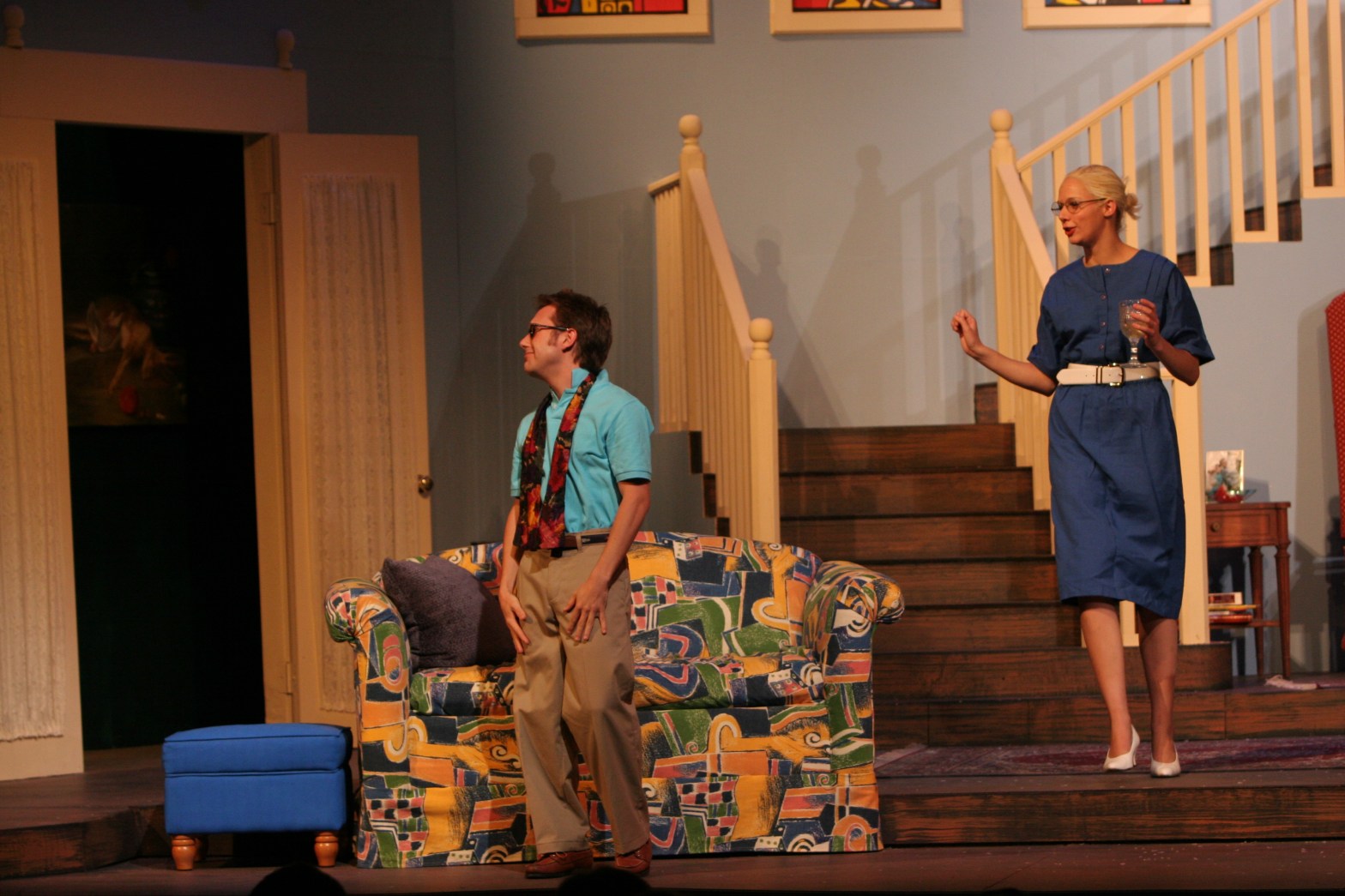
This character-based game tills similar improv terrain as Animal Kingdom and can readily be retooled to incorporate a wide variety of other essences or types of personae. Though it isn’t strictly speaking an endowment game (see Party Quirks for a variant of this ilk), Orchestrated Party does involve a related skill set in that players should seek to unlock the innate potentials hidden in each other’s audience suggestion.
The Basics
After each player is assigned a random musical instrument from the audience, a party scene is explored in which anthropomorphized versions of these ask-fors interact and “jam” together.
Example
Player A, inspired by a trombone, finishes cleaning their living room in final preparation for their party. They effortlessly swish their broom under and around their furnishings while humming to themselves as their roommate, Player B (an electric guitar) returns from the kitchen with a flourish.
Player B: “This is going to be the best party of the year. Are you ready to rock this joint?”
Player A: (continues to clean) “You promised you were going to help me set up, Darren. You know I hate doing these types of things by myself…”
Player B: (brashly, and with expansive gestures) “You got this! And I promised I’d take care of the drinks. “
Player A: (pausing and collapsing into themselves a little) “And have you taken care of the refreshments?”
Player B: “I’ve got some friends taking care of it…”
Player A: “You promised me that you weren’t going to invite them again after what happened last time…”
But Player B has already darted back into the kitchen before A can finish their thought. There is a knock at the front door…
The Focus
I’ve introduced this as a character driven game, but when you start to view it as relationship based, you’re more likely to unlock the magic.
Traps and Tips
1.) Seek variety. For most of us, the nuances distinguishing an alto saxophone from its tenor kin are likely a little obscure and difficult to embody on stage. Subsequently, the team will be better served by acquiring instruments with pronounced differences. In the setup, I find asking for choices from various sections of the orchestra a useful conceit – perhaps an instrument from the brass, wind, strings, and percussion sections, respectively (without getting too hung up on distinctions that the average audience member might not appreciate such as where a piano might rightfully belong).
2.) Explore nuance. It’s likely that your first salvos as an improviser might not be the most elegant as you strive to encapsulate the feel of a possibly unfamiliar instrument. However, as the scene progresses, look to mine the subtle potentials of your source material. Initially, the verbal (musical) qualities will probably come more easily, but as this game works as an investigation of character essence, look for opportunities to take the musicality into your whole body. How might a flute walk, timpani sit, or glockenspiel eat finger food?
3.) Consider pacing. Undoubtedly, the audience will want to see the whole orchestra in action together, but it’s advisable to build to this climactic moment. Smaller characters based on smaller instruments, in particular, will get lost in the cacophony if they haven’t had some space to introduce themselves and establish their games and contributions. Excitement to play can cause improvisers to rush the stage a little (or a lot), which, in turn, can unfortunately cause the scene to prematurely crescendo. So let the piece start with some subtler melodies and softer movements so you have somewhere to go as a team (band).
4.) Pursue combinations. My standard advice for this type of character-centric game is to deploy a little of the philosophy behind Entrances and Exits (discussed in the Game Library here). In a nutshell, this game limits the onstage cast to two players at a time. While you needn’t strictly follow this guideline, there is clearly wisdom to rotating through as many smaller combinations of your constituent instruments as you can before assembling the whole ensemble for the grand finale. In this manner, you also get to unpack all the delightful subgames: how does the piccolo relate to the oboe as opposed to the harp or triangle? Remembering all the while that these interactions should reveal and deepen relationships and points of view
5.) Enable others. Finally, I mentioned above that essence games are kin to their endowment siblings. The crucial distinction is that everyone (ideally) knows each other’s source of inspiration – repeating the suggestions a couple of times in unison before the scene begins will help a lot in this regard. Nonetheless, an attitude of setting each other up (or endowing scenic potentials and connections, if you will) elevates the play to a new level and encourages improvisers not to spend the entirety of the game in their heads trying to come up with their own clever or witty next move. Instead, ask the “trumpet” character if they’d be willing to make an announcement, or harpsichord if they’d help set up the decorations, or start to flirt with the French horn…
In performance
To keep the game fresh, you can replace the instruments with essentially any other category of items to inspire the essence work – pieces of office equipment, modes of transportation, kitchen appliances… Keep in mind that objects that have some innate movement and acoustic qualities will prove richer than inspirations that are truly inanimate or homogenous – construction materials, types of trees, library books…
If you like the party aspect of the scene, consider reviewing Emotional Door (here) that retools this idea in a slightly different way.
Cheers, David Charles.
www.improvdr.com
Join my Facebook group here.
Photo Credit: Tony Firriolo
© 2024 David Charles/ImprovDr
Game Library Expansion Pack I
 ImprovDr.com