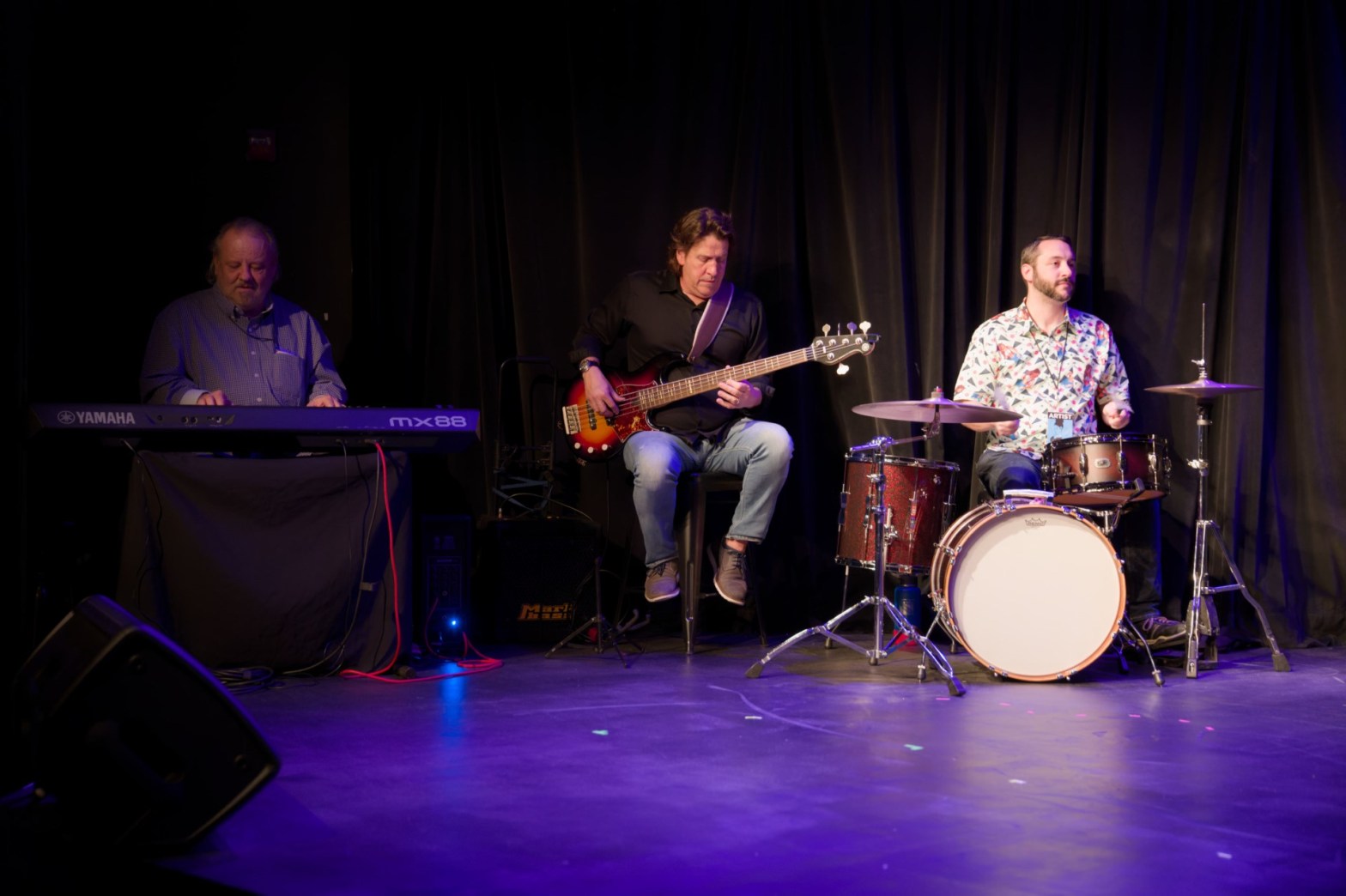
Your company musician is placed front and center as they paint the stage with various melodies and soundscapes in Piano Torture.
The Basics
For the duration of the scene, the improvising musician can start and stop their accompaniment at their pleasure. When music is playing, all onstage dialogue becomes sung. When the music stops, players must immediately return to everyday spoken word.
Example
Players A and B begin a traditional scene in the fruit department of an upscale grocery store, with A pushing their shipping cart around the immaculate displays.
Player A: “I don’t think I’ve ever seen so many options…”
Player B: (a little overwhelmed) “So many expensive options.”
Player A: (gently) “It’s a special occasion, Kevin. It’s not every day I get a promotion.”
Player B: “I know. I know.”
Player A: (picking up a beautiful cantaloupe) “How can you…”
The musician suddenly begins a sultry tango and A begins singing…
Player A:
“…complain about such a ripe sight?
Every melon and guava make me want to swipe right…”
The music stops as quickly as it began.
Player A: (now talking again) “…just pick out something you like. Don’t give a second thought about the price tag…”
The Focus
Enjoy the surprises and tonal shifts provided by the accompaniment.
Traps and Tips
1.) Musician wisdoms. As the musician also functions as a caller, they should keep in mind good etiquette for this role; namely, balancing some challenging torture with moments that set the players up for success or helpful discoveries. (Ideally, every musical switch does a bit of helping and hindering.) Unless you’re building to a culminating climax, you don’t want to think of the musical moments as songs so much as dynamic excerpts or snippets. By all means, throw in a variety of musical styles – as many as are comfortably in your repertoire – but keep in mind that players will need to sing to these accompaniments and do so quickly.
2.) Transition wisdoms. Much can be gained or lost in the moments where players move from dialogue to song and back again. For the musicians, as best you’re able, avoid long play-ins or complex embellishments as these can force the singer to needlessly stall and wait until they have enough musical information to confidently sing. If you’re opting for a stylistic surprise (which is where much of the fun lies), aim to front load the most crucial information – likely the key and general rhythm or feel. For the performers, as best you can, just start singing as soon as you hear the musician play. You’re likely to hit some clumsy notes as you find how your voice best works with the soundtrack, but this fearlessness will serve you and the scene much better than tepid transitions where the energy of the scene dips. (Seek to snap out of the sung sections just as quickly as these stark transitions are pure improv gold.)
3.) Actor wisdoms. Just as caller pointers apply to the musician, actors should heed the general lessons of called games, too. Pay particular attention to focus gives and takes, especially when the music stops and starts. If your character is currently talking, it follows that you should now be singing. It can be tempting to just start crooning when you hear the music, regardless of your current function in the action, but a sudden wall of song will rarely serve. Look to share the hot seat around and exploit the heightened stakes and rhyming mischief that musical improv invites. Overcrowding can easily hamper this fun as well – the more characters on stage, the more challenging it can be to elegantly move focus.
In Performance
If your company is blessed with strong musicians, this structure can make for a nice addition that lets music collaborators lead the charge. It tends to play a little more frenziedly than other short-form singing games like Song Cue and Scene Song (though arguably by design). That being said, it provides a dynamic alternative if you’re looking to shake up your playlist a little.
Cheers, David Charles.
www.improvdr.com
Join my Facebook group here.
Photo Credit: Gontran Durocher
© 2025 David Charles/ImprovDr
Game Library Expansion Pack I
 ImprovDr.com