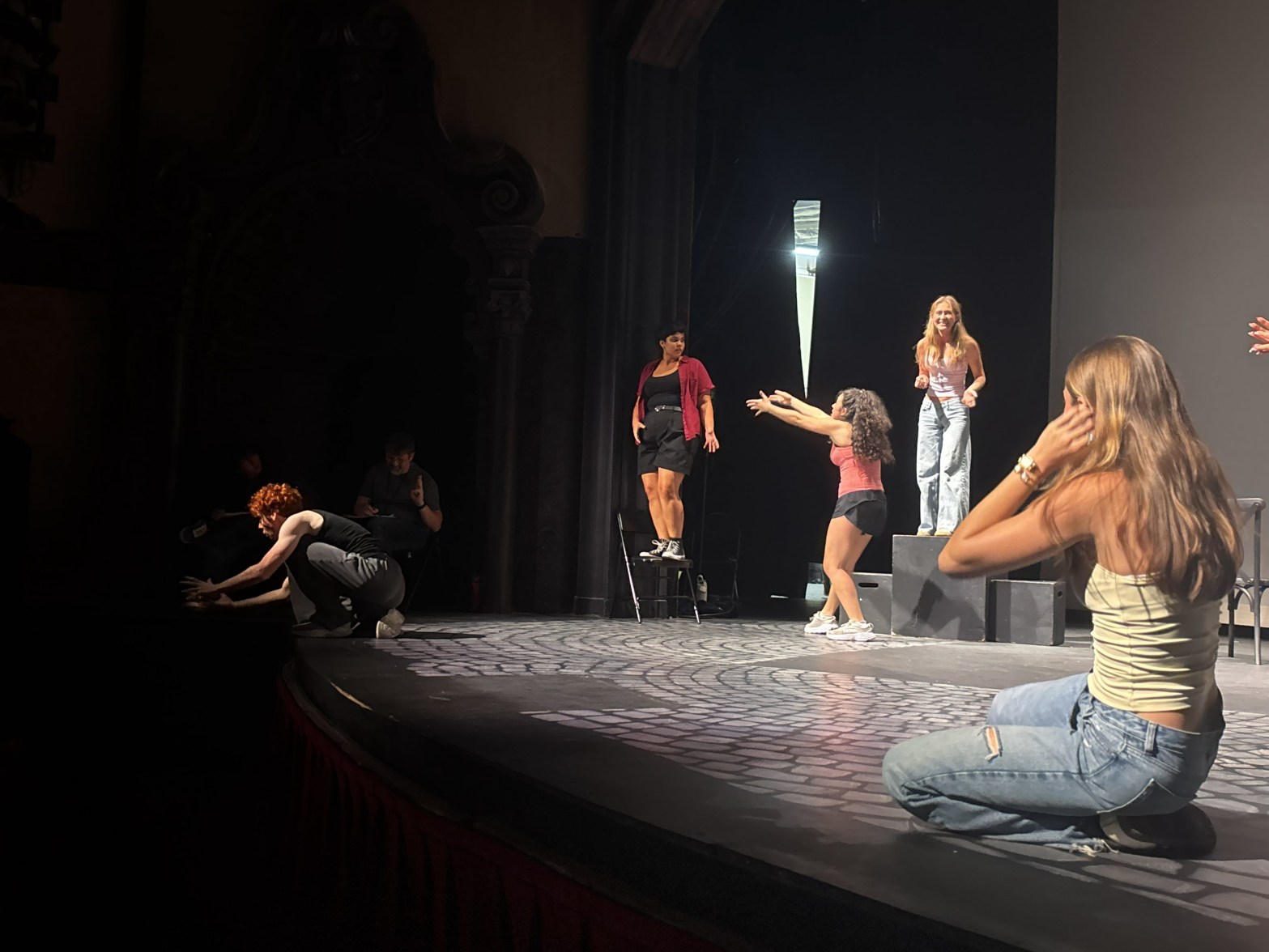
This is a simple conceit that I used in a recent R&D Show exploring the idea of beginnings.
The Basics
A well-known fairytale, fable, or movie is obtained. Players begin their scene where the traditional story ends or, in other words, after the “happily ever after” moment.
Example
The three little pigs sit around the family table feasting on recently roasted wolf (that fell down their chimney).
Player A: (the straw pig) “I’ve never tasted anything quite like this before…”
Player B: (the twigs pig) “I’m not sure I can just go back to living off scraps after dining so gloriously on wolf!”
Player C: (the bricks pig, as they lick their fingers) “I’ve heard howling coming from the woods at night. With a little effort…”
All the pigs: “We might be able to lure another wolf down our chimney!!!”
The Focus
Start boldly. This form invites a “if this is true what else is true?” mindset so be sure to bravely pursue and elevate the first clear step toward discovery.
Traps and Tips
1.) Review. It’s probably worthwhile quickly paraphrasing the major events of the given tale even if you think it’s deeply embedded in the public consciousness. This way, you can make sure all the players have the same chapters in their books to build upon as they look for a common page to start on. It also gives the audience common reference points that are now more easily woven into the fabric of the original scene.
2.) Gather. This is likely more a preference than necessity, but I think there’s something about beginning the scene with a broad array of character already in action. Fairytales often end with a big gathering or celebration, so picking up the plot at that moment (or shortly thereafter) skips the need for ponderous character entrances and introductions. While the game begins “at the end” of the known story, this gives a “starting in the middle” vibe which can go a long way to getting the ball rolling.
3.) Assume. Like any conventional improv scene, the story really can go anywhere, so it’s important that someone offers up a something in those first pivotal moments beyond just paraphrasing the known antecedent action. Our three little pigs could have all gone into shock, or become codependent, or find the brick house too cramped for three occupants… As always, it doesn’t really matter what choice is made but rather that someone feels empowered to make a strong and grounded first move. The format invites a bit of cheeky fun in terms of pulling at an unexpected thread – hence my example of turning the pigs into the aggressors – but don’t let a desire for thinking wildly outside of the box prevent you from making one small, clear, and deliberate step that others can then…
4.) Polish. This game works well when you assume a “follow the follower” stance. If everyone tries to get their own clever gimmick going, it’s more than likely that no one choice will ever evolve and blossom. So, look to the moves of your prior teammates and really try to add volume and energy to the choices already in the mix. Trust that forward momentum will be more joyfully and easily shaped than built from scratch again and again.
The R&D Twist
Our lab assistants played this game in a show demonstrating various ways to start a scene. There’s a lot to be said for capitalizing on known stories in the above manner as it allows you to quickly bring to the stage a wealth of material and backstory without bogging down the action with tiresome exposition.
New to ImprovDr.com or the Game Library? You can find the ever-expanding collection of games, exercises, and warm-ups here.
Cheers, David Charles.
www.improvdr.com
Join my Facebook group here.
Photo Credit: Tony Firriolo
© 2026 David Charles/ImprovDr
The R&D Show Expansion Pack

