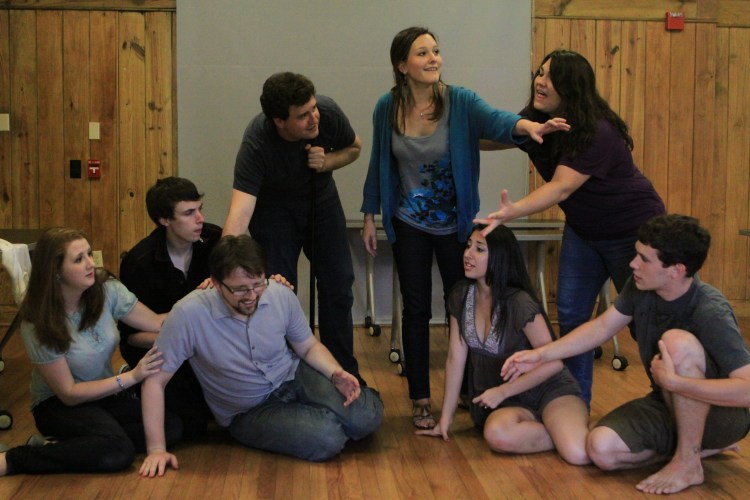
Game Library: “Fortunately/Unfortunately”

If you’re looking for a fun narrative exercise that explores various ways to disrupt storyline routines, Fortunately/Unfortunately should fit the bill!

The Basics

Players form a circle, and someone volunteers to provide the introductory sentence of an original story. As the narrative moves from one player to the next around the group, narrators alternate beginning their sentences with “Fortunately” or “Unfortunately.” The former preface invites a positive turn in events, while the latter serves as an introduction to a problem, complication, or disruption. The story continues in this pattern until a natural conclusion is reached. Several stories can be told in succession depending on the size of the group to facilitate full involvement.

Example

Player A: “It was her first day at her own real estate company, and Kira excitedly turned the door sign to open.”

Player B: “Fortunately, traffic had been surprising light that morning, and so Kira got a great parking spot right in front of her new office.”

Player C: “Unfortunately, she didn’t notice the pigeon perched in the oak tree sprawling over her freshly washed car until she looked through the glass door, and it was too late.”

Player D: “Fortunately, Kira was always prepared and had wet wipes in her bag that she pulled out to clean up the mess on the roof of her car.”

Player E: “Unfortunately, Kira’s first client arrived early, and she became flustered as she tried to minimize the embarrassing site of her dirty car.”

Player F: “Fortunately, Kira’s client, Claire, had parked under the same tree and suffered the same fate, so they shared a laugh…”

The Focus

There is an interesting (though albeit challenging) tension in this game as your lurch from good news to bad news and back again. Subsequently, each established routine will often quickly become disrupted or re-framed. Focusing on this skilled manipulation of the story arc is where the major gift of the game resides, but this might initially require a slightly more cerebral or patient approach.

Traps and Tips

1.) Beware of erasures or cancellations. There is a fine line between inverting the energy of a prior choice and accidentally negating or erasing it. For example, if the prior narrator establishes that it was a beautiful day without a cloud in the sky, and this is followed by an unfortunate thunderstorm, we have essentially wiped away the prior choice with our own. Similarly, if it’s established that a window-rattling thunderstorm is occurring and we immediately have the good fortune of it passing in moments, again we haven’t really taken on the weather as an important and essential fact. This may feel like a subtle distinction, but more dynamic stories will evolve if previously established circumstances are fully embraced and woven into the core of the story arc. New offers should strive to be additive rather than canceling.

2.) Avoid large narrative leaps or disproportionate problems. The story is more likely to feel successful and dynamic when small but significant choices are made that purposefully allow room for the additional ideas and advances of others. If Kira shows up on her first day to find her real estate office burnt to the ground as the first “unfortunately” complication, this may have the effect of leaping over dozens of smaller offers that could have, in turn, eventually led to this greater catastrophic outcome. You certainly could leap into the middle of a story in this fashion, but there is a value in looking for the subtle and inherent smaller steps that have their genesis in prior ideas. I’ve found players tend to err on the side of making major story leaps especially when they play the exercise for the first time: the game takes on a different energy and finesse when this is discouraged as a general approach.

3.) Endeavor to keep the forward momentum or central goal. This is another nuanced goal that can further sharpen the focus of this storytelling exercise. The abrupt changes between good and bad fortune can easily pull the story away from a driving objective or goal. Again, this is not necessarily problematic, and it can be exciting to watch the curve of absurdity exponentially grow as our central character faces one escalating and daunting challenge after another. But as I’ve tried to model in the example above, there can also be a value in applying this narrative technique to a more simple or “slice of life” scenario and then working to see if you can steer your protagonist through a measured and connected series of events. Can we ultimately help Kira win over her first real estate client in this new office in spite of an ever evolving series of challenges and setbacks? If her office immediately burns down, or a meteor destroys her car, or an earthquake consumes her, we are likely to quickly move away from the initial story objective or promise. Using the “fortunately” steps to reconnect the protagonist with their overall objective can help mightily in this regard.

4.) Discourage planning ahead. This is a particular challenge in circle games as players can have the very human tendency to count ahead, determine whether they are going to be “fortunate” or “unfortunate,” and then start composing their “great” choice well before the action actually gets to them. This tactic is often responsible for large story leaps as offers become disconnected from the unique gifts lying dormant in the prior narrative choice. Encourage active listening and a “looking backward” attitude that seeks the next step in the prior actions. If this planning tendency remains pervasive, you can also randomize the order of the narrative by having players throw the focus to a new player across the circle after each contribution (just make sure everyone is getting a chance to contribute).

In Performance

I don’t know if I’d necessarily advocate for such a predictable flip-flop of good and bad complications as a common scenic strategy, but the skill of being able to gently make matters better or worse is a critically helpful narrative technique. Played patiently and carefully, this exercise also teaches pacing and the effectiveness of making proportionate choices that enable the game to gradually build as opposed to leaping to a perceived destination.

Cheers, David Charles.
www.improvdr.com
Join my Facebook group here.
Photo Credit: Tony Firriolo
© 2020 David Charles/ImprovDr

Connected Concept: Breaking Routines
“B” is for “Breaking Routines”

Connected Game: Fortunately/Unfortunately

© 2020 David Charles/ImprovDr
www.improvdr.com
Join my Facebook group here.
Cheers, David Charles.

Related Entries: CAD, Commandment #7, Game of the Scene Antonyms: Balance, Platform, Routine Synonyms: Ignition

This is just a taste of this entry/concept. Go here for more information.

Some Methods for Shaking Up the Routine

The improv proclivity for upending expectations and norms.

“I” is for In-Progress “Index”

Here’s a working and ever-expanding list of improv vocabulary, terms, and concepts. For deeper considerations of these ideas (the original entry versions for my long-term readers) go here for more information. The equivalent in-progress list of games can be found here.

Join my Facebook group here to be the first to know when a new blog entry drops.

A is for…

B is for…

C is for…

D is for…

E is for…

F is for…

G is for…

H is for…

I is for…

J is for…

K is for…

L is for…

M is for…

N is for…

O is for…

P is for…

Q is for…

R is for…

S is for…

T is for…

U is for…

V is for…

W is for…

X is for…

Y is for…

Z is for…

Cheers, David Charles.
www.improvdr.com

Website and Blog content (c) David Charles 2020-23

Game Library: “Rule Breaker”

When I teach improv novices, I’ll typically start with a few days going over the “greatest hits” of foundational skills and terminology, such as Accepting, Blocking, Wimping, Sharing Focus and the like. I like to use this high energy and chaotic exercise, Rule Breaker, as a way of then summarizing this work but through a via negativa approach.

The Basics

Divide the class or ensemble into groups of about six or so (groups much larger than this can be needlessly challenging). An offer is provided, and each team is then invited to play together while breaking as many of the “good rules” of improv as they can. This can include staging choices (upstaging each other), verbal choices (speaking over each other), and improvisational choices (wimping, pimping, blocking each other). The only unbreakable rule is keeping fellow improvisers safe and out of harm’s way. The scene continues until it typically collapses (!) and the process is repeated with the remaining groups.

The Focus

The “rules” of improv can certainly feel restrictive, and I don’t deny that they can tend to put neophyte improvisers in their heads initially. This exercise reminds players of how these parameters actually provide a common language of play and encourage connection, teamwork, and storytelling. By embracing the other side of the coin, most players will emerge having a new appreciation for how the rules empower collective and collaborative creation.

Traps and Tips

1.) Give the scene room to breathe. I will readily admit that often the first minute or so of these scenes are exuberant and enjoyable. There can be a heightened sense of playfulness and abandon even if it is generally solipsistic and without a unified direction. Allowing the exercise room to move beyond this initial burst of freedom will typically result in a steady and marked scenic decline. Players will quickly exhaust their initial choice or game when they are unable to get others to join. The fun of unbridled individualism will soon start to feel like a burden rather than a gift, and you’ll often see players accidentally engaging in collaboration in spite of the stated instructions.

2.) Reinforce vocabulary with sidecoaching. Depending on the experience level of the group, it can be helpful to “call out” accidental “good” improv when it happens. If someone joins a game or accepts a reality, or players engage in generous give and take, it can be worth your time to “correct” this so as to honor the central premise of the exercise. To model this expectation, I’ll often start with “Team, are you ready?” in the hopes that I’ll receive a chorus of “No!” or similar. The initial ask-for is also an interesting conceit as it, too, should generally be ignored or quickly thrown aside. If there is considerable time between your gatherings, it can help to quickly review the fundamental concepts that you’ve been exploring prior to beginning the exercise so players have the maximum amount of (bad) options at their fingertips.

3.) Allow sufficient time to debrief. In many ways, the debrief of this particular exercise is likely to be as important and meaningful as the exercise itself. I ask players to isolate particularly fun or memorable moments within the mayhem as there are usually many choices that were noteworthy! We’ll then discuss what it felt like to be a part of the scene as players and whether this was ultimately joyful or sustainable. It’s also revealing to consider the experience of watching these scenes as audience members. Many will find the experience quite tiring or overwhelming as they endeavored to find meaning or focus within the messiness.

In Performance

I’m always tickled by how much “good improv” inadvertently makes its way into these crazy scenes. Players will often accidentally start crafting mini-scenes within the maelstrom, trying to cooperate to generate something of interest, or fully accepting the offers of teammates in the hopes that some semblance of a story will emerge. I’m skeptical that this approach to improv has much value in performance in this particular form, although the abandon that Rule Breaker unleashes is certainly a palpable reminder that allowing rules to make us retreat into our heads is not without its own consequences and costs. However, throwing out all the rules just for the sake of throwing out all the rules also discards the deep wisdom that these formalized principles have come to represent.

Cheers, David Charles.
www.improvdr.com
Join my Facebook group here.
Photo Credit: Tony Firriolo
© 2020 David Charles/ImprovDr

Connected Concept: Blocking

“B” is for “Blocking”

A tendency towards rejecting or suppressing dynamic possibilities.

How Fear Can Lead to Blocking

This is just a taste of this entry/concept. Go here for more information.

Related Entries: Commandment #1 Antonyms: Accepting, Agreement, Yes And, Yielding Synonyms: Denial, Negating, No

Cheers, David Charles.
www.improvdr.com
Join my Facebook group here.
© 2020 David Charles/ImprovDr

Connected Game: Rule Breaker

Game Library: “Four Sentence Story”

Four Sentence Story provides a helpful narrative exercise that breaks down the constituent elements of a basic story arc. In terms of Balance (definition #1), it uncovers some helpful dynamics and trends when considering how to initiate scenes rich with potential and interest. I use this or a slightly more robust variant in most of my rehearsal processes as it clearly unpacks the foundational features of a simple story progression while allowing players to rotate into the various functions.

The Basics

Depending on the size of your ensemble and the time you have available, you can play this is one large circle or break into smaller groups of 4 to 6 members, although I’ll usually model it once for the group as a whole if this is their first time working with the exercise. Four players participate in each sequence, working together to craft a single story with four distinct sentences: the first provides an introduction, the second continues by developing a problem, the third wraps up the action with a solution, and the final sentences tags the narrative with a moral or resolution. After the story has been completed (and perhaps quickly debriefed), the roles switch around one position, so that now the “second” player assumes the role of beginning a new tale with an introduction. The process ideally continues until everyone in the group has had the opportunity to play in each position at least once.

Example

Player A: (Introduction) “It was a cold and stormy night as Stacy drove down the windy country road in her rental car.”

Player B: (Problem) “All of a sudden, she heard a loud popping sound as the car lurched, sending her hurtling off the road heading dangerously toward a giant oak tree.”

Player C: (Solution) “Fortunately, Stacy was able to regain control of the car just in time, bringing it to a halt just inches from the giant tree’s trunk.”

Player D: (Resolution) “As Stacy sat sheltered from the storm under the tree’s mighty branches, she took out her cell phone, relieved that she had opted for the premium insurance on her rental.”

The Focus

Keep your attention on building a coherent story that fully utilizes the elements that have already been established or implied. Stories told in the third person tend to work best especially if we follow a clearly identified protagonist (and use their name repeatedly). In terms of balance, the first player should strive to set a strong tone that is specific enough to spark the imaginations of those who will follow. If it is too simple, “Joe was a little child,” it can make it difficult for later players to avoid inventive or overly original choices.

Traps and Tips

1.) Play at the top of your intelligence. When you first tackle this game, it can be helpful to do a round with slightly simpler content in order to make sure everyone fully understands the obligations of each narrative position. Once you have a sense of these roles, however, raise the bar in terms of your language use. If you deploy more dynamic or poetic words and images, the stories are likely to inspire your teammates and take on deeper meaning. With only four sentences, these stories will likely feel a little abridged, but you should still strive to make them eloquent and well told.

2.) Pursue strong story telling techniques. This could be a substantial list, so I’ll hit some major points here and recommend you review other entries such as Advancing and Extending. Look to give the action a grounded sense of time and place (rather than summarizing events that have occurred over a wide period of time). To this end, small steps can be helpful, and each subsequent action should have a clear and “logical” connection to those that have gone before (“logical” in that the connection should at least make clear sense to the current teller). The most satisfying stories are often those that have most judiciously used the established elements, weaving them throughout the four sentences as needed.

3.) Avoid fulfilling other player’s story functions. As this exercise offers an elegant but concise story model, it can be problematic if narrators start to fulfill other assigned functions. This most often occurs in the first “introduction” position as it can be tempting to inadvertently foreshadow or offer a problematic element. (The “cold and stormy” night in my example above is arguably on the verge of this, although I think here it is providing mood and stakes rather than a problem per se.) Discourage this as best you can. It’s important to establish the value of a stasis or balance in and of itself as this creates a snapshot of the world in equilibrium. When you rush to the problem, there are fewer details established in the given circumstances from which later elements of the story can gain inspiration. If a fellow player does inadvertently step into your terrain (and a re-start seems inappropriate), I’d advise extending or heightening in order to satisfy the requirements of your assigned sentence rather than offering up an alternative or secondary choice.

4.) Embrace the details and style. Details are everything in this exercise and it can keep the game interesting and fresh after multiple re-visits if players are keenly exploring different voices, moods, and styles. I tend to facilitate the game without providing a launching title so there is a lot of freedom in that first position to craft some unique rules for your world. As players become more adept, it can be joyful to seek to fully embrace not only the specific elements and offers, but also mirror and expand the established tone of the piece. Are we in a typical modern world, or are there supernatural elements at play? Is this a teenage love story, or a gritty crime drama? Leaning into adjectives and nuanced images alone can add a whole new level of challenge and specificity. While the game is called Four Sentence Story, once the basics are mastered, it’s certainly in the spirit of the exercise to encourage each speaker to expand upon their contribution beyond a simple or run-on sentence.

In Performance

There are a lot of storytelling games that explore some form of story structure or spine, but this remains one of my favorites as in spite of its seeming simplicity it can house a wide variety of surprisingly detailed narratives. If you move from this narrative exercise into scenic work, it can be helpful to consciously consider where you are in this four-element structure and what particular role performers may be fulfilling. For example, if two players begin a scene and are struggling to move beyond the stasis or introduction, it is not uncommon for the gift of the third arriving player to be that of the problem. Similarly, if the scene has essentially solved its crisis, this should be an impetus for the team to look for a resolution (a loose equivalent to a scenic button).

Cheers, David Charles.
www.improvdr.com
Join my Facebook group here.
Photo Credit: Tony Firriolo
© 2020 David Charles/ImprovDr

Connected Concept: Balance

“B” is for “Balance”

There are multiple (at least four) pertinent definitions of Balance from a performance perspective, including the initial status quo of the theatrical world, and the way in which we play together on stage.

This is just a taste of this entry/concept. Go here for more information.

Related Entries: Commandment #3, Ensemble, Inclusiveness Antonyms: Breaking Routines, Shining Synonyms: Given Circumstances, Platform, Routine

Cheers, David Charles.
www.improvdr.com
Join my Facebook group here.
© 2020 David Charles/ImprovDr

Connected Game: Four Sentence Story

Game Library: “Three Through the Door”

I came across this challenging game in the 1990s when I studied with the Players Workshop of the Second City. Currently, I feature it in my semester-long improv course that focuses on characterization as it’s a nice way to weave together some of those threads. It’s a two-person scene that riffs on the concept of an Audition and I know it as Three Through the Door.

The Basics

Working in pairs, one player assumes the role of the director or casting agent while the other serves as three consecutive actors. In a series of three vignettes, the actor enters the space and, with the assistance of the director, goes through the various stages of a brief interview and audition. At the completion of each audition process, the actor leaves the space only to immediately return as a completely new character also attending the audition. This second character is then, in turn, followed by a third and final new persona. Once the director has seen all three contenders, the two improvisers change roles with the former director now providing “three through the door”.

Example

Player A, as the director, sits at a large table with a stack of papers and resumes.

Player A: “Next.”

Player B enters with a confident gait and strides over to the director, firmly shaking their hand.

Player B: “So nice to see you again. I was a huge fan of your recent adaptation of Hamlet. Some really lovely and original work there.”

Player A: “It’s certainly good of you to come in today. I was just reviewing your resume…”

Player B: (interrupting jovially) “That’s me! Dustin Jones. I’m excited to show you how I’ve applied the feedback you gave me last time…”

Player A: “Well, let me see what you’ve brought me today and we’ll take it from there…”

The Focus

This format is a great way to practice diving headfirst into strong characterizations and finding the details and nuances as you go. The director should see themselves as primarily a facilitator, nudging the various characters into discoveries and interesting dynamics. Ideally by the end of the exercise, each improviser has crafted three compelling and unique characters that could easily populate future scenic work.

Traps and Tips

1.) Commit to the audition premise. There is a lot of fun to be had in the banter between the various actors and the director but also strive to get to the actual audition. If you are working in a group of non-actors who do not have monologues at the ready, it’s more than fine to recite lyrics from a song or make up a monologue completely. If you do have one or more monologues in your repertory, I think it can be enlightening to bring them out in this very different context and try them from wildly different points of view and energies. (It’s an interesting choice to have all three characters use the same piece, for example, so that you’re encouraged to find something new in it each time.) The director can then also make adjustments or modifications as part of the scene, thereby facilitating new discoveries from old terrain.

2.) Seek contrast and finesse in your characters. Often characters will start off a little gimmicky due to the need to just grab at something when you begin. To offset this tendency, the director serves an instrumental function in encouraging levels and honesty as the characters have a little more room to develop. When selecting those “first” inspiring choices or energies as the actor, seek interesting contrasts to stretch yourself. For an added level of challenge, I think it can be powerful to craft three characters or versions of yourself who might all actually audition for the same role or play as opposed to just crafting three wildly different personas, such as a precocious child, indifferent young adult, and new-to-the-boards octogenarian. (Although there is undeniably a value in approaching the task at hand in this latter manner as well.) This exercise can also promote problematic portrayals if we’re not careful: perhaps review my thoughts on Archetypes in improv here if this is a concern.

3.) Use all your gifts as an improviser. In addition to exploring three different character points of view, also be sure to consider other facets of your craft as a performer. Does each character have a different tempo when it comes to moving or speaking? Do they have innately different status relationships with the director? How do they occupy the audition space: are they free and comfortable, minimize their physical presence and jittery, or expansive and controlling? Consider using a different animal essence, physical lead, or verbal rhythm in order to unlock new possibilities. This form is wonderfully open and can serve a myriad of different characterization techniques and processes so be sure to bring past lessons with you as you walk “through the door”. It’s unlikely that you’re have the time and wherewithal to consider all of these dynamics but just committing to a specific in one or two areas can launch you on a new path.

4.) As the director seek to empower rather than endow. The director should certainly strive to be a helpful and enabling scene partner, providing new observations and opportunities through which the personae can find their voices and cores. I would caution, however, that I think it’s in the spirit of the game to allow for the major choices to come from the actors rather than the director otherwise the dynamic can shift into a series of endowments (or possibly pimps) rather than more open-ended offers that encourage the actor to make their own informed choices. It’s helpful to play along with any games the actor might pitch, “Yes, I did see you at that Hollywood party…” but be wary of making broad defining choices, “Temuera Morrison! I’m a huge fan of your work”. While this game certainly could be played in a lay-over manner, with the director offering up an increasingly difficult array of hoops for the actor to jump through, I don’t think this elevates the underlying value of empowering the improviser in the hot seat to find their own character truths.

In Performance

I’ll often have class members playing this dynamic in pairs all at once as it is a lengthy game – easily 8 to 10 minutes or more for each trio combination. This provides a little anonymity as players take their first steps, and also prevents observer fatigue as watching 10 or 15 of these in a row can be a little daunting and is likely to put those performing later in the mix very much in their heads as they increasingly feel the pressure to rule out possible characters based on what they have seen already. I’ll wander through the workshop space looking for trends and feedback. Providing time warnings is also helpful so that the third character doesn’t get short-changed if the first two were expansive or verbose.

Allow a decent amount of time to debrief (ideally before the reversal of roles and then again at the conclusion of the exercise) as players often gain a lot from both their struggles and successes in the game. If you’re considering using this in a classroom or workshop situation, I’d also advise that it typically serves everyone better when offered later in your programming as the conceit requires considerable trust and confidence.

Cheers, David Charles.
www.improvdr.com
Join my Facebook group here.
Photo Credit: Tony Firriolo
© 2020 David Charles/ImprovDr

Connected Concept: Auditions

“A” is for “Auditions”

A fraught but necessary part of the production process.

Putting Your Best Foot Forward

This is just a taste of this entry/concept. Go here for more information.

Synonyms: Preparation, Professionalism

Cheers, David Charles.
www.improvdr.com
Join my Facebook group here.
© 2020 David Charles/ImprovDr

Connected Game: Three Through the Door

Game Library: “Scene in the Audience”

When I explored the role of the Audience in improv, this game quickly came to mind. In some ways, it’s almost more of a handle as there are few “rules” to the structure, but it’s nonetheless a great dynamic to literally break the fourth wall during your shows. Here’s Scene in the Audience.

The Basics

A premise (often a location) is obtained. The team performs a scene that takes place predominantly or exclusively in the auditorium as opposed to on the stage.

Example

Players receive the suggestion of a security line. After the transitional blackout, the lights come up on the auditorium, where the players have scattered themselves through the audience. Player A is standing and calling.

Player A: “I thought you said you were going to hold my place!”

Player B is standing on the other side of the house, and with a gesture encourages those nearby to stand up as well.

Player B: (yelling back in return) “You know how I struggle with being assertive. I just didn’t want to have to keep explaining.” (Turning to an audience member) “And this lady reminded me that you’re not meant to hold places…”

The audience members nod and smile.

Player A: “Well, that’s just great. Don’t think I’m going to give you any of this popcorn! Would anyone else like my former best friend’s popcorn?”

Player A offers some popcorn to a nearby audience member and starts to sulk…

The Focus

There are many ways to approach this dynamic, but the major pay-off is obviously getting willing audience members involved. I’m including some possible strategies below. I’d caution players to make sure audience safety is front of mind. And, as always, I think it’s a wiser approach to invite participation rather than mandate or potentially coerce it.

Traps and Tips

1.) Using the audience as people. This is probably the most straightforward approach and is modeled in the example above. I’ve often seen some variation of putting the scene in a theatre auditorium or crowded space, which certainly honors the central conceit of the game. Here, players can define the audience as ill-defined masses or endow various individuals or smaller sub-groups as characters with whom they can interact and play. If you’ve earned the trust of your audience beforehand, the potentials are literally boundless. A third improviser could enter and utilize other audience members as fellow security guards, the team could offer that the rock band is making a Canadian Cross in the hopes that some folks will leap into the roles, or players could try their luck at moving up through the line and accepting whether or not audience members will hinder or allow their progress. If you’re using audience members in this manner, it’s a powerful choice to truly let them make decisions that will influence the progress and outcome of the scene. Just remember to keep your audience safe.

2.) Using the audience as environment. This option opens up if you take the risk of exploring a location that doesn’t closely mirror a typical auditorium. For example, if your scene is set in a warehouse, audience members could now be invited to participate as other characters or environmental objects such as large crates, a conveyor belt, or forklift. This can take some gentle coaxing and encouragement, especially if you’re asking several patrons to work together to form something with their bodies, but it can be quite wonderful to experience strangers embracing the accepting philosophy if you’ve empowered them graciously to do so. Just remember to keep your audience safe.

3.) Using the audience as props. This is essentially a smaller scale variant of the above strategy, but you can also assume a Furniture approach to the scene. (Read more about that game here.) If you’re not familiar with this short-form game, it essentially involves using a fellow player’s body to create all the needed hand props and furniture. To return to our warehouse premise, someone could be invited to create a clipboard for a manager to hold, or a lunch pail, or a flashlight. Part of the fun can be then having these patrons follow you around in the scene to be reincorporated as needed. Be careful of merely naming large slews of objects in the hopes that audience members will know what to do. Especially in the early beats of the scene, you’ll need to provide some targeted guidance and instructions. Once the dynamic has been seen and learned, it’s fun to be a little more open and risky in your object needs, but make sure you still have a scene amidst the game. And just remember to keep your audience safe.

4.) Using the audience as soundscape. In many ways, this is the most user-friendly and accessible strategy as some audience members may have mobility issues or a reluctance to offer up their bodies to the game (and rightly so). The key is, once again, clearly establishing your expectations when you invite the audience to play, especially at the top of the scene. If your setting is an ancient rain forest, referencing the relentless downpour pointedly is more likely to get audience members serving as your Foley artists rather than just mentioning it nonchalantly in passing. (It’s also important to have your technician in the loop – if they fill these needs the audience will be less likely to do so.) If you’re not using microphones as performers, also keep in mind that you don’t want to offer up a soundscape that you won’t be able to be heard over. As is the case with all the above mechanics, once the audience has a sense of the “rules,” you’re more likely to get participation both of the expected and surprise varieties. It probably goes without saying, but it’s important that any surprises are weaved into the mix.

5.) Using the audience for all of the above. This can be magical if it happens and builds organically. Don’t push for this as your scene will more likely shine with simpler and more expertly executed audience games that are earned and built rather than everyone grabbing at their own dynamic and sending the audience confusing messages and expectations. Bring your audience into the shallow end of the improv pool first to let them get a sense of the playful possibilities, and did I mention to make sure you’re keeping the audience safe once the scene takes off?

In Performance

The beauty of Scene in the Audience is that it is such an open approach. I offer the above observations as possible strategies in the event you’ve never seen or experienced the game before. At the end of the day, your team will be best served if you make a strong initial staging choice and then work together to discover and develop how to best maximize the presence and creativity of the audience. In addition to my warning of keeping your patrons safe, I would also offer that it would be a shame not to tap into their energy and ideas once you are working amongst them as this is the unique promise of the dynamic. For this reason, try to avoid a scene that just happens to be in the auditorium and yet doesn’t capitalize on this unique staging choice in any interesting way.

Cheers, David Charles.
www.improvdr.com
Join my Facebook group here.
© 2020 David Charles/ImprovDr

Connected Concept: Audience