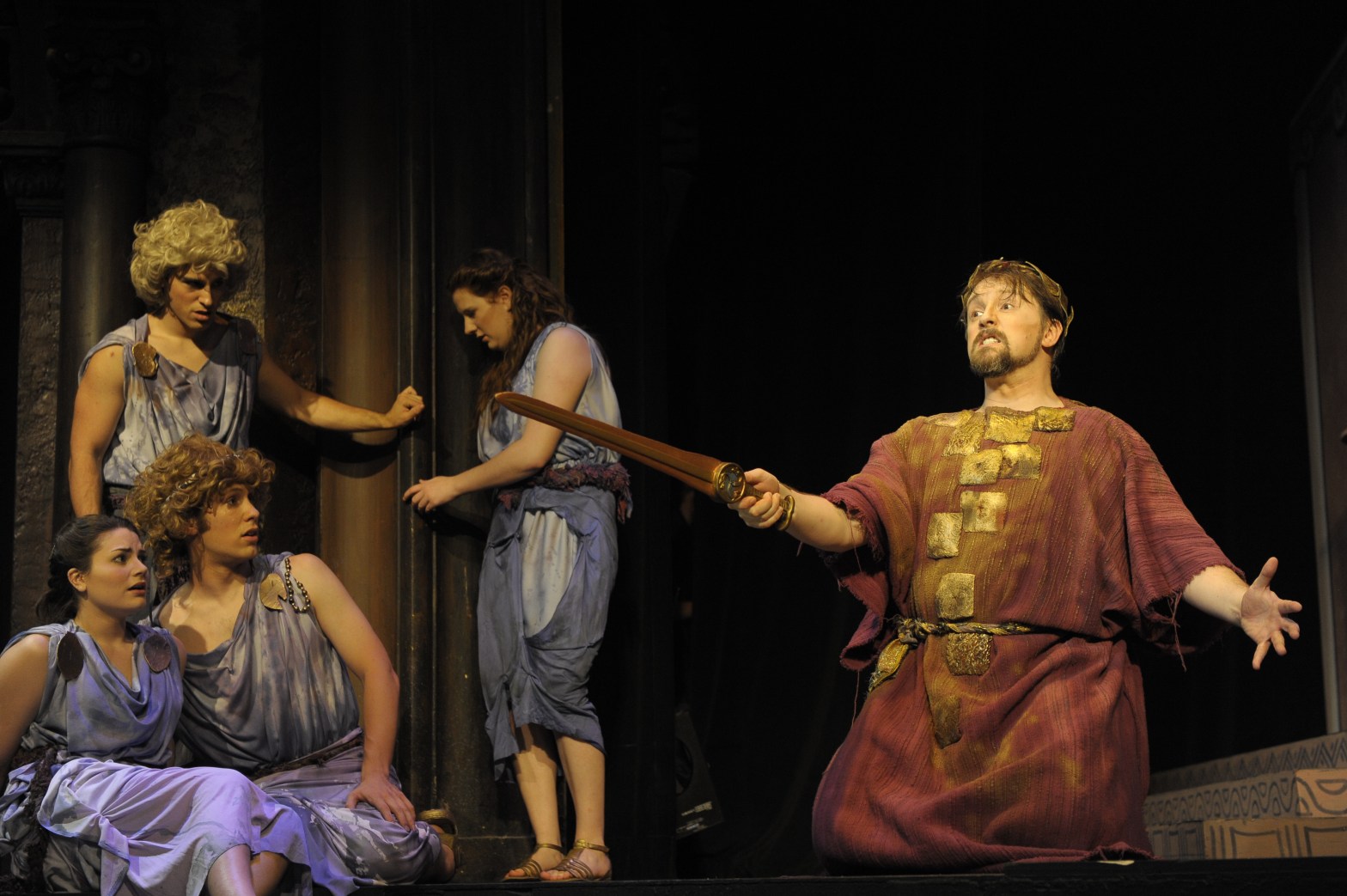
“A” is for “Auditions”

A fraught but necessary part of the production process.

Putting Your Best Foot Forward

This is just a taste of this entry/concept. Go here for more information.

Synonyms: Preparation, Professionalism

Cheers, David Charles.
www.improvdr.com
Join my Facebook group here.
© 2020 David Charles/ImprovDr

Connected Game: Three Through the Door

Game Library: “Scene in the Audience”

When I explored the role of the Audience in improv, this game quickly came to mind. In some ways, it’s almost more of a handle as there are few “rules” to the structure, but it’s nonetheless a great dynamic to literally break the fourth wall during your shows. Here’s Scene in the Audience.

The Basics

A premise (often a location) is obtained. The team performs a scene that takes place predominantly or exclusively in the auditorium as opposed to on the stage.

Example

Players receive the suggestion of a security line. After the transitional blackout, the lights come up on the auditorium, where the players have scattered themselves through the audience. Player A is standing and calling.

Player A: “I thought you said you were going to hold my place!”

Player B is standing on the other side of the house, and with a gesture encourages those nearby to stand up as well.

Player B: (yelling back in return) “You know how I struggle with being assertive. I just didn’t want to have to keep explaining.” (Turning to an audience member) “And this lady reminded me that you’re not meant to hold places…”

The audience members nod and smile.

Player A: “Well, that’s just great. Don’t think I’m going to give you any of this popcorn! Would anyone else like my former best friend’s popcorn?”

Player A offers some popcorn to a nearby audience member and starts to sulk…

The Focus

There are many ways to approach this dynamic, but the major pay-off is obviously getting willing audience members involved. I’m including some possible strategies below. I’d caution players to make sure audience safety is front of mind. And, as always, I think it’s a wiser approach to invite participation rather than mandate or potentially coerce it.

Traps and Tips

1.) Using the audience as people. This is probably the most straightforward approach and is modeled in the example above. I’ve often seen some variation of putting the scene in a theatre auditorium or crowded space, which certainly honors the central conceit of the game. Here, players can define the audience as ill-defined masses or endow various individuals or smaller sub-groups as characters with whom they can interact and play. If you’ve earned the trust of your audience beforehand, the potentials are literally boundless. A third improviser could enter and utilize other audience members as fellow security guards, the team could offer that the rock band is making a Canadian Cross in the hopes that some folks will leap into the roles, or players could try their luck at moving up through the line and accepting whether or not audience members will hinder or allow their progress. If you’re using audience members in this manner, it’s a powerful choice to truly let them make decisions that will influence the progress and outcome of the scene. Just remember to keep your audience safe.

2.) Using the audience as environment. This option opens up if you take the risk of exploring a location that doesn’t closely mirror a typical auditorium. For example, if your scene is set in a warehouse, audience members could now be invited to participate as other characters or environmental objects such as large crates, a conveyor belt, or forklift. This can take some gentle coaxing and encouragement, especially if you’re asking several patrons to work together to form something with their bodies, but it can be quite wonderful to experience strangers embracing the accepting philosophy if you’ve empowered them graciously to do so. Just remember to keep your audience safe.

3.) Using the audience as props. This is essentially a smaller scale variant of the above strategy, but you can also assume a Furniture approach to the scene. (Read more about that game here.) If you’re not familiar with this short-form game, it essentially involves using a fellow player’s body to create all the needed hand props and furniture. To return to our warehouse premise, someone could be invited to create a clipboard for a manager to hold, or a lunch pail, or a flashlight. Part of the fun can be then having these patrons follow you around in the scene to be reincorporated as needed. Be careful of merely naming large slews of objects in the hopes that audience members will know what to do. Especially in the early beats of the scene, you’ll need to provide some targeted guidance and instructions. Once the dynamic has been seen and learned, it’s fun to be a little more open and risky in your object needs, but make sure you still have a scene amidst the game. And just remember to keep your audience safe.

4.) Using the audience as soundscape. In many ways, this is the most user-friendly and accessible strategy as some audience members may have mobility issues or a reluctance to offer up their bodies to the game (and rightly so). The key is, once again, clearly establishing your expectations when you invite the audience to play, especially at the top of the scene. If your setting is an ancient rain forest, referencing the relentless downpour pointedly is more likely to get audience members serving as your Foley artists rather than just mentioning it nonchalantly in passing. (It’s also important to have your technician in the loop – if they fill these needs the audience will be less likely to do so.) If you’re not using microphones as performers, also keep in mind that you don’t want to offer up a soundscape that you won’t be able to be heard over. As is the case with all the above mechanics, once the audience has a sense of the “rules,” you’re more likely to get participation both of the expected and surprise varieties. It probably goes without saying, but it’s important that any surprises are weaved into the mix.

5.) Using the audience for all of the above. This can be magical if it happens and builds organically. Don’t push for this as your scene will more likely shine with simpler and more expertly executed audience games that are earned and built rather than everyone grabbing at their own dynamic and sending the audience confusing messages and expectations. Bring your audience into the shallow end of the improv pool first to let them get a sense of the playful possibilities, and did I mention to make sure you’re keeping the audience safe once the scene takes off?

In Performance

The beauty of Scene in the Audience is that it is such an open approach. I offer the above observations as possible strategies in the event you’ve never seen or experienced the game before. At the end of the day, your team will be best served if you make a strong initial staging choice and then work together to discover and develop how to best maximize the presence and creativity of the audience. In addition to my warning of keeping your patrons safe, I would also offer that it would be a shame not to tap into their energy and ideas once you are working amongst them as this is the unique promise of the dynamic. For this reason, try to avoid a scene that just happens to be in the auditorium and yet doesn’t capitalize on this unique staging choice in any interesting way.

Cheers, David Charles.
www.improvdr.com
Join my Facebook group here.
© 2020 David Charles/ImprovDr

Connected Concept: Audience

“A” is for “Audience”

An important, but sometimes neglected, partner in the act of spontaneous creation.

Contracts We Could/Should Have with Our Audiences

This is just a taste of this entry/concept. Go here for more information.

Related Entries: Hosting, Inclusiveness, Trust, Volunteers

Cheers, David Charles.
www.improvdr.com
Join my Facebook group here.
© 2020 David Charles/ImprovDr

Connected Game: Scene in the Audience

Game Library: “Scene Without Questions”

This entry explores a stock Theatresports game that I remember first playing during my youth in New Zealand. As I considered the importance of Assumptions, it seems almost too obvious to pair it with Scene Without Questions, but being obvious is also a foundational improv concept (to be discussed in a later post!) so here we go…

The Basics

This can be played as a Decider or standard scenic game: I’m primarily dealing with the latter here. A premise is obtained – it can be fun to deliberately elicit a scenario in which a lot of questions would naturally occur. A scene is created in which characters cannot ask questions. If they do so, they must leave the scene immediately typically after quickly justifying their exit. The scene continues until an ending is found, or the entire team is eliminated (depending on how you elect to deal with infractions).

Example

The audience suggestion is a department store service counter. Player A establishes a counter and starts to work behind it as Player B enters with a large, mimed prop in their hand.

Player A: “Next”

Player B: “I’d like to return this microwave. It isn’t working properly.” B places the box on the counter.

Player A: (Passively examining the box) “I’ll need to see your receipt.”

Player B: “And I’ll need to see your manager if you keep talking to me in that tone.”

Player A: “Sir, this box appears to be empty. Are you trying to pull one over on me?”

A question has been asked and the audience groans.

Player A: “I think you should see my manager.” They exit as Player C now enters in the role of the manager.

Player C: “I see you’re back again with the microwave box…”

Player A: “And I see that you haven’t been returning my phone calls, Rhea…”

The Focus

This game is certainly about avoiding questions, as the title makes clear, but it is also about attacking the scene even with the knowledge that a question might slip out. If you play the game too tentatively or scrutinize every word before you say it, the scene will quickly lose its energy and momentum. Play to “win” but don’t be afraid to “lose” and make sure the dynamism of the scene comes first. Take the risk to speak before you think!

Traps and Tips

1.) Establish a quick and clear method for determining infractions. There are several possibilities that you can set up as you’re introducing the game for the audience. My preference is to instruct the audience to groan or make a buzzer sound if they hear a player asking a question. This reaction can be further heightened by a light or sound cue from the booth if you have that at your disposal (although it’s generally good form for the booth to wait to make this adjustment until it’s been noticed by the audience or their proxy). If you’re using an emcee or judges for the show, I think it’s also helpful to empower them to quickly make the call. Sometimes players might use a questioning inflection, or ask a question and then quickly tag it with a statement, or just mumble or fade out as they realize what they are about to say. Some audiences can be a little wary to initially make these difficult calls, so it’s also helpful to just have someone who can quickly make the decision as needed as you don’t want to have to pause the scene for lengthy discussions or petitions!

2.) Establish the penalty for breaking the rules. Depending on the experience and skill of the players and your goals as a company, there are several penalties that can be deployed. In ascending order of difficulty: players who ask questions must leave the scene for a set period of time (generally 30 to 60 seconds) but can then return as their original character; offenders must leave the scene but can then return only as non-speaking inanimate objects or the like; or players guilty of infractions must leave the stage for the remainder of the scene. In rehearsal or if you’re working with student performers, I think it’s kind to begin at the first level of difficulty otherwise you can end up with a scene that suddenly dissipates in an anticlimactic fashion. If you’re working on a team that has a strong grasp of the requisite skill set, the third iteration certainly maximizes the risk and stakes for the audience. But if you set the bar too high too early, players are likely to perform with fear rather than abandon. If you’re playing on a smaller team, the game also benefits from leaving a little wiggle room for players to reappear.

3.) Attack, attack, attack. Don’t fall into the trap of proofing every line of dialogue in your head before saying it out loud. You (and the audience) will have more fun if you take the risk of having a question pop out of your mouth at any given moment. It’s certainly good improv etiquette to establish a strong environment and to engage in interesting staging and activities, but don’t avoid language for long periods of time if this is purely a tactic to avoid asking a question. If you are eliminated for asking a question, don’t forget to justify your exit (this final moment can provide a helpful gift to keep the scene going for those who remain) and be sure to accept the call with good humor and grace. A little “heat” or performed disappointment can add an interesting dynamic, but the audience can quickly sense if your frustration or anger is real, and this can put a negative cloud on the game.

4.) Pace your entrances and don’t crowd the stage. This is sound advice for any improv scene, but it’s particularly important in Scene Without Questions. You’ll never know who might end up carrying the weight of the scene due to eliminations and it’ll help the story if you can strategically make those characters who survive important to the action. In the example above, Player A could (should) have become more closely known to Player B if they had remained together in the scene longer. With an earlier exit, it becomes increasingly important to invest in the remaining available character combinations. Scenes populated by strangers are uniquely problematic in this form and also innately increase the likelihood of early questions! (“Do I know you,” “Have we met before,” “What’s your name?”) If someone in your team or company generally does well with this challenge, it can be helpful to have them in the starting combination just to increase the likelihood that a protagonist can emerge and make it through the majority of the scene. (If you’re playing this as a Decider, on the other hand, I’d encourage a ringer to wait and go later so as to help ramp up the finesse and skill.)

5.) This dynamic works well as a decider. The basics of the scene remain the same, although it’s a given that eliminated players can’t return so that you can whittle down the players to a “winner.” A clear method for acknowledging infractions becomes more critical, and it tends to work best essentially as a pair game with one representative from each opposing team. Avoid having teammates playing against each other as it undermines the conceit of the decider competition. You can also present the scene continuously or discretely. In the continuous version, the scene just continues uninterrupted with disqualified players being replaced by teammates as new entering characters until only one player or team remains. In the discrete version, a new unrelated vignette begins after each question. This may be inspired by the original or a newly elicited suggestion. Depending on the cast size and skill, the successful player can either remain and take on a new challenger, or two new players can start afresh with the successful playing earning a point or similar for their team.

In Performance

This is a dynamic game or decider in front of an audience, especially if everyone joyfully attacks the scene. If you are working with improvisers who unhelpfully default to asking a lot of bland questions, it’s also a great workshop exercise that can diagnose and hopefully provide a step in the right direction towards breaking this habit.

Cheers, David Charles.
www.improvdr.com
Join my Facebook group here.
Photo Credit: Tony Firriolo
© 2020 David Charles/ImprovDr

Connected Concept: Assumptions

“A” is for “Assumption”

A piece of information to help build the ever-evolving improv edifice.

Techniques to Turn Your Questions into Assumptions

This is just a taste of this entry/concept. Go here for more information.

Related Entries: Bulldozing, Endowing, Specificity Antonyms: Fear, Questions Synonyms: Initiation, Offer

Cheers, David Charles.
www.improvdr.com
Join my Facebook group here.
© 2020 David Charles/ImprovDr

Connected Game: Scene Without Questions

Game Library: “Options”

This is one of my favorite short-form games in my on-campus repertoire, in part as it allows me to play a little more directly with my student improvisers as the caller. Options is a fun format that requires ongoing interaction with the audience, and so it snugs nicely with the concept of Ask-Fors.

The Basics

An initial prompt is obtained, and players start to improvise a conventional scene. As the action takes shape, a caller (typically the host or another player) pauses the improvisers and elicits new information from audience members that informs the next scenic step. Several such interruptions occur at strategic intervals for the remainder of the scene.

Example

Players receive “apartment hunting” as the inspiring choice.

Players A and B enter by cautiously opening the door and stepping inside the empty apartment. They take a moment to look around and assess the space. Neither seems particularly impressed, but they try to put on a brave face.

Player A: “I can see some real potential here. It’s not too far from your work.”

Player B: (nodding but halfheartedly) “Yeah. And that walk up the four flights wasn’t as bad as I thought…”

They both look behind them.

Player A: “I thought the real estate agent was right behind us, Roberto.”

Player B: “Well, we cab at least take a moment to have a good look around without getting the hard sell.”

The caller announces “Freeze” and gestures to a particular audience member asking: “Roberto sees something unexpected in the room. What is it?” After a moment, the audience member answers “a dead rat,” and the caller repeats it for the players.

Player B: (trying to hide the rising disgust) “Is that what I think it is in the corner?”

Player A: “Oh, it’s a big city – we’ve seen rats everywhere else we’ve looked as well. At least this one is dead..!”

The Focus

Much of the fun and work of this game resides in the domain of justifying as players need to immediately and unreservedly take on and utilize whatever randomness the audience might provide. From the caller’s perspective, there is also the challenge of facilitating quick and helpful ideas from the audience while reading what might benefit the scene by adding an interesting new ingredient.

Traps and Tips

1.) Give due attention to the role of the caller. If it’s possible, get into the auditorium when serving as the caller: a cordless hand-held microphone can be helpful too if you’re in a larger space and one is available. While I’m moving through the house, I strive to pre-select my next audience member, looking for someone who is clearly engaged and likely to play along. When I’m able, I’ll make eye contact with them as soon as I can so they know that I’ll be coming to them shortly. As modeled in the example, more pointed questions tend to elicit more interesting suggestions. It’s also more dynamic if you have a good variety of prompts: “What object do they pull out of their pocket,” “How do they know the person who just walked through the door,” “They have a large emotional reaction – what is it?” Be sure to clearly repeat the final answers so that the audience and company are all in the know. If possible, endeavor to get to different sections of the house as well rather than just going to one little audience cluster. With smaller houses, I’ve had some success with asking the question and then asking for a raised hand to give me an answer, but this can be needlessly clumsy in bigger spaces.

2.) Use the audience suggestions as quickly and fully as you can. There can be a temptation to disarm the randomness of a new choice by justifying it prior to letting it appear in the scene. This can be a helpful approach used sparingly, but I strongly prefer just getting the idea out there and then letting the audience enjoy you squirm a little as you figure it out. Don’t under-estimate the performance value of this palpable moment of panic or uncertainty. It’s also much more rewarding if anything elicited from the audience becomes unequivocally central to the resulting action rather than merely a brief mention or throwaway. This format has a very “Choose Your Own Adventure” feel to it that should be fully embraced.

3.) Pace your entrances. The stop and start nature of the game can make the scene falter a little in terms of rhythm, especially if the scene is crowded. As a caller, it’s nice to try to share the challenge of the game by pitching different options to different characters, and it’s more difficult to facilitate this if you (and possibly the audience) are faced with a cluttered stage picture with only loosely defined characters and relationships. Entrances provide strong potentials for the next piece of information, so keep this in mind, too, and try to help the caller out by avoiding run-on sentences or talking over each other.

4.) The scene freezes can add to the dynamism. I’m not always a big fan of freezing scenes, but it’s largely unavoidable in this particular case as you need strong focus when you’re wrangling each new audience suggestion. To reduce the resulting faltering energy, it can be helpful for the onstage improvisers to assume “soft freezes” rather than becoming statues. If you’re unfamiliar with the distinction, it means that while dialogue pauses when the caller engages with the audience, gentle activity can continue in the background. For example, our two potential renters could continue to examine the room quietly. You just want to avoid making any huge discoveries during these soft freeze moments: in many ways, this is the responsibility of the next audience-elicited choice. Generally, I’d also caution the onstage players against making anything that might read as a negative reaction to the audience’s suggestions as this can dissuade others from feeling safe to contribute. If a suggestion is truly odd, icky, or inappropriate, the caller should feel free to reject or modify it.

In Performance

In addition to flexing your audience and ask-for skills, this game is a wonderful example of rolling with the punches in our scenic work. The audience interruptions will invariably open unanticipated doors (while also sometimes offering up the most perfect connections and solutions). Jumping into these choices with joy and fearlessness is a great remedy for over-planning if you tend to live in your head a little as a player.

Cheers, David Charles.
www.improvdr.com
Join my Facebook group here.
© 2020 David Charles/ImprovDr

Connected Concept: Ask-For

“A” is for “Ask-for”

The starting point, often elicited from the audience, to get a scene or improv production rolling.

Ways to Get the Most Out of Your Ask-For

This is just a taste of this entry/concept. Go here for more information.

Related Entries: Audience, Hosting, Initiation Synonyms: Get, Prompt, Suggestion

Cheers, David Charles.
www.improvdr.com
Join my Facebook group here.
© 2020 David Charles/ImprovDr

Connected Game: Options

Game Library: “Genre Rollercoaster”

Previously, I looked at the complex issue of Archetypes on the improv stage, noting that breathing life and nuance into these personae is particularly challenging in the short-form tradition. I offer Genre Rollercoaster with this frame in mind, as the sudden shifts in style and tone offer unique challenges and opportunities for the improviser, especially in terms of character and story.

The Basics

A list of popular genres is obtained from the audience (some companies use pre-written lists or just call from the top of their heads), along with an initial offer to launch the scene. The action typically begins in a “neutral” style for several beats in order to allow some time to establish the basic premise. A caller (perhaps the host or a member from another team) then begins to strategically announce various genres that the onstage improvisers should immediately accept and use to shift the context and flavor of the scene. The action continues through multiple genre calls until the scene reaches its conclusion.

Example

The players are given “maze” as inspiration.

Players A and B enter joyfully, holding hands as they walk in sharp geometric patterns on the stage.

Player A: (a little shyly) “…and I just didn’t think you’d want to come out with me.”

Player B: (joking) “I did have to think about it.” (Player B touches A gently on the shoulder.) “But not for too long.”

Player A: (gesturing) “My parents used to bring me here all the time, when I was a kid. I hope this isn’t lame.”

Player B: “No, I’m actually surprised at how much I’m enjoying being surrounded by corn!”

Player A: (slyly) “Maybe it’s the company…”

Caller: “Science fiction. Science Fiction.”

Player B: (stopping dead in their tracks and pointing ahead) “Is that normal? All the ears of corn flattened like that?”

Player A: (shuddering) “Oh no, it’s happening again.”

Player B: (leaning in closer to A for safety) “Again?!?!”

Player A: “I haven’t been completely honest with you about tonight…”

The Focus

Agility applying the various genres is certainly a core component of this game, but the scene really excels when the story arc retains some sense of logic and consistency in spite of the ever-changing calls. To this end, leaning heavily into the relationship (and any established archetypes) can certainly help, as can laying down as many specifics as possible in the early steps of the scene. Yes, the audience will delight in the wild mood swings of the scene and well-placed nods to emblematic stylistic elements, but if you also skillfully tell a story then the scene takes on a whole new level of impressiveness.

Traps and Tips

1.) Generous calling is key (and an important skill to nurture). There is definitely an art to skillfully calling the switches in a rollercoaster game. It generally adds heat to the scene if it appears to the audience that the caller is trying to throw off the improvisers with challenging choices, but in reality, the caller should be carefully observing the action for opportunities to enhance and heighten dynamic moments and shifts. Endeavor to provide strong contrast between each call: moving from Mystery to Suspense, for example, might not set the players up for a clear adjustment. It can also be helpful to keep a strong or surprising genre “in your pocket” so you have something strong for the scene to go out on. Some callers prefer to call “Freeze” before each new genre. This has the benefit of pausing the action to get everyone’s undivided attention, but it also has the deficit of pausing the action in its tracks… I prefer repeating each call twice as an alternative. The first time, the audience and players are primed for the information, and the repeat makes sure the content is heard. This enables the scene to still maintain momentum or for an improviser to get out those last few words if your call landed accidentally in an awkward moment.

2.) Music and tech add so much. I actually tend to avoid playing this sort of game if I’m not in an environment where lights, sound, and music are readily available to reinforce the story. Your venue may not be arranged in such a way that the caller can let others know what style is coming, but regardless of the stage configuration, everyone should be looking for the cue that a switch is about to happen. This game invites lush soundtracks, stark lighting shifts, and bold Foley effects, remembering, as always, that these contributors are improvisers too and should be encouraged to take big risks and play with abandon.

3.) Establish the given circumstances and hold onto them for dear life. It’s a given that the style overlay will change multiple times throughout the scene, so this makes it even more important than usual to have a clear balance or baseline. Take the time to really create a strong relationship and environment, in particular, as these elements can (should?) remain the same throughout all the ensuing madness. The new genres will certainly invite discoveries and nuances, but it is helpful if everyone starts on the same well-defined page as any misunderstandings or unintended vagueness in these opening moments will only become magnified when the styles start flying. When I serve as a caller for this game, I’ll tend to wait to offer that first style until I’m confident that everyone knows and agrees upon the basic premise.

4.) Pay attention to sharing focus, especially when new styles are announced. The excitement of each new genre can tend to make improvisers step on each other a little in a scramble to justify what has happened in light of the added style. Make sure everyone is getting an opportunity to have the first crack at applying the new mood. A good rule of thumb is to make sure you’re following the natural progression of the dialogue. For example, if Player A has just asked Player B a question prior to the caller’s announcement, it would generally make sense for Player B to speak first and answer the question. Entrances are also powerful moves heralding or following a new call but be wary of eclipsing everything that has been established. If you move the focus of the scene too far away from the initial relationship or deal, the scene can quickly hurtle off the tracks.

5.) Consider using some well-placed ambiguity. If you’re unfamiliar with this strategy, you can read more about it here, but I think it can be extremely useful not to go noun crazy in rollercoaster scenes. If, in the above example, the players point to the sky and explicitly say a U.F.O. is hovering overhead, when the genre changes to “Western” it can create a story rupture that is hard to address. Is there now a U.F.O. in the wild west (it’s possible), or do we have to undertake some verbal gymnastics to redefine this (it’s also possible)? Another alternative would be to clearly endow a U.F.O. hovering in the sky, hopefully with some great music and stage effects, but to use slightly more ambiguous language: “They’ve come again. I’ve seen this sign before.” This gives us a little more wiggle room now if the saucer becomes a posse or similar. I call this specific ambiguity, and there’s a fine line between just being vague and being deliberate but not overly explicit. I’m not advocating this as a universal approach for the game, but I think it allows a little more room for forward momentum if you don’t have to spend all your energy redefining every past choice.

In Performance

I will admit to having a little bit of a love/hate relationship with rollercoaster games as I find the innate rhythms of the central dynamic can make it challenging to find nuance and subtlety in your story telling and characterization. If new calls come too quickly, the scene can tend to never advance beyond a quick series of punchlines before we spin off in a new direction again with a different called genre. Playing these games, however, with an eye to carefully defined archetypes, can unlock a new potential for grounded storytelling, play, and finesse.

Cheers, David Charles.
www.improvdr.com
Join my Facebook group here.
Photo Credit: Tony Firriolo
© 2020 David Charles/ImprovDr

Connected Concept: Archetype

“A” is for “Archetype”

There’s a fine line between inspiring Archetypes and reductive Stereotypes, but it’s a line worth recognizing and exploring with deliberateness and care.

Possible Strategies for Empowering Archetypes

This is just a taste of this entry/concept. Go here for more information.

Related Entries: Groupmind, Inclusiveness Antonyms: Stereotype, Wearing Your Character Lightly Synonyms: Emotional Truth, Empathy

Cheers, David Charles.
www.improvdr.com
Join my Facebook group here.
© 2020 David Charles/ImprovDr

Connected Game: Genre Rollercoaster

Game Library: “Eye Contact”

A signature habit of improvisers who are keen to seek Approval from others while performing is dropping out of the action to “check in” with their instructor, director, or peers in the house. This game provides a playful mechanism for challenging this habit, and it goes by the name Eye Contact. I deploy a series of games that riff off this theme, and here’s the first iteration.

The Basics

This dynamic generally works best in pairs. Players obtain a suggestion for a relationship or scenario. During the course of the scene, the characters must sustain unbroken eye contact at all times. And that’s the game!

Example

The suggestion of “first date” is obtained.

Player A sits expectantly at the table, eyeing the door to the restaurant relentlessly. As the door swings open and Player B enters, they immediately lock eyes. Player A calls over.

Player A: “I’m over here by the window.”

Player B shuffles through the other tables, all the while keeping a firm gaze on A.

Player B: “I recognized you immediately – you look just like your profile picture.”

In an awkward act of attempted chivalry, A stands and tries to pull out B’s chair, but instead they engage in a graceless dance, all the while maintaining eye contact.

Player A: “Here, I thought you’d like the seat with the better view…”

The Focus

The focus is very much on focus in this game! It is, frankly, unnatural to sustain such rigorous eye contact for a protracted period of time, but the game seeks to explore how this might deepen or enrich the character connection while having the added advantage of making it more difficult for players to “check out” of the scene as it unfolds. When you first play the game, improvisers might need some gentle reminding through sidecoaching to prioritize this goal.

Traps and Tips

1.) Attempt to make the eye contact as natural as possible. It can be tempting to exaggerate or over-commit to the sustained eye contact, and while this can certainly add some awkward comedy into the mix, it tends to degrade any potential for nuance or more honest connection. The game isn’t a staring contest so much as an exploration of an intense relationship. It’s okay to blink or quickly glance at a prop as long as you catch yourself and resolutely return to the challenge at hand.

2.) Justify but don’t explain away the eye contact choice. As is the case with all games, if you “name” them, they tend to lose veracity. Sure, one of our characters in the example above could offer, “You’re so mesmerizing, I just can’t take my eyes off of you!” but this will likely puncture the dynamic. Feeling this way, on the other hand, and playing it subtly as subtext, is likely to add more interest and energy to the scene. Maintaining this level of eye contact is undeniably odd, but if it’s just accepted, it can unlock some really interesting choices and playfulness.

3.) Don’t ignore your environment and any related activities. Part of the fun (dare I say absurdity) of the game is striving to make the rest of the scene as typical as any other in terms of staging and physicality. Avoid the trap of just sitting and watching each other. Still move around your playing space, interact with props, and engage in any pertinent activities. Watching our two daters navigate menus, glasses, and consuming their meals, for example, adds wonderful new layers and opportunities.

4.) Honor any discovered rules if additional characters enter. If you’re exploring this game in a rehearsal or workshop situation, I’d encourage you to keep the focus on the two primary players, but this dynamic has great potential in performance as well. If a third entrance feels needed, perhaps a waiter (or an ex if we want to add a little heat), discover and sharpen how this influences the foundational rule. Perhaps both Players A and B completely ignore this new arrival, maintaining their connection at all costs. Or they could both break their eye contact as if they have been caught in an indecent act, only to return to their intense gaze once the intruder leaves. Or the game may now incorporate the new arrival, shifting how the eye contact is held or inviting one of the established players to leave so that a new intense connection can be explored. There are numerous possibilities, but it’s usually more effective to follow and build upon the first “solution” that hits the stage. Perhaps the least effective approach, from prior observations, is all three players trying to hold eye contact with both of their scene partners at the same time as this tends to decay any semblance of reality (although it might serve as a fittingly ludicrous finale and button).

In Performance

In addition to serving as an interesting exercise or scenic frame, embracing such a strong eye contact choice can be an unexpected and dynamic doorway into a scene in general. If you struggle with checking out of the scene or checking in with your director, this is also a simple technique to encourage maintaining your focus behind the “fourth wall.” Heightening the game can result in surprisingly pleasing scenes with an oddly comedic twist, while pursuing subtlety and connection with this device can truly enrich your onstage relationships and chemistry. Everyone in your ensemble will also become painfully aware and self-conscious of how they make and sustain eye contact in their everyday life after playing this scene a few times!

Cheers, David Charles.
www.improvdr.com
Join my Facebook group here.
Photo Credit: Tony Firriolo
© 2020 David Charles/ImprovDr

Connected Concept: Approval