“A” is for “Ask-for”

The starting point, often elicited from the audience, to get a scene or improv production rolling.

Ways to Get the Most Out of Your Ask-For

This is just a taste of this entry/concept. Go here for more information.

Related Entries: Audience, Hosting, Initiation Synonyms: Get, Prompt, Suggestion

Cheers, David Charles.
www.improvdr.com
Join my Facebook group here.
© 2020 David Charles/ImprovDr

Connected Game: Options

Game Library: “Genre Rollercoaster”

Previously, I looked at the complex issue of Archetypes on the improv stage, noting that breathing life and nuance into these personae is particularly challenging in the short-form tradition. I offer Genre Rollercoaster with this frame in mind, as the sudden shifts in style and tone offer unique challenges and opportunities for the improviser, especially in terms of character and story.

The Basics

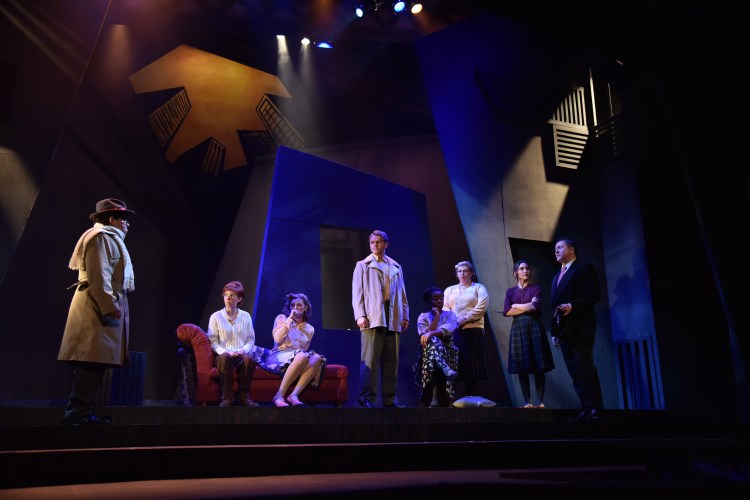
A list of popular genres is obtained from the audience (some companies use pre-written lists or just call from the top of their heads), along with an initial offer to launch the scene. The action typically begins in a “neutral” style for several beats in order to allow some time to establish the basic premise. A caller (perhaps the host or a member from another team) then begins to strategically announce various genres that the onstage improvisers should immediately accept and use to shift the context and flavor of the scene. The action continues through multiple genre calls until the scene reaches its conclusion.

Example

The players are given “maze” as inspiration.

Players A and B enter joyfully, holding hands as they walk in sharp geometric patterns on the stage.

Player A: (a little shyly) “…and I just didn’t think you’d want to come out with me.”

Player B: (joking) “I did have to think about it.” Player B touches A gently on the shoulder. “But not for too long.”

Player A: (gesturing) “My parents used to bring me here all the time, when I was a kid. I hope this isn’t lame.”

Player B: “No, I’m actually surprised at how much I’m enjoying being surrounded by corn!”

Player A: (slyly) “Maybe it’s the company…”

Caller: “Science fiction. Science Fiction.”

Player B: (stopping dead in their tracks and pointing ahead) “Is that normal? All the ears of corn flattened like that?”

Player A: (shuddering) “Oh no, it’s happening again.”

Player B: (leaning in closer to A for safety) “Again?!?!”

Player A: “I haven’t been completely honest with you about tonight…”

The Focus

Agility applying the various genres is certainly a core component of this game, but the scene really excels when the story arc retains some sense of logic and consistency in spite of the ever-changing calls. To this end, leaning heavily into the relationship (and any established archetypes) can certainly help, as can laying down as many specifics as possible in the early steps of the scene. Yes, the audience will delight in the wild mood swings of the scene and well-placed nods to emblematic stylistic elements, but if you also skillfully tell a story then the scene takes on a whole new level of impressiveness.

Traps and Tips

1.) Generous calling is key (and an important skill to nurture). There is definitely an art to skillfully calling the switches in a rollercoaster game. It generally adds heat to the scene if it appears to the audience that the caller is trying to throw off the improvisers with challenging choices, but in reality, the caller should be carefully observing the action for opportunities to enhance and heighten dynamic moments and shifts. Endeavor to provide strong contrast between each call: moving from Mystery to Suspense, for example, might not set the players up for a clear adjustment. It can also be helpful to keep a strong or surprising genre “in your pocket” so you have something strong for the scene to go out on. Some callers prefer to call “Freeze” before each new genre. This has the benefit of pausing the action to get everyone’s undivided attention, but it also has the deficit of pausing the action in its tracks… I prefer repeating each call twice as an alternative. The first time, the audience and players are primed for the information, and the repeat makes sure the content is heard. This enables the scene to still maintain momentum or for an improviser to get out those last few words if your call landed accidentally in an awkward moment.

2.) Music and tech add so much. I actually tend to avoid playing this sort of game if I’m not in an environment where lights, sound, and music are readily available to reinforce the story. Your venue may not be arranged in such a way that the caller can let others know what style is coming, but regardless of the stage configuration, everyone should be looking for the cue that a switch is about to happen. This game invites lush soundtracks, stark lighting shifts, and bold Foley effects, remembering, as always, that these contributors are improvisers too and should be encouraged to take big risks and play with abandon.

3.) Establish the given circumstances and hold onto them for dear life. It’s a given that the style layover will change multiple times throughout the scene, so this makes it even more important than usual to have a clear balance or baseline. Take the time to really create a strong relationship and environment, in particular, as these elements can (should?) remain the same throughout all the ensuing madness. The new genres will certainly invite discoveries and nuances, but it is helpful if everyone starts on the same well-defined page as any misunderstandings or unintended vagueness in these opening moments will only become magnified when the styles start flying. When I serve as a caller for this game, I’ll tend to wait to offer that first style until I’m confident that everyone knows and agrees upon the basic premise.

4.) Pay attention to sharing focus, especially when new styles are announced. The excitement of each new genre can tend to make improvisers step on each other a little in a scramble to justify what has happened in light of the added layover. Make sure everyone is getting an opportunity to have the first crack at applying the new mood. A good rule of thumb is to make sure you’re following the natural progression of the dialogue. For example, if Player A has just asked Player B a question prior to the caller’s announcement, it would generally make sense for Player B to speak first and answer the question. Entrances are also powerful moves heralding or following a new call but be wary of eclipsing everything that has been established. If you move the focus of the scene too far away from the initial relationship or deal, the scene can quickly hurtle off the tracks.

5.) Consider using some well-placed ambiguity. If you’re unfamiliar with this strategy, you can read more about it here, but I think it can be extremely useful not to go noun crazy in rollercoaster scenes. If, in the above example, the players point to the sky and explicitly say a U.F.O. is hovering overhead, when the genre changes to “Western” it can create a story rupture that is hard to address. Is there now a U.F.O. in the wild west (it’s possible), or do we have to undertake some verbal gymnastics to redefine this (it’s also possible)? Another alternative would be to clearly endow a U.F.O. hovering in the sky, hopefully with some great music and stage effects, but to use slightly more ambiguous language: “They’ve come again. I’ve seen this sign before.” This gives us a little more wiggle room now if the saucer becomes a posse or similar. I call this specific ambiguity, and there’s a fine line between just being vague and being deliberate but not overly explicit. I’m not advocating this as a universal approach for the game, but I think it allows a little more room for forward momentum if you don’t have to spend all your energy redefining every past choice.

In Performance

I will admit to having a little bit of a love/hate relationship with rollercoaster games as I find the innate rhythms of the central dynamic can make it challenging to find nuance and subtlety in your story telling and characterization. If new calls come too quickly, the scene can tend to never advance beyond a quick series of punchlines before we spin off in a new direction again with a different called genre. Playing these games, however, with an eye to carefully defined archetypes, can unlock a new potential for grounded storytelling, play, and finesse.

The Improv Dictionary drops in three days! Find out how to get your copy here.

Cheers, David Charles.
www.improvdr.com
Join my Facebook group here.
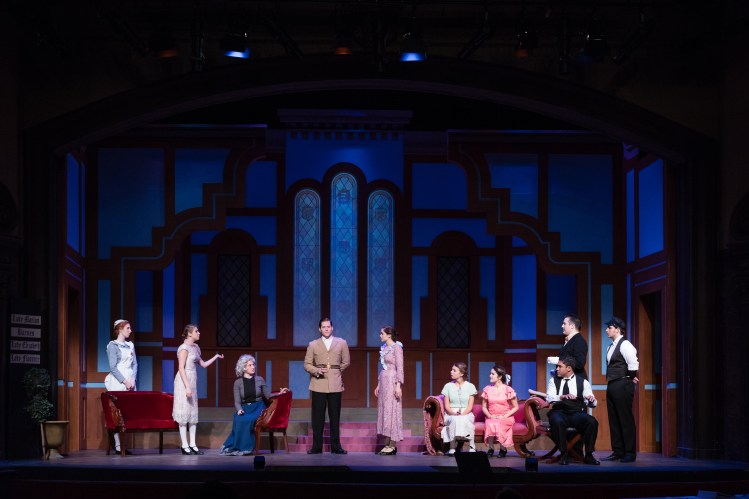
Photo Credit: Tony Firriolo
© 2020 David Charles/ImprovDr

Connected Concept: Archetype

“A” is for “Archetype”

There’s a fine line between inspiring Archetypes and reductive Stereotypes, but it’s a line worth recognizing and exploring with deliberateness and care.

Possible Strategies for Empowering Archetypes

This is just a taste of this entry/concept. Go here for more information.

Related Entries: Groupmind, Inclusiveness Antonyms: Stereotype, Wearing Your Character Lightly Synonyms: Emotional Truth, Empathy

Cheers, David Charles.
www.improvdr.com
Join my Facebook group here.
© 2020 David Charles/ImprovDr

Connected Game: Genre Rollercoaster

Game Library: “Eye Contact”

A signature habit of improvisers who are keen to seek Approval from others while performing is dropping out of the action to “check in” with their instructor, director, or peers in the house. This game provides a playful mechanism for challenging this habit, and it goes by the name Eye Contact. I deploy a series of games that riff off this theme, and here’s the first iteration.

The Basics

This dynamic generally works best in pairs. Players obtain a suggestion for a relationship or scenario. During the course of the scene, the characters must sustain unbroken eye contact at all times. And that’s the game!

Example

The suggestion of “first date” is obtained.

Player A sits expectantly at the table, eyeing the door to the restaurant relentlessly. As the door swings open and Player B enters, they immediately lock eyes. Player A calls over.

Player A: “I’m over here by the window.”

Player B shuffles through the other tables, all the while keeping a firm gaze on A.

Player B: “I recognized you immediately – you look just like your profile picture.”

In an awkward act of attempted chivalry, A stands and tries to pull out B’s chair, but instead they engage in a graceless dance, all the while maintaining eye contact.

Player A: “Here, I thought you’d like the seat with the better view…”

The Focus

The focus is very much on focus in this game! It is, frankly, unnatural to sustain such rigorous eye contact for a protracted period of time, but the game seeks to explore how this might deepen or enrich the character connection while having the added advantage of making it more difficult for players to “check out” of the scene as it unfolds. When you first play the game, improvisers might need some gentle reminding through sidecoaching to prioritize this goal.

Traps and Tips

1.) Attempt to make the eye contact as natural as possible. It can be tempting to exaggerate or over-commit to the sustained eye contact, and while this can certainly add some awkward comedy into the mix, it tends to degrade any potential for nuance or more honest connection. The game isn’t a staring contest so much as an exploration of an intense relationship. It’s okay to blink or quickly glance at a prop as long as you catch yourself and resolutely return to the challenge at hand.

2.) Justify but don’t explain away the eye contact choice. As is the case with all games, if you “name” them, they tend to lose veracity. Sure, one of our characters in the example above could offer, “You’re so mesmerizing, I just can’t take my eyes off of you!” but this will likely puncture the dynamic. Feeling this way, on the other hand, and playing it subtly as subtext, is likely to add more interest and energy to the scene. Maintaining this level of eye contact is undeniably odd, but if it’s just accepted, it can unlock some really interesting choices and playfulness.

3.) Don’t ignore your environment and any related activities. Part of the fun (dare I say absurdity) of the game is striving to make the rest of the scene as typical as any other in terms of staging and physicality. Avoid the trap of just sitting and watching each other. Still move around your playing space, interact with props, and engage in any pertinent activities. Watching our two daters navigate menus, glasses, and consuming their meals, for example, adds wonderful new layers and opportunities.

4.) Honor any discovered rules if additional characters enter. If you’re exploring this game in a rehearsal or workshop situation, I’d encourage you to keep the focus on the two primary players, but this dynamic has great potential in performance as well. If a third entrance is needed, perhaps a waiter (or an ex if we want to add a little heat), discover and sharpen how this influences the foundational rule. Perhaps both Players A and B completely ignore this new arrival, maintaining their connection at all costs. Or they could both break their eye contact as if they have been caught in an indecent act, only to return to their intense gaze once the intruder leaves. Or the game may now incorporate the new arrival, shifting how the eye contact is held or inviting one of the established players to leave so that a new intense connection can be explored. There are numerous possibilities, but it’s usually more effective to follow and build upon the first solution that hits the stage. Perhaps the least effective approach, from prior observations, is all three players trying to hold eye contact with both of their scene partners at the same time as this tends to decay any semblance of reality although it might serve as a fittingly ludicrous finale and button.

In Performance

In addition to serving as an interesting exercise or scenic frame, embracing such a strong eye contact choice can be an unexpected and dynamic doorway into a scene in general. If you struggle with checking out of the scene or checking in with your director, this is also a simple technique to encourage maintaining your focus behind the “fourth wall.” Heightening the game can result in surprisingly pleasing scenes with an oddly comedic twist, while pursuing subtlety and connection with this device can truly enrich your onstage relationships and chemistry. Everyone in your ensemble will also become painfully aware and self-conscious of how they make and sustain eye contact in their everyday life after playing this scene a few times!

Cheers, David Charles.
www.improvdr.com
Join my Facebook group here.
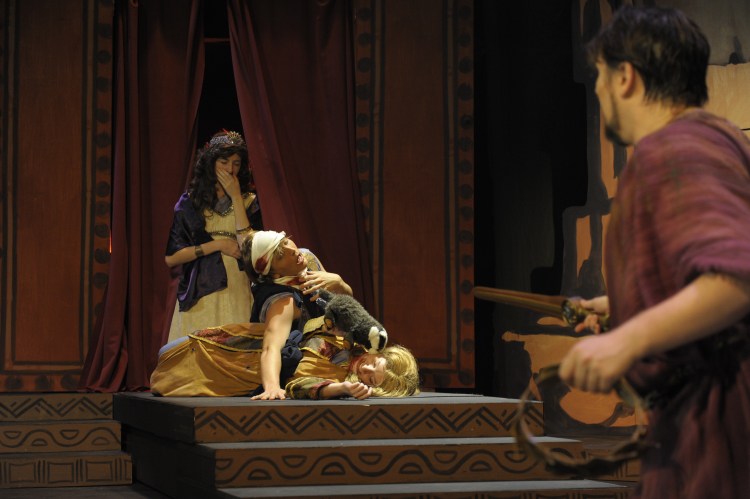
Photo Credit: Tony Firriolo
© 2020 David Charles/ImprovDr

Connected Concept: Approval

“A” is for “Approval”

Be wary of seeking unhealthy and unhelpful forms of Approval as you develop your craft.

Goals in Pursuit of Gaining Your Own Approval

This is just a taste of this entry/concept. Go here for more information.

Related Entries: Abandon Synonyms: Checking In, Judging

Cheers, David Charles.
www.improvdr.com
Join my Facebook group here.
© 2020 David Charles/ImprovDr

Connected Game: Eye Contact

Game Library: “Conscience”

Exploring the concept of Ambiguity can certainly provide challenges, but this particular game quickly jumped to mind. There are several performance games that riff on this general theme of voicing character thoughts, but this version of the short-form game Conscience allows for some dynamic interplay in terms of enriching our dialogue.

The Basics

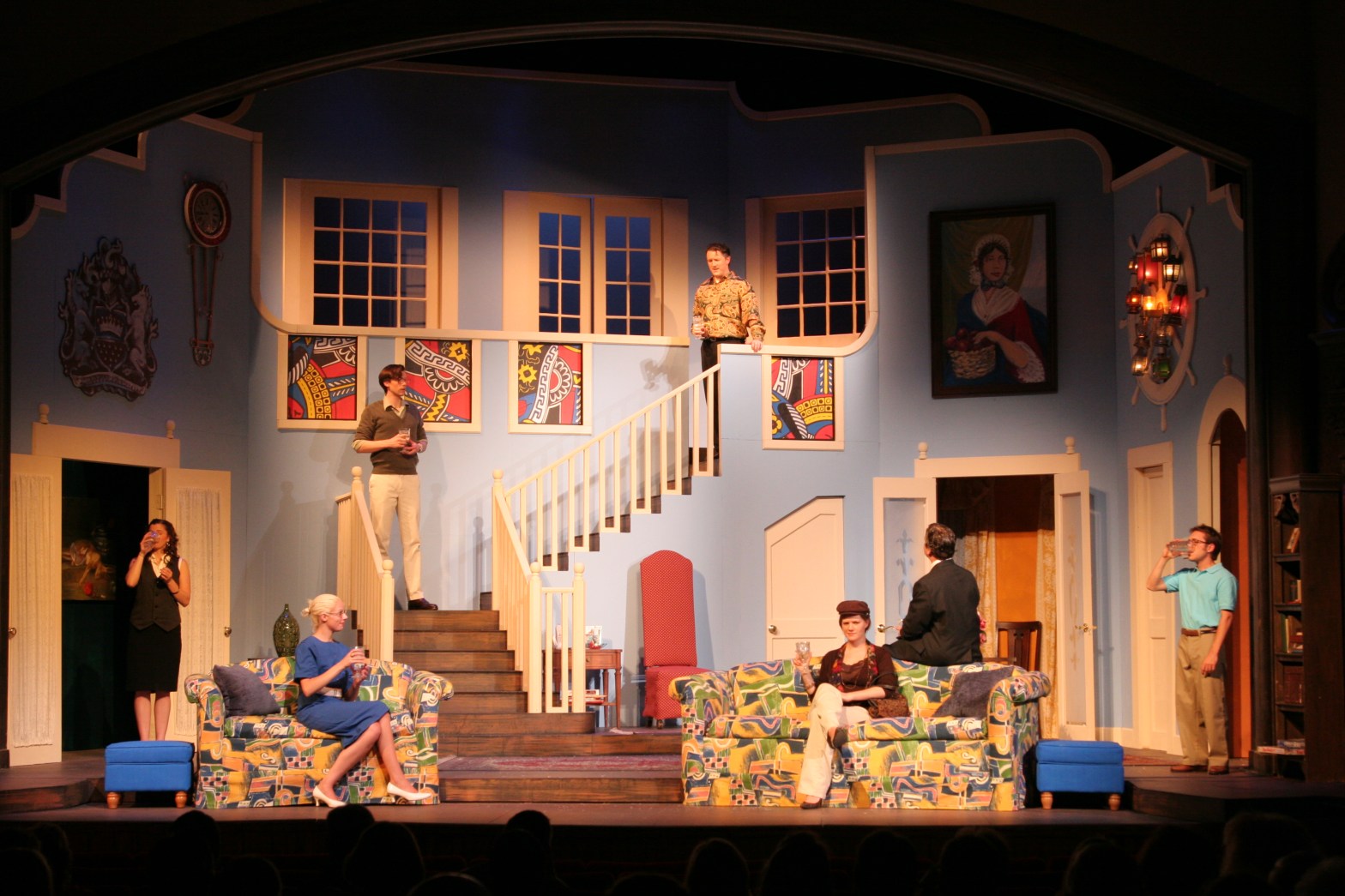
This game works most efficiently in teams of four with players working in pairs. Two players (A and B) perform as the characters in the scene, while C and D serve as their respective consciences. An ask-for is elicited (a relationship works well). Throughout the scene, each line of dialogue (often a little dry or ambiguous) is followed by the offstage partner speaking the deeper conscience’s truth or subtext. This pattern continues until the scene reaches a natural conclusion.

Example

The ask-for of “separated lovers” is provided.

Player B is already sitting in the waiting room as Player A enters, taking a moment to assess the situation before timidly stepping forward.

Player A: “Sorry I’m late.”

Player C: (as A’s Conscience) “I don’t know if I’m going to be able to keep it together.”

Player B gently turns, moving over ever-so-slightly to make room on the waiting room couch.

Player B: “I was early.”

Player D: (as B’s Conscience) “Did you have to wear my favorite sweater?”

Player A: (gesturing toward the couch) “Do you mind?”

Player C: (as A’s Conscience) “I miss sitting close to you…”

The Focus

As is the case with most improv games, there are many different ways to maximize the potential of this dynamic. In terms of exploring ambiguity, I think it’s helpful for partners to work closely together: characters and consciences should earnestly endeavor to honor each others’ nuances and intent. (In performance, there certainly can be a value in being a little playfully unpredictable and mischievous.) Deliberately sparse dialogue can add to the challenge and dynamism of the game, while also leaving more room for the conscience voices to play and translate the action as they perceive it.

Traps and Tips

1.) The rhythm of the scene can take a moment to establish. As each line of dialogue is necessarily followed by a matching statement from the conscience player, it’s important that this pattern is closely adhered to, especially during the opening stages of the scene so as to model the dynamic. It’s helpful for the first few beats to include a little more air between them than might typically be preferred. Characters need to be careful not to quickly provide dialogue after each other or to get in a loop with their conscience in a way that shuts the other player out. Similarly, those voicing the consciences should strive to leap into the fray quickly after their corresponding character speaks as too much dead air will likely stall the progression of the scene. If you know the short-form game They Said, They Said (also known as Stage Directions), the mechanics are very similar.

2.) Listening makes or breaks the scene. Active listening is needed all around. Consciences should look closely for any hidden intentions (consciously or unconsciously provided) and endeavor to weave these into their subtextual statements. Characters need to fully embrace anything that their assigned conscience offers while retaining subtlety and nuance. It’s also critical that while improvisers need to hear everything that is said onstage – namely all dialogue and conscience thoughts – characters should only hear what is spoken at the textual level. It is a trap of the game to over-eagerly exploit what has occurred at the conscience level rather than allowing tensions and games to gradually build while remaining under the surface as long as it is helpful.

3.) Consider staging. If you’re in a proscenium configuration or similar, I find it helpful to bring the two players serving as consciences downstage with each initially positioned diagonally across from their partner. This maximizes the likelihood that details provided by the characters can be clearly seen and interpreted by their teammates. When the consciences speak, it’s important to angle in such a way that both the performers and audience can discern your choices clearly. Obviously the characters are likely (hopefully) to move all around the stage, but they should maintain an awareness of where their assigned conscience is perched so as to keep the lines of communication as unobstructed as possible.

4.) Explore a range of conscience angles and energies. It may just be my experience, but it often seems more accessible to make the attitude of the conscience snarky or sarcastic. This is certainly a viable option, but make sure that such tones don’t become a default, or the game will start to produce scenes of a very similar and aggressive hue. Opposites can be a lovely choice, both in terms of finding contrast between the character and their inner thoughts, but also in terms of each conscience in relation to its counterpart. In the above example, I was riffing on a potential divorce meeting. Placing some love in the subtext can make us care more about the characters and scene rather than just descending to arguments or name-calling. In general, I think this game is a great way to bring more love and connection to our characters and scene work overall.

5.) Don’t feel the need to explode the dynamic. There are so many ways these scenes can unfold in terms of the central text/subtext dynamic. It is possible (and highly effective) for the subtext never to be revealed or raised to the level of text for the entire scene. Our separated couple might have deep-seated feelings for each other, but neither feels able to share these aloud, and so the divorce proceedings just limp forward without interruption. Or the conscience voices can prod their character counterparts into action or change, or get them into trouble. Player A might confess their lingering feelings only to be rejected once more. Or one or both conscience voices might have a change of mind or perspective, remembering once more the thousand little things that pushed the couple apart. Or so many other possibilities. In learning the dynamics and rhythms of the game, be careful of limiting the scope or constraining the potential for discovery as this double-barreled way of storytelling can really open up great new levels and energies.

In Performance

This format is wonderfully versatile and can house a wide range of styles and stories: from raucous comedies of misunderstanding to more gentle dissections of a relationship that are reminiscent of psychodrama or Playback Theatre. There are different gifts when performing as the characters than there are in the conscience positions, so shuffle players into both roles if and when you can. Regardless of which hat you might end up wearing, both positions certainly enable a complex and rewarding exploration of ambiguity, text, and subtext.

Cheers, David Charles.
www.improvdr.com
Join my Facebook group here.
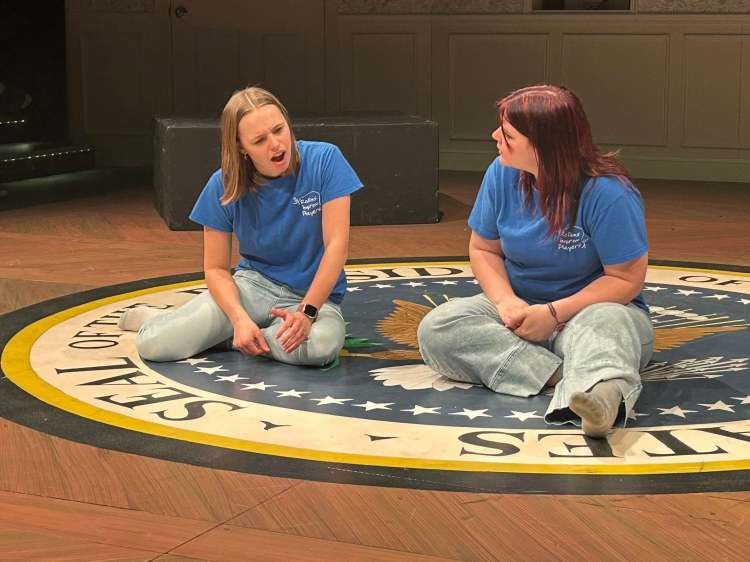
Photo Credit: Tony Firriollo
© 2020 David Charles/ImprovDr

Connected Concept: Ambiguity

“A” is for “Ambiguity”

Developing a taste for strategic Ambiguity can unlock whole new potentials for play and surprise in your work.

Striking the Balance Between Richly Ambiguous and Problematically Vague

This is just a taste of this entry/concept. Go here for more information.

Related Entries: Curve Ball, Specificity Antonyms: Vagueness, Wimping

Cheers, David Charles.
www.improvdr.com
Join my Facebook group here.
© 2020 David Charles/ImprovDr

Connected Game: Conscience

Game Library: “Because”

This addition to the Game Library pairs with the story concept of Advancing. Because embodies the concepts of making small steps and always looking backward as we endeavor to move our scenes and stories forward.

The Basics

Players form a circle and one participant volunteers to provide the launching statement for the narrative, such as “Jamaica opened the refrigerator door.” The next player (typically moving in a clockwise direction) makes the next small step by first repeating the prior statement: “Because Jamaica opened the refrigerator door…,” and then adds their own story piece, “her nose was hit by a terrible smell.” The next player continues the same process, repeating the prior action before adding their own. The story moves around the circle until the narrative finds an organic conclusion.

Example

Player A: “Jamaica opened the refrigerator door.”

Player B: “Because Jamaica opened the refrigerator door, her nose was hit by a terrible smell.”

Player C: “Because her nose was hit by a terrible smell, Jamaica took a step backward and retched.”

Player D: “Because Jamaica retched, she covered her face with her hand.”

Player E: “Because she covered her face with her hand, she didn’t see the rotten cantaloupe teetering precariously on the fridge shelf…”

The Focus

As noted in the introduction, this is a great narrative exercise to practice the skill of making small connected steps that fully utilize the ideas that have come before. Players should be wary of trying to push the story in their own preconceived direction, but rather embrace the flow that organically emerges as each sequential player adds a small new detail or nuance.

Traps and Tips

1.) Make sure sentences start with “Because.” This is a small but critical detail. As the story starts to take off, players can accidentally omit this word or place it in the middle of their offer which can have the undesired effect of moving the story backwards (rather than using previous choices to move the story forward). It’s worth pausing the story and correcting the phrasing when and if this occurs. Obviously, this rule doesn’t apply to the first narrator.

2.) Third-person stories tend to work best. The story can stumble if it’s told through the perspective of an “I” as the identifiers of the protagonist will now change as the action moves from speaker to speaker. It’s easier to assume a third-person voice and to provide a definitive name for your primary character. I think it’s also helpful to get into the practice of keeping this name alive as the story develops (as well as the names of any other characters that may appear) so that later contributors don’t needlessly struggle to identify the various people involved.

3.) Discourage large leaps in the narrative. It’s surprisingly easy and tempting to push the story multiple beats ahead with one offer, especially if you have a sense of where you want the narrative to end up. For example, Jamaica could go running out of her front door and drive to her sister’s house as one suggestion, but this large move leaps over the possibly dozens of smaller beats that would happen along the way, many of which could unlock new paths and potentials. If such a leap is offered, invite the narrator to isolate and offer the first smaller constituent action: “Jamaica took a step towards her front door to escape the smell…” This can feel a little pedantic initially, but I think the exercise benefits from erring on the side of embracing the minutiae. The exception to this rule would be players stalling the action through passive “thinking” and “deciding” choices which can almost always be rephrased more actively: we don’t need to offer that “Jamaica decided to take a step towards her front door,” for example.

4.) Encourage strong connections to prior choices. Sure, Jamaica could grab a mop right after opening the refrigerator door, but this choice doesn’t fully unpack the initial suggestion of the refrigerator. As the narrative grows, opportunities to re-incorporate previously mentioned or shelved ideas will appear as well, which is another good example of moving forward by using what has come before. In this sense, naming the source of the smell as the rotten cantaloupe is a way of referencing an earlier choice and keeping that reality at the forefront of the story.

5.) Balance momentum with side-coaching. I can struggle with this a little as nearly every contribution could warrant some discussion, feedback, or perhaps a tweak. If your group is playing this for the first time, frequent nudging is a little unavoidable initially as you explore the intent and gift of the exercise, but strive to let the action find some build and energy, allowing some time for thoughts at the completion of the exercise. Similarly, my preference is to play the game standing to try and keep the group’s energy up, although this can be challenging in larger ensembles when players are waiting considerably longer between their contributions. I’m also intrigued by the thought of performing the story with “Jamaica” in the above example now acting out each step in the middle of the circle. (This would be similar to the conceit of What Happens Next? if you’re familiar with that game.)

In Performance

The lessons of this exercise easily apply to our scenic work as improvisers: games that involve story-telling and narrative devices, in particular, would make for a logical next exploratory step. When played patiently and attentively, Because also reminds us how joyful it can be to construct a simple and tight story collaboratively, making sure every idea is suitably received and celebrated.

Cheers, David Charles.
www.improvdr.com
Join my Facebook group here.
Photo Credit: Tony Firriolo
© 2020 David Charles/ImprovDr

Connected Concept: Advancing

“A” is for “Advancing”

A core narrative concept that refers to the forward momentum (or active) elements of the story.

Some Thoughts on Advancing your Advancing

This is just a taste of this entry/concept. Go here for more information.

Related Entries: Chapter Two, Extending, Looking Backwards, Obvious Antonyms: Balance, Inaction, Stasis

Cheers, David Charles.
www.improvdr.com
Join my Facebook group here.
© 2020 David Charles/ImprovDr

Connected Game: Because

Game Library: “Beneath the Line”

When we’re improvising, it’s critical that we are attuned to all the aspects of our scene partners’ choices. We often refer to this heightened sense of attentiveness as Active Listening, and this exercise is a great way to sharpen this skill while encouraging players to make rich and detailed offers. Beneath the Line truly requires players to scrutinize the hidden meanings contained in the first moments of a scene.

The Basics

Players work in pairs. This can be done with all pairs working simultaneously, but I prefer to do it one pair at a time in front of the group if time and logistics allow as there is a lot to be gained from observing. A line of dialogue is obtained or assigned. Player A sits in a chair and is the receiver of the exercise. Player B enters the space and, generally in silent action, establishes a dynamic and detailed context for the scene and relationship. As this culminates, Player B says the pre-determined line of dialogue.

Example

The line “I love you” is provided.

Player A sits “neutrally” in a chair.

Player B enters holding pantomimed keys in their hand. They slowly make their way around the “car,” with a heaviness in their gait and avoiding eye contact. Eventually, they arrive at B’s side of the “car,” and they open the door. With a gentle sigh and almost unconscious head shake, they utter, “I love you…”

The Focus

It is incumbent upon Player B to enter the space with a reasonably fleshed out sense of the given circumstances, while Player A should be studiously looking for clues and offers. The scene can draw to a close after the one line has been delivered, and then Player A (and possibly the rest of the group that is observing) can articulate what they experienced and assumed. Player B may then have an opportunity to add any missed or “misinterpreted” details. This exercise also allows that rare improvisational do-over if Player A’s perception of events is wildly different than intended. As players become more confident and adept, scenes could launch from this first moment and then continue onward.

Variation

Generally, the one inspirational line is provided, and this same dialogue may be used for multiple scenes in a row. In terms of the context, players may either self-select their own given circumstances before entering (as described above), or a detailed CROW could be provided privately from a list. Both approaches have pluses and minuses. While the first method allows greater freedom of choice for Player B, this freedom can feel too infinite at times, and players can be tempted to smudge their intent towards what was successfully communicated or only make vague assumptions prior to entering. The second method provides a more consistent target but certainly involves considerable preparation. When I use this second variation, I like to use random slips of paper so that players get to try scenarios regardless of any preconceived notions of “type.”

Traps and Tips

1.) Be patient in the chair. While Player A typically begins the scene in a somewhat neutral state, they should still strive to be a receptive and helpful scene partner. They can be invited to move or participate in the activity of the scene while layering in emotional details and specific staging as they start to piece together the puzzle. However, they should also be patient and allow their partner sufficient room to establish some ideas before making large assumptions. For some, this might feel like a new way of beginning a scene, with one player more definitively taking the lead, so it might take some practice to feel the corresponding scenic rhythms.

2.) Emphasize the experience rather than being correct. A common adage of improv is that there are no mistakes, but this exercise does have an element of trying to solve a riddle with a particular answer. It is more than likely that players will misinterpret offers from their partner; in fact, this is part of the lesson and the fun of the game. As mis-readings occur, emphasize the factors at play that could invite deeper listening and clearer initiations. Why was the relationship misconstrued? Did Player B make some unintended choices that influenced Player A’s perception? Were offers made in view of the audience but not in Player A’s line of sight? In retrospect, were there any missed opportunities for clearer communication?

3.) Make the silence count. The provided line, in the above example “I love you,” could occur anywhere in the scene, but it tends to work well as the button to the initial offers. It’s helpful to use the conceit that while the players could choose to talk at any given moment, there is an emotional tension or rich backstory that at least initially prevents the characters from doing so. Extending the opening silence can be a true gift of this exercise, promoting greater patience and specificity in the initial moments of our scene work, so don’t needlessly rush through this silent action. Other utterances are fine, such as sighs, groans, exhalations, and the like, but avoid putting any additional dialogue prior to the provided one line. A key goal of the game is to really make that one line count as much as possible.

4.) The more specific the intent, the better. In the above example, I was picturing an over-worked single parent who had just picked up their teenager from the police station again after being called away from an important business meeting at their law firm. Especially in written form, it’s unlikely that all of that was communicated in my description of the stage action, but this level of specificity gives the performer so much more to play with than just a parent picking up their child after school. Enjoy the opportunity to front load a dynamic premise while also accepting that the likelihood of communicating every small element successfully in the silence might be unlikely.

5.) Don’t feel the need to describe all your prior choices if you continue the scene. If you move the exercise into fuller scenes, it can be tempting to describe all the subtle gifts rather than just accepting them and allowing them to play out at their own pace. Yes, it can certainly be helpful to define key elements, to let your partner know that you also see them as the parental figure, or that you are outside your family home, but let these details emerge organically rather than in a monologue. If you are in the Player A position, you shouldn’t be afraid of making assumptions (ultimately what you perceived is your reality after all), but if a major element feels opaque, it can be in the spirit of this exercise to allow your partner a little extra space to send you some more information. If you are in the Player B position and a choice is made that doesn’t gel with your intent, make sure you fully embrace this new direction. The discussion after the scene will give you a chance to explore any missed opportunities for stronger communication.

In Performance

Beneath the line can really encourage a slower and more detailed style of play that embodies generosity, patience, and attentiveness. There is no reason this approach to starting a scene couldn’t be added to your general improviser utility belt if it’s not there already as it can provide dynamic and rich openings. I also like that it makes that first line really count as the players have worked their way up to it with great deliberateness.

Cheers, David Charles.
www.improvdr.com
Join my Facebook group here.
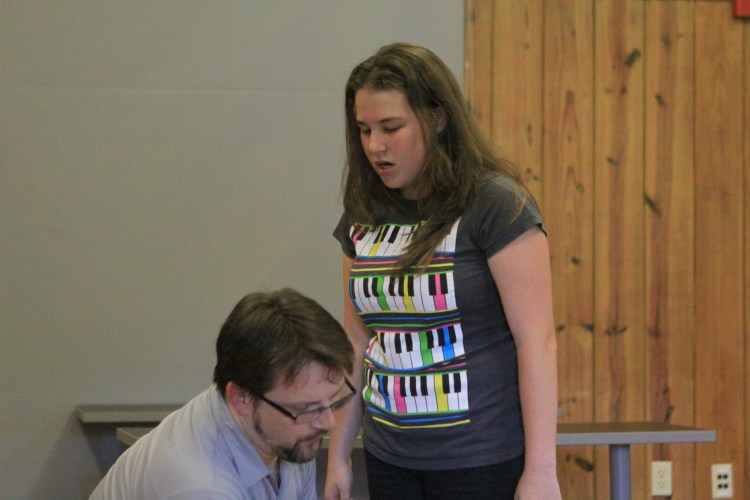
Photo Credit: Charlotte Brown
© 2020 David Charles/ImprovDr

Connected Concept: Active Listening