This dynamic served as the second installment of the ImprovDr “Game Library” where I initially matched up exercises with a concept of the week. Accepting is such a critical and pervasive underlying improv concept that I actually had a hard time narrowing down my choice for this entry. I decided to offer up a game that almost consists of nothing but accepting at its most immediate and unbridled. It’s time to explore That’s Right Experts.
The Basics
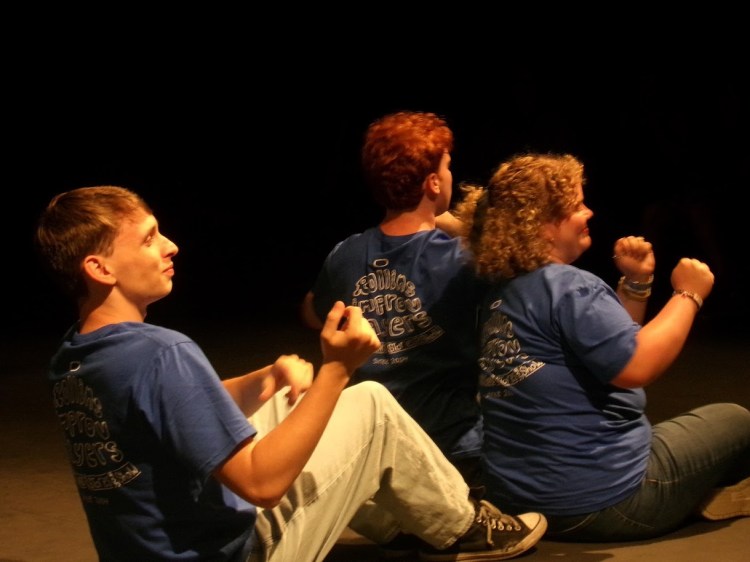
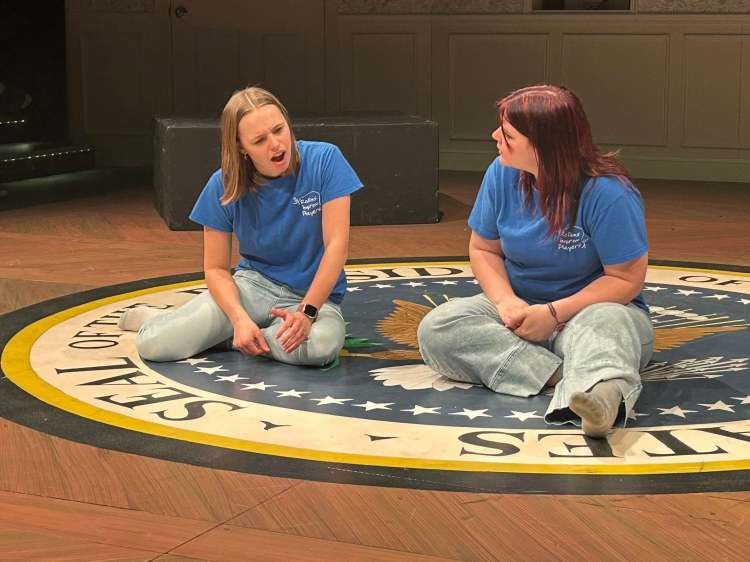
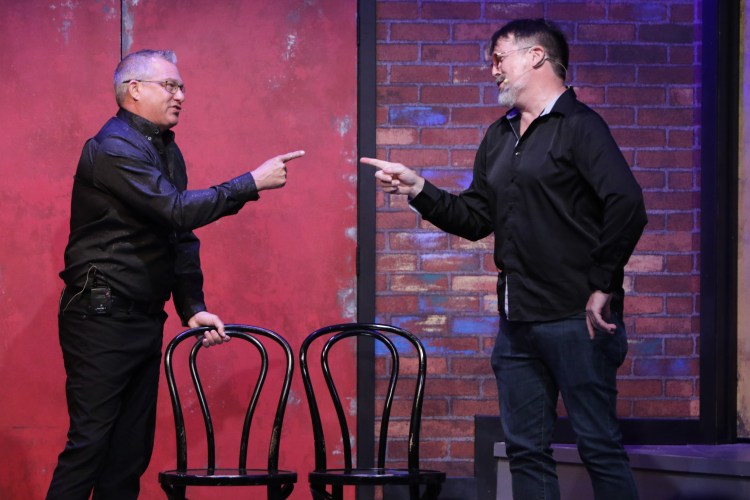
Two or more players, often (but not necessarily) seated, obtain a simple factual statement from the audience before the scene begins. As the expert scene starts, one player offers up this factoid, and then in quick succession, each “expert” accepts and extends upon the prior choice of their teammates. Players continue to “Yes, and” each other as they discuss and extrapolate on the fact at hand, generally pursuing a curve of absurdity until their expertise arrives at an unexpected, but wholly justified, conclusion.
Example
The “experts” obtain the suggestion that modern opera began in Ancient Greece.
Player A: “Well, we all know what we’re here to discuss today, because frankly it’s been all over the news: you guessed it, folks are talking about how modern opera got its start in Ancient Greece.”
Player B: “That’s right, Melanie! It was over 2500 years ago that the Greeks gathered in their huge outdoor theatres to hear the stories of the day.”
Player A: “You’re so right. These amphitheaters were so large that the actors really had to project in order to be heard all the way in the back.”
Player B: “That’s right, cause even the poor Grecians in the cheap seats needed to be able to hear all that poetry, or they’d get restless and threaten to riot.”
Player A: “You couldn’t be more right because these Grecian operas were actually designed to lull the masses into peaceful oblivion.”
Player B: “You’re right there, and that’s why the Grecians were known for bringing pillows and their night clothes to the performances…”
The Focus
There is not a lot of room to evade in this scene as an improviser, and even as I just improvised the snippet above, I had to remind myself to fully accept the prior offer before adding a new element or tangent. A gentle curve of absurdity is key. You don’t want to leap from opera in Ancient Greece to smashing guitars in rock and roll solos in a few steps, although this might be a lovely place to end up by the end of the game. The fun is the journey. Avoid trying to force a particular outcome rather than allowing it to unfold for the players and audience simultaneously.
Traps and Tips
1.) Use and enjoy the titular refrain. While it certainly doesn’t need to be verbatim (as I’ve modeled above), there is a simple delight in echoing some version of “That’s Right” during the build of the expert scene. On a simple level, it can buy you a few seconds to process what your partner has just said, while more generally this refrain adds a playful energy to the rising action if the agreement and accepting heighten and become more and more passionate with each exchange. Don’t under-estimate the true joy of just watching fellow improvisers revel in the process with each other.
2.) Small steps are key. I know of few performance games that so inherently demand small and related steps. If you start to race to a perceived ending or desired conclusion, you’ve almost lost the battle before it has begun. The game really requires you to stay firmly in the moment, connected to your partners, while you look for some simple potential in their prior offer. I’ve explored Reiterate/Repeat in another entry, and this approach can certainly be helpful as well to make sure that you have fully embraced the previous choice by paraphrasing some element of it before adding your own obviously unique twist or addition.
3.) Use what you know and sell what you don’t know. Especially in the first expert exchanges, it can be helpful to lay down some basic “facts” that are as close to the truth as your personal knowledge base can afford! In many ways, this provides the balance or routine before the unexpected connections and departures ensue. Remember that even if you’re way off in an early assertion, the audience loves it when we’re brave and take the risk to say something specific. This is also a key element of selling the expert frame of the format. If you equivocate too much with stalling vagueness, you’re also not providing your partner with details that they can recycle and re-frame.
4.) Pairs or trios work well.While you could certainly have a larger panel of experts, or perhaps deploy an additional teammate to facilitate as a host, there is something about the rhythm and danger of just having two or three experts alternating lines back and forth that is bracing and exciting. Obviously, adjust the game to suit your needs, but if you’re looking to increase the panel it might be wise to at least establish a default speaking order so that the ball doesn’t get dropped after each offer. This is part of the particularly risky dynamism of just having two experts: there is no doubt where the focus is at any given moment.
5.) Remain physically engaged. I’ve mainly experienced this game with the experts seated beside each other, but I don’t think that it has to occur in this particular staging, although keeping the focus contained certainly assists the players in maintaining their connection and pace. While the dialogue is key, look for opportunities to engage strong points of view, character mannerisms, and relationship foibles. Similarly, even if the scene starts in chairs, there’s no reason that the crescendo of “That’s right” needs to keep you in those chairs as the scene draws to a close. And throwing in a little activity probably isn’t a bad idea either!
In Performance
I’ll confess that this game, for all the right reasons, still scares me a little, and while it’s been in my improv repertory for decades, it’s definitely not a format I see or play with great frequency. This brings me back to my earlier comment that this is really an elegant exercise with few bells or whistles to hide behind. If you’re not accepting fully and with abandon, and listening deeply to your partners, it can be hard for the narrative to unfold with ease. Give it a try and let me know how it goes!
A small addendum after a recent workshop: I think this works really well in threes (and standing), especially using the default order advice above (while allowing and encouraging inspired players to break that pattern when it suits). A third player gives everyone a little breathing room and can also add energy to the chorus of “that’s right” as the scene builds.
As I noted in my previous entry here discussing the opera-improv-script hybrid that is (Your) Opera in a Trunk, this format was primarily designed with the assumption that the company might have rather sparse improv experience as they began the rehearsal process. For this reason, early rehearsals covered the greatest hits of improv, introducing core concepts such as accepting, wimping, and endowments. By design, the show was a small cast of characters embodied by the soprano, tenor, mezzo, and bass respectively, with the high voices typically assuming the more heroic or virtuous roles and the lower voices taking on the function of confidant(e)s and villains, very much in keeping with classical archetypal tropes inherent in much of the genre. Subsequently, the improv portions of the show were very relationship based, and the casting of dynamic characters was key to the arc and success of the performance. Each time a new character emerged, the audience was given the opportunity to vote from three cast-provided options, and so it was important to strengthen the skill of providing suitable archetype and relationship possibilities.
A game called Justify Circle was helpful in this regard, offering an embodied exercise to explore how characters might connect in ways that complicate, enrich, and add playfulness to the unfolding world of the opera.
Here’s a peek inside at how the exercise works:
The Basics
Players form a circle. One player volunteers to step into the middle of the group and assumes a dynamic (but frozen) pose suggestive of a character, activity, or energy. Once this image has been formed, any other player from the circle can enter and, using their own body, assume a related pose that “makes sense” of the first image, providing context, relationship, or added detail. Once this companion pose has been established, the first player says, “Thank you” and returns to the edge of the circle. The group is now left with a new incomplete image that inspires another player to enter and physically justify the remaining pose in a different way.
The Details
As the title of the exercise suggests, this game explores the concept of justification: providing a context, frame, or rationale for an incomplete or nascent choice. It’s important to stress that this justification need only make sense to the entering player, although they should strive to communicate the intent or inspiration behind their choice as clearly as possible. There is a joy in the abandon and freedom the exercise can unlock.
Within the context of (Your) Opera I typically also stress the difference between parallel choices (those that essentially mirror the idea of your scene partner) and complementary choices (those that offer a cause-and-effect dynamic, or a more complex relationship or power dynamic). In this game, parallel choices tend to collapse in on themselves after a while as they limit the emergence of new ideas, while complementary choices tend to open up new, perhaps unexpected, directions and possibilities. With only four characters to cast in this particular format, it was particularly critical to train an eye for the latter. I write about this at greater length in my consideration of the seventh commandment of Theatresports which you can find here.
Example
The first player enters the circle and assumes a pose crouching on the ground with their hands covering their head.
A second player enters, and mimes lovingly placing a shawl or covering over the first player who they have viewed as a child in need of comfort. The image sits for a moment, and then the first player says, “Thank you” and returns to the edge of the group.
A third player enters and assumes the stance of a charging bull with a ferocious look in their eye. The caring gesture is now re-framed as a cowering bullfighter who is about to be attacked. After a moment, the second player says, “Thank you” and moves aside…
Traps and Tips
1.) Encourage momentum. This exercise promotes bravery and trusting your first instinct, so encourage players to leap before they look. If using random entrances doesn’t accommodate full participation (especially if you have a larger group) you can move around the circle in order or split the group up and play it in smaller circles or even pairs. The two-person variant of this exercise is extremely bracing and dynamic as there’s nowhere to hide as you immediately have to return to craft a new tableau once you have left! Once a group is familiar with the conceit, playing in pairs is a great way to raise the stakes.
2.) Note parallel chains if they emerge. I’ll often use this game to introduce the concepts of parallel and complementary action, and I think it’s helpful to at least acknowledge if the ensemble is falling into a pattern of mirroring the prior choice rather than justifying it with a new frame or energy. There are exceptions to all improv rules, but I’ll often use the phrase “what does this character need in their world” to try to unlock potentials. There are certainly times when this “need” might in fact be a parallel – a boxer generally needs another boxer – but in most instances there are also interesting complements lurking as well – a boxer can also need a manager, a referee, an announcer, a coach, a worried parent, a fan, a doctor…
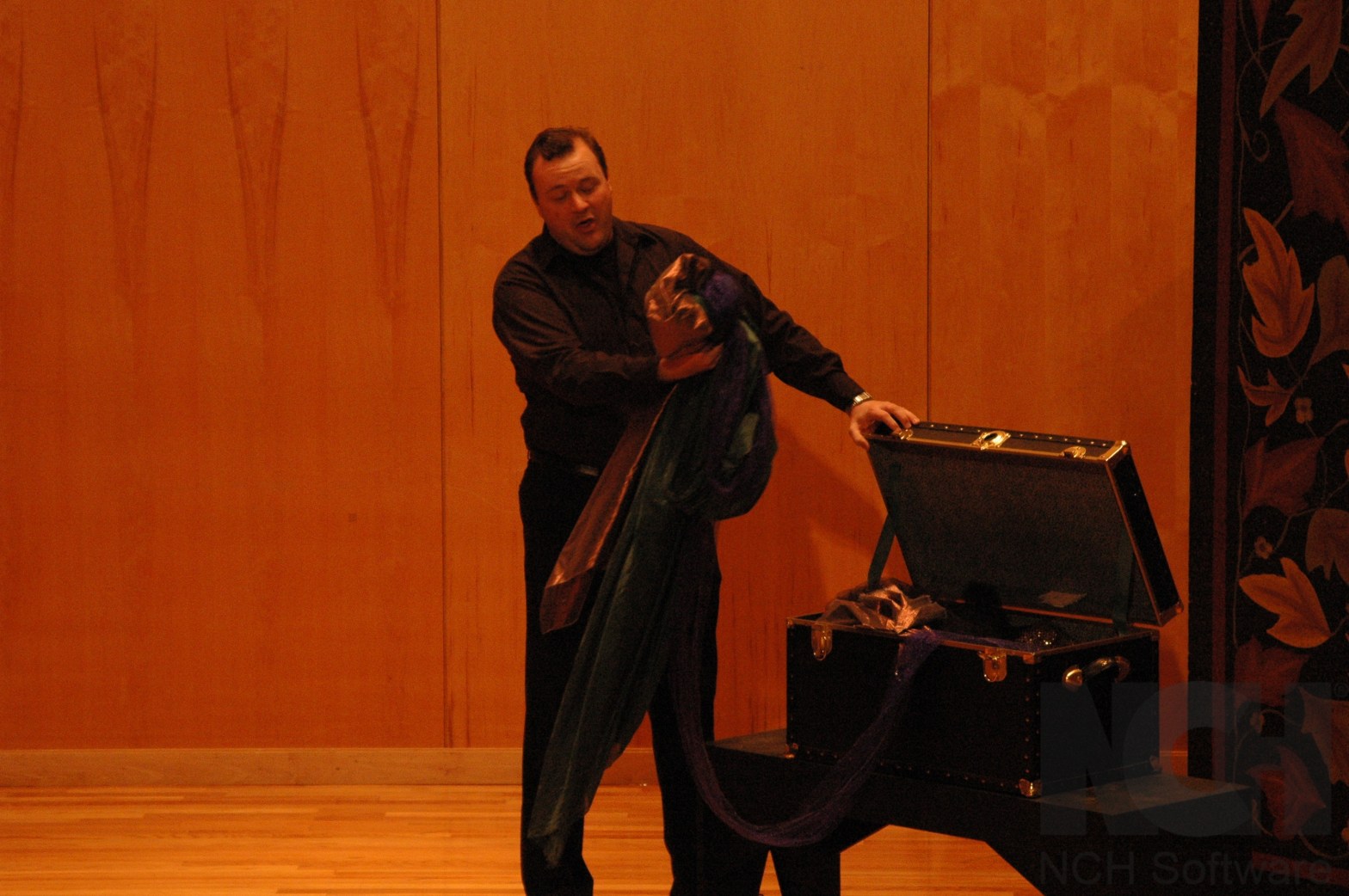
Members of the (Your) Opera in a Trunk company provide costumes and character possibilities for the awaiting Bass.
3.) Embrace the “Thank you.“I’ll often joke that the game teaches manners as well as improv, but the “Thank you” really does serve an important function. It provides a rhythm to the exercise and discourages players from jettisoning until they are confident the entering player has fully embodied their new offer. It also punctuates the beat between each completed tableau and acknowledges that a gift has just been given (even if the leaving player doesn’t fully understand the specifics in the moment). If you play the two-person version, the “Thank you” is even more critical for maintaining the integrity of the sequence.
4.) Embrace the silence.As I note below, there are certainly ways to use this frame to jump start scenes or explore dialogue, but the foundational exercise is intended to encourage physical communication. Players can have a tendency to only halfheartedly commit to the poses especially if they can “explain” their choice rather than fully embody it. Similarly, look out for players performing an activity rather than committing to a static pose rich with emotion and dynamism. When the exercise is operating on all cylinders, tableaux should explore a wide variety of compelling stage pictures and levels.
Final Thoughts
Justify Circle is one of those lovely foundational exercises that is readily adapted to multiple contexts and needs. As the company members became more comfortable and proficient with making dynamic relationship choices, I’d add new elements to the basic game structure. We might use a tableau as the first moment of a scene and then allow it to continue for a few sung or spoken lines. As (Your) Opera involved company members providing character possibilities for audience votes (see the image above) we would also sometimes explore multiple complementary roles for a tableau: if our soprano is an ice cream parlor owner, then who might our tenor, mezzo, and bass become to help populate this world with allies and obstacles? So much of the success of this format was directly attributable to the increasing playfulness with which the company would concoct whimsical character combinations and connections, and this exercise helped establish that creative mindset.
And that’s your peek inside the rehearsal process of (Your) Opera in a Trunk, my first successful “scripted” improv show that debuted at Pensacola Opera.
I encountered the Ten Commandments of Theatresportswhen I was first introduced to improvisation in New Zealand during the 1980s. These helpful “rules” provide a launching point to consider many of the fundamental principles that serve as the bedrock of most modern improvisational practices. There is some debate as to whether or not rules are necessarily helpful or may, rather, encourage players to think too much while creating onstage. Overall, however, I think there is sage wisdom to be mined, and I used these ten guidelines to inspire one of my first ImprovDr.com blog series.
Below you’ll find a summary of the commandments. Each entry is also connected to a game or exercise that explores the concept.
When I began the ImprovDr “Game Library” in 2020, I matched up exercises with the concept of the week. New entries gained inspiration from the technique or term at hand in the hopes that they might also provide additional embodied insights and experiences.
I started off this book-length series with the concept of Abandon, and this accompanying exercise is a fun energy-building game designed to promote and develop this sense of joyful playfulness. I know it as Room at the Inn.
The Basics
Players form a large circle, standing approximately shoulder-width apart if the space will allow. One player who is “in” stands in the middle of the circle and attempts to find a “room” that they can occupy by asking random players, “Do you have a room?” Generally, the conceit is that players do not in fact have a room as everyone wants to maintain their accommodation(!), so they answer “no” or similar. This sends the player who is “in” to the next random player. Meanwhile, other players in the circle who make eye contact with each other should quickly run across the circle to exchange rooms. The middle player should aim to seize this opportunity and occupy a vacant room before the dashing player arrives. Any player who does not successfully swap rooms now becomes the new center player who is “in” and should begin asking others, “Do you have a room?”
Disclaimer: This can become a pretty physical exercise so it might not be suitable if company members have mobility issues or are concerned about or prone to injury.
The Focus
This game is a great way to build energy, playfulness, and abandon in the company. It quickly becomes clear that being overly cautious or reserved in your approach diminishes the joy and build. As noted below, be on the lookout for strategies designed to minimize the risk of play – the consequences of ending up “without a room” couldn’t be much lower.
Traps and Tips
1.) Embrace the risk. It’s not uncommon to find players standing in the outer circle deliberately avoiding making eye contact with anyone else so that they don’t have to vacate their room and potentially become “in”. Often, they’ll look down at the floor or scan the circle in such a way as to reduce the chances of connecting with anyone else. As eye contact triggers the room changes, it’s a critical part of the dynamic. I’ll playfully call folks out if I see overtly evasive maneuvers, or if I’m playing, I’ll go out of my way to make eye contact with them to bring them into the game. That being said, if someone is sporting an injury or finds this type of dynamic sincerely uncomfortable, it’s probably wise to let them opt out of the warm-up.
2.) Connect with players across the circle. Another risk-diminishing strategy I’ve seen is that players will discover they have a better chance to move from room to room if they make eye contact with the person to their immediate left or right. Again, this isn’t really embracing the “danger” nor fun of the game. It can be helpful to set a ground rule that eye contact switches need to be “across” the circle for this reason. This also gives the player who is “in” a fighting chance to succeed at obtaining a spot in the circle.
3.) Don’t drop the conceit of asking for a room. Occasionally the game almost devolves into the player who is “in” just actively waiting to see someone move or perhaps roaming like a predator around the circle. Maintaining the central device of asking, “Do you have a room?” is helpful in terms of giving some structure to the chaos. Encourage the player who is “in” not to give up on their need even as they strive to have an awareness of the movement around and behind them. This has the added bonus of reinforcing the importance of objectives in our scenic work, and that even if the odds appear insurmountable, we can’t just discard our greater goal, or the scene will likely fizzle to an end.
4.) Consider setting some guidelines in terms of physical contact.I most frequently play this exercise with college-aged improvisers, some of whom can tend to take a rather aggressive stance to the room switches. As is the case with all our improv, we don’t want our pursuit of risk and playfulness to increase the likelihood of injury or carelessness. It can be helpful in this regard to remind players that we want to keep each other safe, that we shouldn’t be making physical contact without permission (and that pushing and shoving aren’t acceptable tactics in general), and that part of playing is graciously accepting the loss if someone happens to beat us to the empty “room.”
5.) And sometimes it’s okay to have a room. I don’t typically introduce this explicitly as players will often discover it for themselves as the game unfolds but sometimes answering yes to the critical question of “Do you have a room?” is a lovely and helpful choice too. I’m thinking in particular if someone is struggling to get out of the middle of the circle for a while or is finding the experience unpleasant in general. Keeping in mind the joy of the ensemble as a whole is such a key component of the improvisational creative spirit, and so it’s good to keep this in mind even during a silly little warm-up exercise such as this.
In Performance
This is a delightfully irreverent exercise that focuses on the joy of playing together as an ensemble. If you have become bogged down with the minutiae of a project, or need an infusion of whimsy and attack, then this warm-up should make for a welcome addition to your lexicon.
The “A to Z” series that inspired this game entry has now been turned into a full-length book with Routledge that you can find here!
I’m currently strolling back through this alphabetized list of improv games, adding new entries when I see the chance to offer a new game of note or interest. I’ll strive to keep this list updated as I go! You can also search my blog using the search tool below.
Those game titles without hyperlinks are connected to blog posts that are currently in development or unpublished (but I’ve written at least a draft already, I promise!)
Feel free to email me here if you have a suggestion, or perhaps a game or skill you’d like me to consider for a future post. I’d also love to know if you know a game by another name.
Cheers, David Charles. www.improvdr.com Join my Facebook group here to be the first to know when a new game entry drops. Photo Credit: Scott Cook
This is my last improv game paired with the “Ten Commandments” of Theatresports that began this blog journey many years ago! The final commandment invites us to keep a sense of healthy perspective in our craft, and this exercise, Three Sentence Scenes, holds a similar lesson (among others).
The Basics
I generally have players form a circle with some chairs scattered at the compass points (north, south, east and west) for ease of access. A theme (love) or focus (starting in the middle) may be provided. Players take turns initiating scenes that should typically last no longer than three lines. At the conclusion of each vignette, the active players freeze until they are replaced by a new entering energy from someone waiting on the periphery. This new scene then continues for three sentences with the prior players returning to the circle, and the process continues. Sometimes I’ll utilize a system whereby players clap their hands at the perceived end of the scene to indicate that they will be the next entrance, or players can just enter at whim.
The Focus
Many companies utilize some version of a “get the bad improv out” exercise or warm-up, and this game can certainly have that goal, reminding players that scenes are fleeting and that the next one is coming right around the bend. There are few art forms more transitory than improvisational theatre, after all. Coupled with a particular stated goal at the outset, this exercise can also be used to introduce or reinforce skills or techniques that might be atrophying. It is certainly a helpful energy builder and can help dust off improv cobwebs if your ensemble has not played together for a while.
Traps and Tips
1.) Share the stage time. Some players are just generally more confident or excited to start scenes than others, so I’ll often set it as a goal for everyone to start at least one scene before the exercise culminates. Similarly, I might just have company members raise their hand if they have been a little under-featured halfway through the exercise. As players initiate new scenes, they can then make a concerted effort to invite these less featured improvisers to join them in the middle of the circle. I find it helpful to maintain an awareness of full inclusion during this warm-up to make sure that it doesn’t devolve into exclusionary side games.
2.) Resist the downward spiral into wackiness! There can be a trap in setting up this exercise as “getting the bad improv out” as I’ve found this frame can almost become self-fulfilling if we’re not cautious. Yes, there is certainly a value in blowing off some improv steam and having some unbridled fun together that shouldn’t be overlooked or undervalued; but, if we set up an expectation that good listening and nuanced improv won’t happen, then it won’t happen. This is where I find the next strategy helpful…
3.) Shake up the goal of the exercise. Especially if you’re using this warm-up frequently, I think it can be helpful to implement it to reinforce, review, or introduce some foundational concepts that you’ve been working on as a troupe. Whether it’s crafting interesting staging, exploring the moment before, portraying relationships that are not commonplace in your work, or perhaps even just challenging ensemble members to initiate scenes with those in the group with whom they do not typically play, a stated and changing focus can give the exercise freshness and new meaning. Why not put some “good” improv habits front of mind while we’re also expelling some of the “bad” improv for the day?
4.) Really use the three sentences. It’s not particularly helpful to pause the game to discuss whether an utterance or broken speech act counts as a sentence or not, but the limit of dialogue is a gift in this game that will hopefully encourage players not to just waffle (see Commandment #6) or wimp (Commandment #8). With only three lines available, players are encouraged to use emotion, subtext, staging, and action to imbue the scene with life and deeper meaning. Sure, some scenes will sneak in an extra line or two, but it’s helpful to challenge players to make every word count. It’s also useful to stress that these should generally be three sentences as opposed to three long-winded and meandering paragraphs. But there’s no need for the sentences to happen in quick succession without developing nuance or exploring the power of the silences between the words.
5.) Concentrate on two player scenes. With only three sentences available, it will quickly become clear that an over-abundance of side-support, Canadian crosses, or early entrances will drastically reduce the likelihood that the original players can really explore their relationship and initial dynamic. Most improvisers will intuitively want to start calling back prior characters or scenes, and this certainly adds fun and energy, particularly as the exercise nears completion, but once the scenes start to become “all-plays” it’s difficult to get back to softer or more nuanced two-person work. I’d recommend that you try to hold onto that more focused energy and pace as long as you can.
In Performance
While I might generally provide some big take-aways from the warm-up, resist doing a blow-by-blow account of every vignette as that’s antithetical to the notion that we’re embracing the disposable quality of improv if we then scrutinize every small misstep. The major gift of this exercise in my opinion is that when played joyfully it fosters a spirit of abandon, reactivity, and immediate forgiveness for when things don’t turn out quite the way you were hoping. These are important reminders for us all.
Click here to review all ten commandments, or here to go to the ImprovDr Game Library.
This is a deliberately paradoxical title designed to intrigue a little but it’s actually a reasonable way to describe the particular concept and format in question. (Your) Opera in a Trunk weaves together both scripted elements, stock operatic melodies and accompaniments, and improvisational unpredictability, characters and stories. While several of my prior forms were coalesced into rough outlines or flow charts, this was the first time I truly formalized an improv piece into a “script” as the complexities of the concept, coupled with the fact that it was designed for opera singers rather than “improvisers,” necessitated that collaborators could have something helpful in their hand that they could refer to throughout the rehearsal and development process.
The seeds for the piece were initially sown by my friend Timothy Kennedy who had been a fellow student at Louisiana State University: he was studying music there while I was studying theatre. Tim had been pivotal in bringing to that campus Making It Up, a large-cast short-form improv competition. Since graduating he had landed at Pensacola Opera as the Director of Education and Community Outreach around the same time I started teaching at Rollins College in Winter Park. Around 2004 he mused on the possibility of having an improv opera as part of his company’s outreach and audience development program. Several detailed conversations and a copy of Opera for Dummieslater, the “basic” concept emerged and I set to work structuring the admittedly unwieldy piece. Tim remained instrumental in every sense of that word throughout the process, offering possible source materials, translating opera-speak into English for me as needed, and brainstorming strategies and possibilities for public domain repertory that could inspire the improvisational numbers. As he had been at L.S.U., Tim continued to serve as my doorway into the opera world while I, in many ways, served as our target audience! I joined Tim and his company before New Years 2004, and spent the next few weeks directing and coaching the first of what would become seven seasons of (Your) Opera with Pensacola Opera. Sherrie Mitchell, the Executive Director, also deserves a shout out here as she made this exciting collaboration possible on so many levels.
The Basic Premise: A trunk, brimming with costume pieces, hats and hand props, sits on a bare stage waiting for the operatic players to arrive. The event’s Joker (half-host, half-storyteller) welcomes the assembled audience and invites them to come along on an operatic journey full of unexpected surprises and twists. Opera, our host says, is usually about big events in big places peopled by big characters with big problems and desires. Today’s opera, however, will be slightly different, coming to life from the smallest of trunks. Today’s opera will bring to life a unique story created by today’s audience. Today’s opera, the Joker invites, will be “(your) opera in a trunk”.
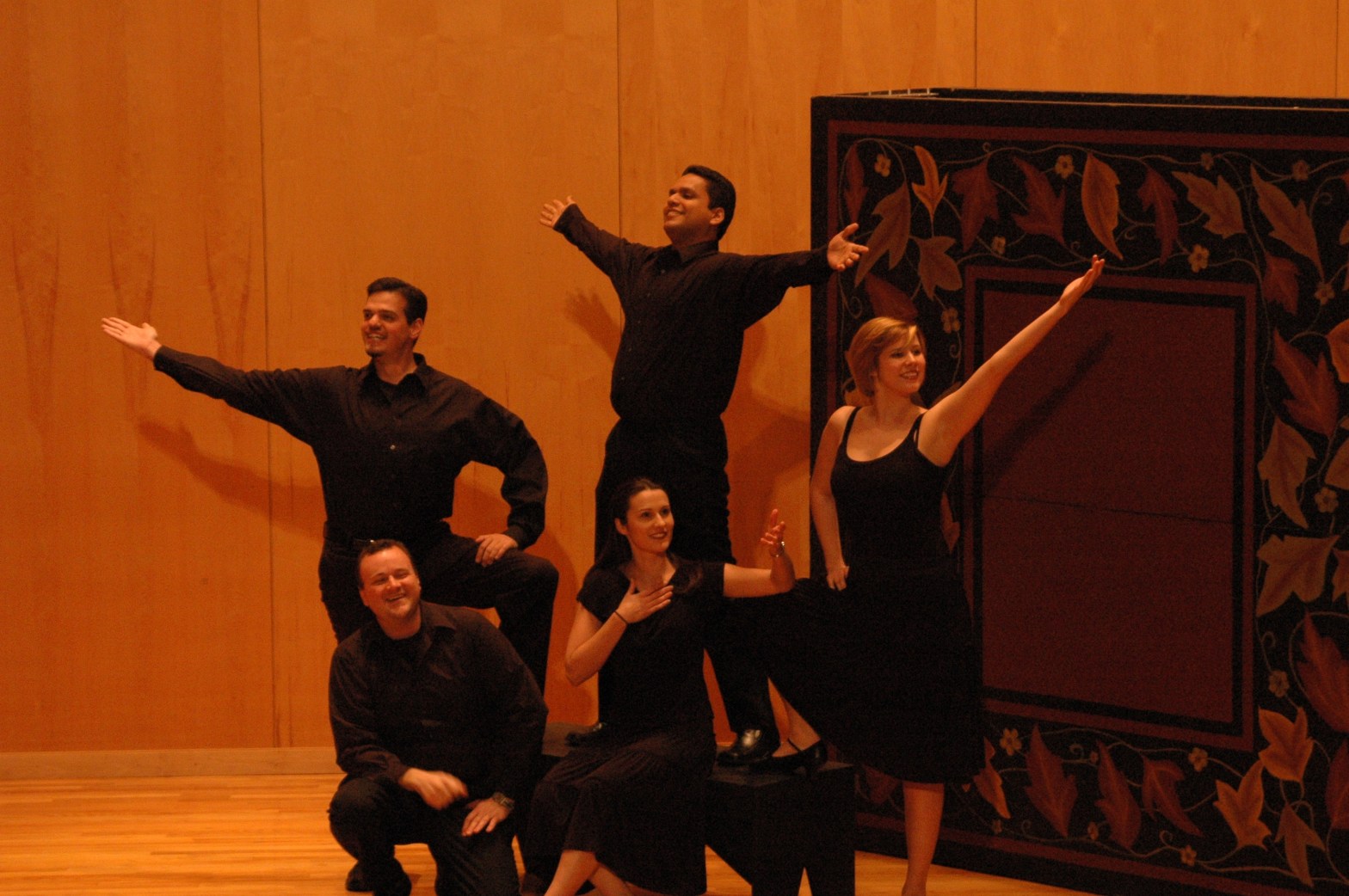
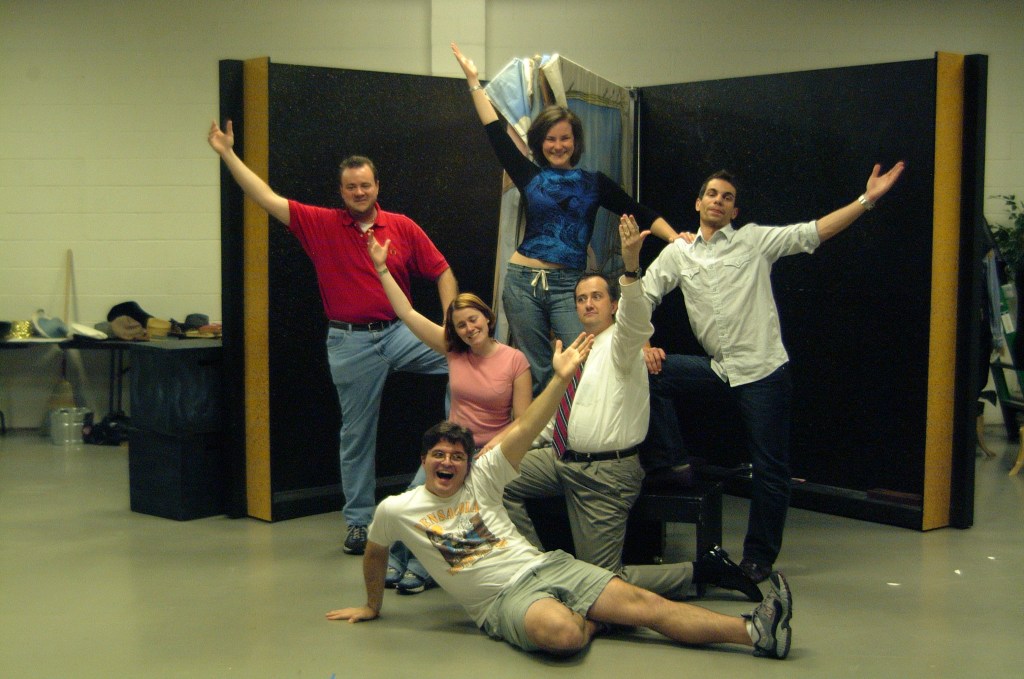
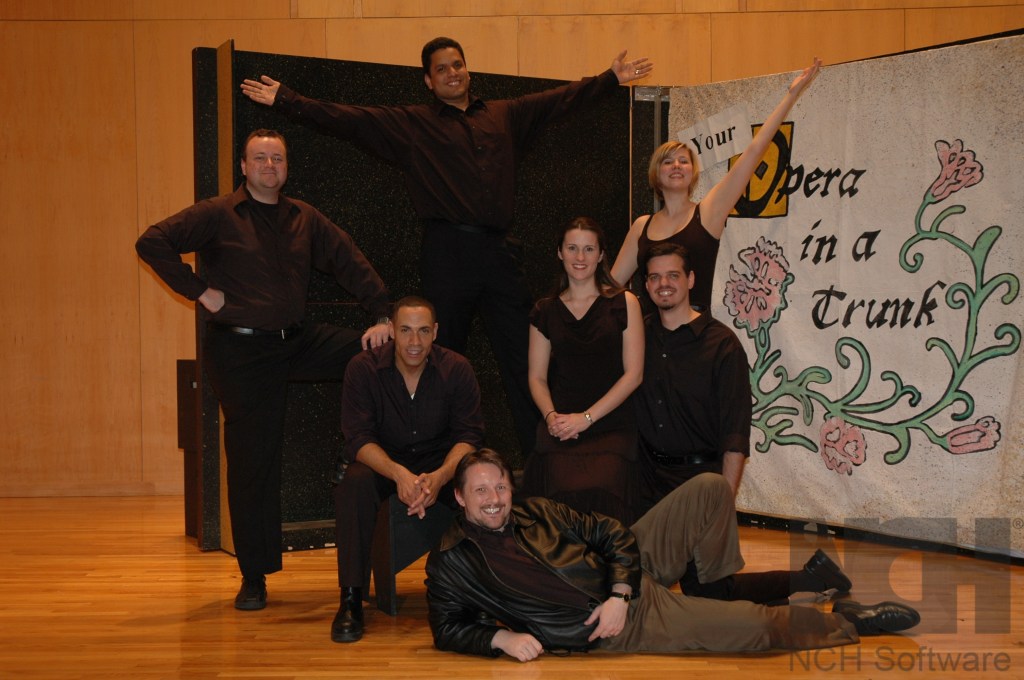
The first two companies of (Your) Opera in a Trunk with Pensacola Opera
There were a lot of unique features to this process and production. In addition to four opera singers, each representing one of the four paradigmatic voice types, the show utilized a maestro and a narrator (I referred to this role as a “Joker” as a nod of sorts to Boal’s emblematic facilitator.) Each role had it’s own unique challenges, stresses and gifts. Alongside fully improvised recitative, the singers needed to improvise unique lyrics to arias and duets in their repertoires while constructing some semblance of a story that made sense! The Maestro had the Herculean task of moving from set pieces that framed the show, to improvisational accompaniment, to selecting one of multiple possible arrangements of pre-selected arias or duets to inspire the singers. Lastly, the Joker (played by Tim in the first several productions) had the heavy lifting in terms of the script, with large passages setting up the premise and mechanics of the show, alongside facilitating multiple audience votes and defining core operatic terms, such as aria, cadenza and libretto, as they emerged within the story arc of the piece. There were a lot of moving parts, hence the need for an extremely detailed outline to assist the rehearsal process.
I’m particularly indebted to the bravery of the first company who did not have the knowledge going into the enterprise that the project was in fact possible and that it would be well-received by student and adult audiences alike. In later iterations, we often benefited from having one or two returning players, or at least an understanding that this terrifying concept could actually work! While I had routinely been a company member in most of my prior improvisational works – a position that generally allowed me to direct and assist from inside of the form – this strategy wasn’t possible in this particular instance. Furthermore, generally companies were cast for their (formidable) operatic ability rather than their level of improv experience, and so many singers were taking their first significant steps into this spontaneous realm of performance.
— The First Cast:
Annie Burridge (Soprano) Chip Cothran (Maestro) Timothy Kennedy (Joker) Kelly Markgraf (Bass) Elise Quagliata (Mezzo) Thomas Rowell (Tenor) —
Lessons
At first glance, the script and its appendices are certainly a bit overwhelming, but they served the intended purpose well; namely, breaking down the action into clear bite-sized pieces. Here’s a set song that we’ll sing to introduce the four voice types, now let’s have the audience select a location and whether or not the soprano or tenor will serve as our star for the show, now let’s have a vote on this character’s identity… So while the hybrid piece moves between scripted, interactive, and fully improvised elements, there was a clear road map as to when and why this was happening. I hadn’t quite conceived of an improv piece in this way before, and this experience certainly influenced other concepts that would follow. This organizational structure also meant that while the show ran about 50 minutes long, no one player was responsible for improvising an enormous amount of lyric or material. This was particularly important as the show was designed for opera performers who improvise rather than improvisers who can pull off some opera.
For the first season, the show opened and closed with an original ditty (I use that word deliberately) that I crafted which I soon discovered didn’t really serve the need. Looking back, opening an opera with a more patter-like musical theatre song was just an odd choice on my part necessitated by, frankly, my lack of knowledge of the canon. Tim recommended the “Drinking Song” from Verdi’s La Traviata for the subsequent season, which provided me with a much stronger musical tone and base for newly-crafted lyric. This now serves as the “in” and “out” of the piece, the other other set song being written to Strauss’ “Champagne’s Delicious Bubbles” re-tooled for our purposes as “Behold the Grand Soprano” in which we meet the four different voice types. My second crack at the opening was certainly stronger, but I’m most proud of my construction of “Behold” as it sets up such a playful tone and dynamic between the singers before the audience casts them in their roles for the show. Here’s a little sample:
“Behold the grand Soprano (Tra la la la la la la la) No need for a piano (Tra la la la la la la) My voice is valued dearly So high that dogs can’t hear me My résumé’s extensive So each high C’s expensive”
The show also benefited from a sleek and helpful design language. We inherited a large book as the prominent set piece (as this was in use for other touring shows) and had three different beautifully painted backdrops designed by Christien Fontaine: a cityscape, a countryside, and a castle atop a craggy mountain path. As the show started, the book was closed, hiding the players and a huge assembly of random props and costumes that were used to inspire casting choices. When a setting was selected by the audience, the book would open to the corresponding page which then framed the rest of the improvised action. We also deployed a trunk as well, as suggested in the show title, with the conceit that everything that was needed somehow magically came from that one source rather than the racks and crates of items backstage!
(Your) Opera was designed as a pedagogic outreach tool, but it wasn’t just our audiences that learned from the project. There was a great equalizing effect during these rehearsals in that most of the operatic company members were taking their first foray into improv, while I, as the director and deviser, was an opera novice and felt like a guest in a world in which they were experts. The resulting cross pollination was really joyful and rewarding. Opera is certainly not known for its spontaneity and abandon, and many company members have noted how the experience of (Your) Opera opened them up as performers and made them look at old arias in whole new ways after using them to improvise original whimsical lyrics. The depth of my admiration for this form of performance certainly grew exponentially as well as I saw firsthand the discipline, training and talent required to make singing like that happen at nine in the morning!
If you’re intrigued by this premise or way of structuring a show, go here for another peek inside the form. This remains a favorite project and I’d happily direct it again in a heartbeat!