When I began the ImprovDr “Game Library” in 2020, I matched up exercises with the concept of the week. New entries gained inspiration from the technique or term at hand in the hopes that they might also provide additional embodied insights and experiences.
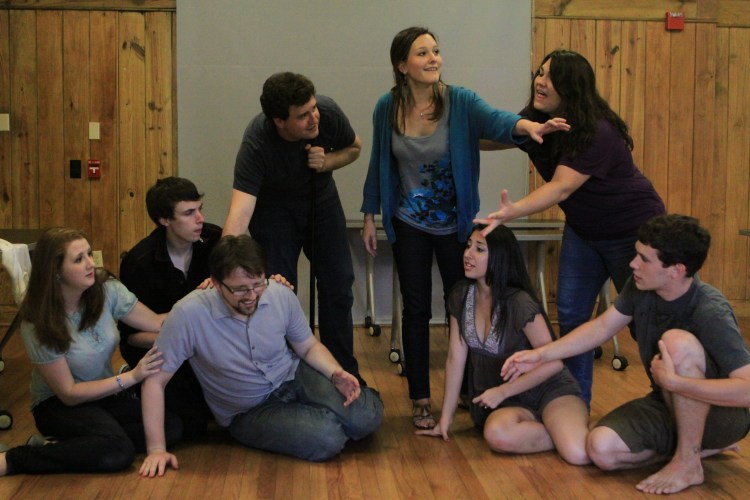
I started off this book-length series with the concept of Abandon, and this accompanying exercise is a fun energy-building game designed to promote and develop this sense of joyful playfulness. I know it as Room at the Inn.
The Basics
Players form a large circle, standing approximately shoulder-width apart if the space will allow. One player who is “in” stands in the middle of the circle and attempts to find a “room” that they can occupy by asking random players, “Do you have a room?” Generally, the conceit is that players do not in fact have a room as everyone wants to maintain their accommodation(!), so they answer “no” or similar. This sends the player who is “in” to the next random player. Meanwhile, other players in the circle who make eye contact with each other should quickly run across the circle to exchange rooms. The middle player should aim to seize this opportunity and occupy a vacant room before the dashing player arrives. Any player who does not successfully swap rooms now becomes the new center player who is “in” and should begin asking others, “Do you have a room?”
Disclaimer: This can become a pretty physical exercise so it might not be suitable if company members have mobility issues or are concerned about or prone to injury.
The Focus
This game is a great way to build energy, playfulness, and abandon in the company. It quickly becomes clear that being overly cautious or reserved in your approach diminishes the joy and build. As noted below, be on the lookout for strategies designed to minimize the risk of play – the consequences of ending up “without a room” couldn’t be much lower.
Traps and Tips
1.) Embrace the risk. It’s not uncommon to find players standing in the outer circle deliberately avoiding making eye contact with anyone else so that they don’t have to vacate their room and potentially become “in”. Often, they’ll look down at the floor or scan the circle in such a way as to reduce the chances of connecting with anyone else. As eye contact triggers the room changes, it’s a critical part of the dynamic. I’ll playfully call folks out if I see overtly evasive maneuvers, or if I’m playing, I’ll go out of my way to make eye contact with them to bring them into the game. That being said, if someone is sporting an injury or finds this type of dynamic sincerely uncomfortable, it’s probably wise to let them opt out of the warm-up.
2.) Connect with players across the circle. Another risk-diminishing strategy I’ve seen is that players will discover they have a better chance to move from room to room if they make eye contact with the person to their immediate left or right. Again, this isn’t really embracing the “danger” nor fun of the game. It can be helpful to set a ground rule that eye contact switches need to be “across” the circle for this reason. This also gives the player who is “in” a fighting chance to succeed at obtaining a spot in the circle.
3.) Don’t drop the conceit of asking for a room. Occasionally the game almost devolves into the player who is “in” just actively waiting to see someone move or perhaps roaming like a predator around the circle. Maintaining the central device of asking, “Do you have a room?” is helpful in terms of giving some structure to the chaos. Encourage the player who is “in” not to give up on their need even as they strive to have an awareness of the movement around and behind them. This has the added bonus of reinforcing the importance of objectives in our scenic work, and that even if the odds appear insurmountable, we can’t just discard our greater goal, or the scene will likely fizzle to an end.
4.) Consider setting some guidelines in terms of physical contact.I most frequently play this exercise with college-aged improvisers, some of whom can tend to take a rather aggressive stance to the room switches. As is the case with all our improv, we don’t want our pursuit of risk and playfulness to increase the likelihood of injury or carelessness. It can be helpful in this regard to remind players that we want to keep each other safe, that we shouldn’t be making physical contact without permission (and that pushing and shoving aren’t acceptable tactics in general), and that part of playing is graciously accepting the loss if someone happens to beat us to the empty “room.”
5.) And sometimes it’s okay to have a room. I don’t typically introduce this explicitly as players will often discover it for themselves as the game unfolds but sometimes answering yes to the critical question of “Do you have a room?” is a lovely and helpful choice too. I’m thinking in particular if someone is struggling to get out of the middle of the circle for a while or is finding the experience unpleasant in general. Keeping in mind the joy of the ensemble as a whole is such a key component of the improvisational creative spirit, and so it’s good to keep this in mind even during a silly little warm-up exercise such as this.
In Performance
This is a delightfully irreverent exercise that focuses on the joy of playing together as an ensemble. If you have become bogged down with the minutiae of a project, or need an infusion of whimsy and attack, then this warm-up should make for a welcome addition to your lexicon.
The “A to Z” series that inspired this game entry has now been turned into a full-length book with Routledge that you can find here!
I’m currently strolling back through this alphabetized list of improv games, adding new entries when I see the chance to offer a new game of note or interest. I’ll strive to keep this list updated as I go! You can also search my blog using the search tool below.
Those game titles without hyperlinks are connected to blog posts that are currently in development or unpublished (but I’ve written at least a draft already, I promise!)
Feel free to email me here if you have a suggestion, or perhaps a game or skill you’d like me to consider for a future post. I’d also love to know if you know a game by another name.
Cheers, David Charles. www.improvdr.com Join my Facebook group here to be the first to know when a new game entry drops. Photo Credit: Scott Cook
This is my last improv game paired with the “Ten Commandments” of Theatresports that began this blog journey many years ago! The final commandment invites us to keep a sense of healthy perspective in our craft, and this exercise, Three Sentence Scenes, holds a similar lesson (among others).
The Basics
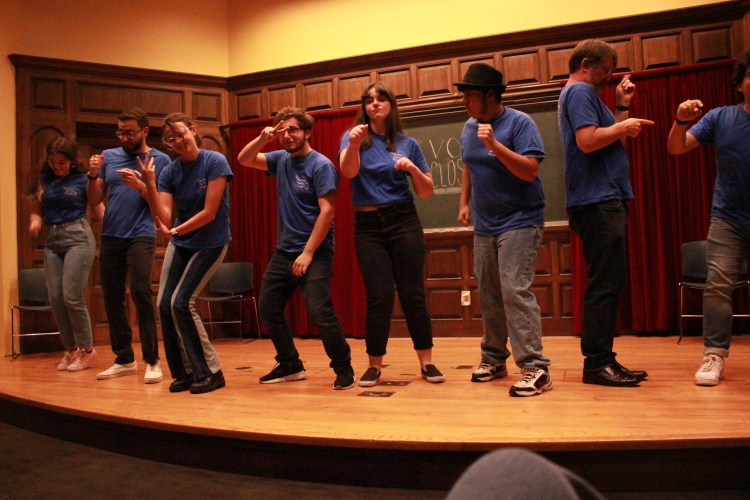
I generally have players form a circle with some chairs scattered at the compass points (north, south, east and west) for ease of access. A theme (love) or focus (starting in the middle) may be provided. Players take turns initiating scenes that should typically last no longer than three lines. At the conclusion of each vignette, the active players freeze until they are replaced by a new entering energy from someone waiting on the periphery. This new scene then continues for three sentences with the prior players returning to the circle, and the process continues. Sometimes I’ll utilize a system whereby players clap their hands at the perceived end of the scene to indicate that they will be the next entrance, or players can just enter at whim.
The Focus
Many companies utilize some version of a “get the bad improv out” exercise or warm-up, and this game can certainly have that goal, reminding players that scenes are fleeting and that the next one is coming right around the bend. There are few art forms more transitory than improvisational theatre, after all. Coupled with a particular stated goal at the outset, this exercise can also be used to introduce or reinforce skills or techniques that might be atrophying. It is certainly a helpful energy builder and can help dust off improv cobwebs if your ensemble has not played together for a while.
Traps and Tips
1.) Share the stage time. Some players are just generally more confident or excited to start scenes than others, so I’ll often set it as a goal for everyone to start at least one scene before the exercise culminates. Similarly, I might just have company members raise their hand if they have been a little under-featured halfway through the exercise. As players initiate new scenes, they can then make a concerted effort to invite these less featured improvisers to join them in the middle of the circle. I find it helpful to maintain an awareness of full inclusion during this warm-up to make sure that it doesn’t devolve into exclusionary side games.
2.) Resist the downward spiral into wackiness! There can be a trap in setting up this exercise as “getting the bad improv out” as I’ve found this frame can almost become self-fulfilling if we’re not cautious. Yes, there is certainly a value in blowing off some improv steam and having some unbridled fun together that shouldn’t be overlooked or undervalued; but, if we set up an expectation that good listening and nuanced improv won’t happen, then it won’t happen. This is where I find the next strategy helpful…
3.) Shake up the goal of the exercise. Especially if you’re using this warm-up frequently, I think it can be helpful to implement it to reinforce, review, or introduce some foundational concepts that you’ve been working on as a troupe. Whether it’s crafting interesting staging, exploring the moment before, portraying relationships that are not commonplace in your work, or perhaps even just challenging ensemble members to initiate scenes with those in the group with whom they do not typically play, a stated and changing focus can give the exercise freshness and new meaning. Why not put some “good” improv habits front of mind while we’re also expelling some of the “bad” improv for the day?
4.) Really use the three sentences. It’s not particularly helpful to pause the game to discuss whether an utterance or broken speech act counts as a sentence or not, but the limit of dialogue is a gift in this game that will hopefully encourage players not to just waffle (see Commandment #6) or wimp (Commandment #8). With only three lines available, players are encouraged to use emotion, subtext, staging, and action to imbue the scene with life and deeper meaning. Sure, some scenes will sneak in an extra line or two, but it’s helpful to challenge players to make every word count. It’s also useful to stress that these should generally be three sentences as opposed to three long-winded and meandering paragraphs. But there’s no need for the sentences to happen in quick succession without developing nuance or exploring the power of the silences between the words.
5.) Concentrate on two player scenes. With only three sentences available, it will quickly become clear that an over-abundance of side-support, Canadian crosses, or early entrances will drastically reduce the likelihood that the original players can really explore their relationship and initial dynamic. Most improvisers will intuitively want to start calling back prior characters or scenes, and this certainly adds fun and energy, particularly as the exercise nears completion, but once the scenes start to become “all-plays” it’s difficult to get back to softer or more nuanced two-person work. I’d recommend that you try to hold onto that more focused energy and pace as long as you can.
In Performance
While I might generally provide some big take-aways from the warm-up, resist doing a blow-by-blow account of every vignette as that’s antithetical to the notion that we’re embracing the disposable quality of improv if we then scrutinize every small misstep. The major gift of this exercise in my opinion is that when played joyfully it fosters a spirit of abandon, reactivity, and immediate forgiveness for when things don’t turn out quite the way you were hoping. These are important reminders for us all.
Click here to review all ten commandments, or here to go to the ImprovDr Game Library.
This is a deliberately paradoxical title designed to intrigue a little but it’s actually a reasonable way to describe the particular concept and format in question. (Your) Opera in a Trunk weaves together both scripted elements, stock operatic melodies and accompaniments, and improvisational unpredictability, characters and stories. While several of my prior forms were coalesced into rough outlines or flow charts, this was the first time I truly formalized an improv piece into a “script” as the complexities of the concept, coupled with the fact that it was designed for opera singers rather than “improvisers,” necessitated that collaborators could have something helpful in their hand that they could refer to throughout the rehearsal and development process.
The seeds for the piece were initially sown by my friend Timothy Kennedy who had been a fellow student at Louisiana State University: he was studying music there while I was studying theatre. Tim had been pivotal in bringing to that campus Making It Up, a large-cast short-form improv competition. Since graduating he had landed at Pensacola Opera as the Director of Education and Community Outreach around the same time I started teaching at Rollins College in Winter Park. Around 2004 he mused on the possibility of having an improv opera as part of his company’s outreach and audience development program. Several detailed conversations and a copy of Opera for Dummieslater, the “basic” concept emerged and I set to work structuring the admittedly unwieldy piece. Tim remained instrumental in every sense of that word throughout the process, offering possible source materials, translating opera-speak into English for me as needed, and brainstorming strategies and possibilities for public domain repertory that could inspire the improvisational numbers. As he had been at L.S.U., Tim continued to serve as my doorway into the opera world while I, in many ways, served as our target audience! I joined Tim and his company before New Years 2004, and spent the next few weeks directing and coaching the first of what would become seven seasons of (Your) Opera with Pensacola Opera. Sherrie Mitchell, the Executive Director, also deserves a shout out here as she made this exciting collaboration possible on so many levels.
The Basic Premise: A trunk, brimming with costume pieces, hats and hand props, sits on a bare stage waiting for the operatic players to arrive. The event’s Joker (half-host, half-storyteller) welcomes the assembled audience and invites them to come along on an operatic journey full of unexpected surprises and twists. Opera, our host says, is usually about big events in big places peopled by big characters with big problems and desires. Today’s opera, however, will be slightly different, coming to life from the smallest of trunks. Today’s opera will bring to life a unique story created by today’s audience. Today’s opera, the Joker invites, will be “(your) opera in a trunk”.
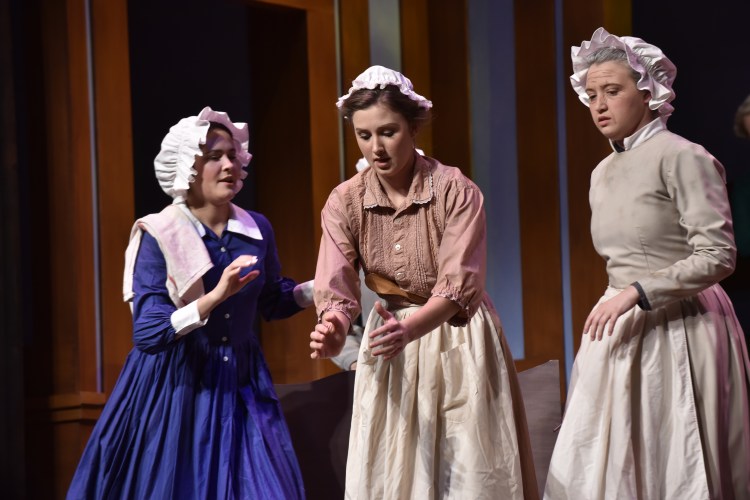
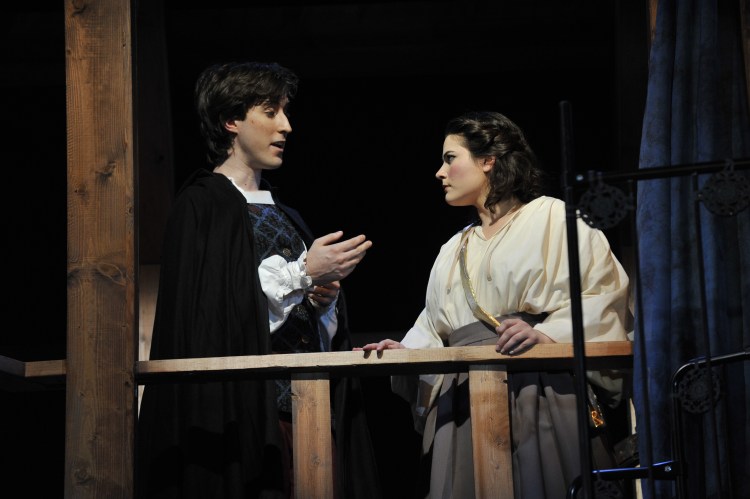
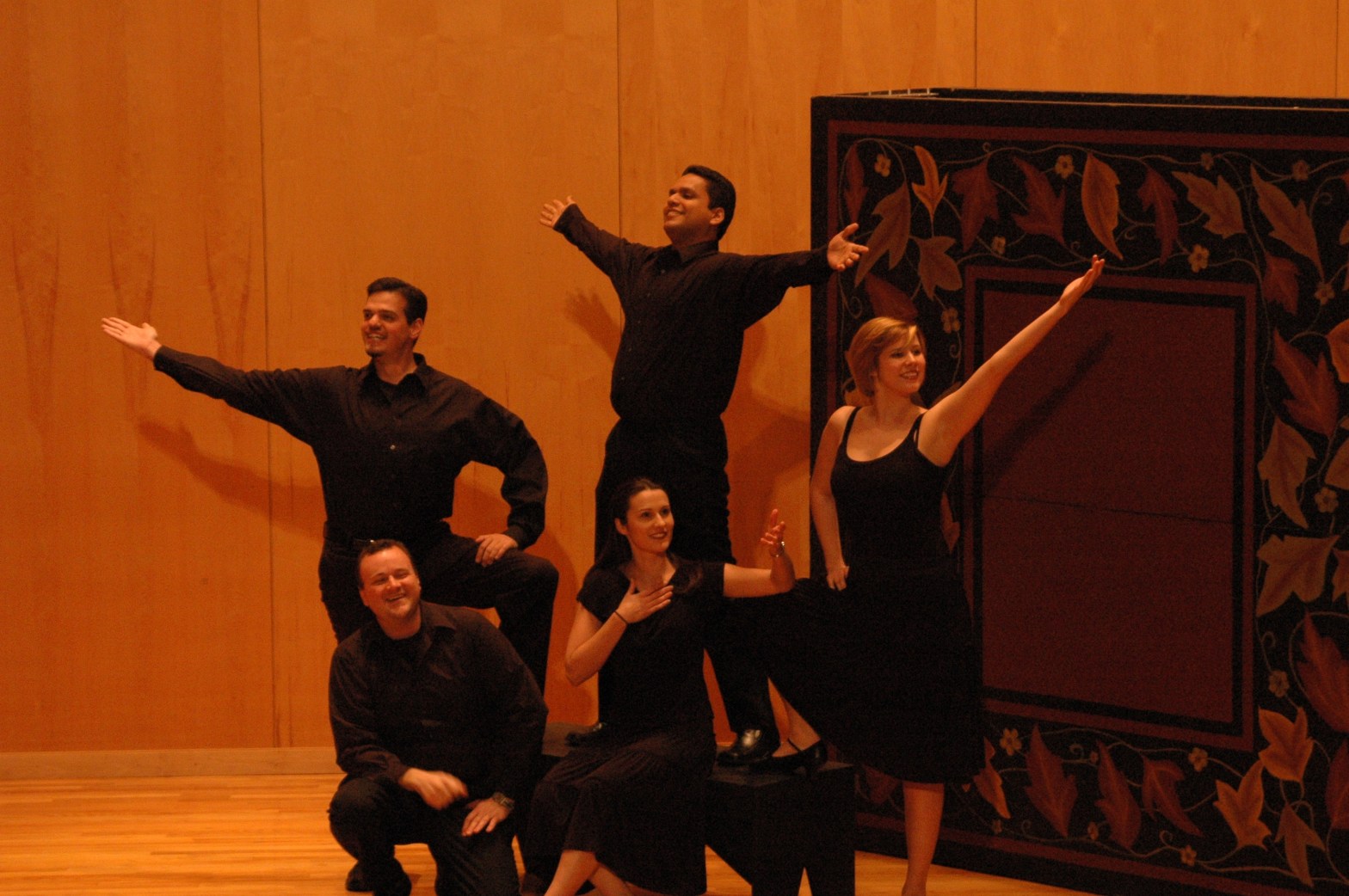
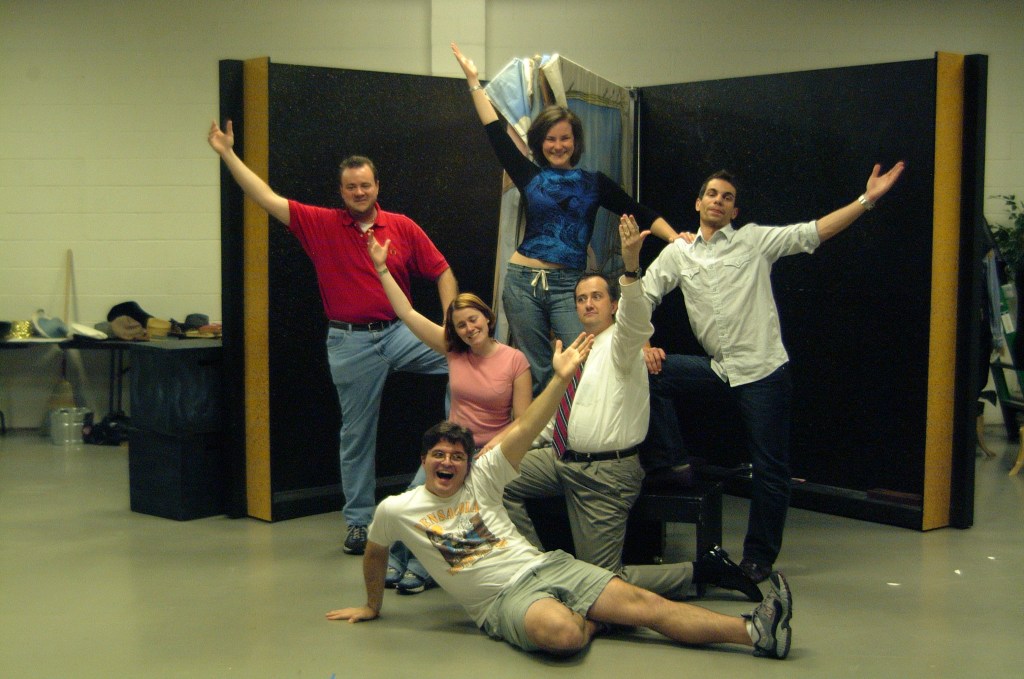
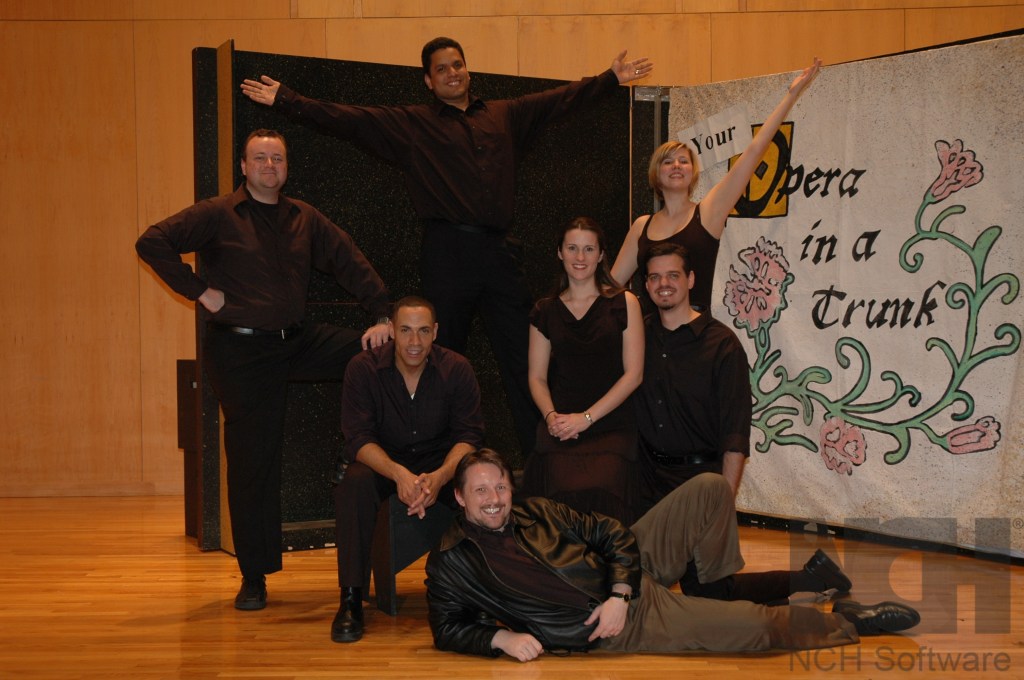
The first two companies of (Your) Opera in a Trunk with Pensacola Opera
There were a lot of unique features to this process and production. In addition to four opera singers, each representing one of the four paradigmatic voice types, the show utilized a maestro and a narrator (I referred to this role as a “Joker” as a nod of sorts to Boal’s emblematic facilitator.) Each role had it’s own unique challenges, stresses and gifts. Alongside fully improvised recitative, the singers needed to improvise unique lyrics to arias and duets in their repertoires while constructing some semblance of a story that made sense! The Maestro had the Herculean task of moving from set pieces that framed the show, to improvisational accompaniment, to selecting one of multiple possible arrangements of pre-selected arias or duets to inspire the singers. Lastly, the Joker (played by Tim in the first several productions) had the heavy lifting in terms of the script, with large passages setting up the premise and mechanics of the show, alongside facilitating multiple audience votes and defining core operatic terms, such as aria, cadenza and libretto, as they emerged within the story arc of the piece. There were a lot of moving parts, hence the need for an extremely detailed outline to assist the rehearsal process.
I’m particularly indebted to the bravery of the first company who did not have the knowledge going into the enterprise that the project was in fact possible and that it would be well-received by student and adult audiences alike. In later iterations, we often benefited from having one or two returning players, or at least an understanding that this terrifying concept could actually work! While I had routinely been a company member in most of my prior improvisational works – a position that generally allowed me to direct and assist from inside of the form – this strategy wasn’t possible in this particular instance. Furthermore, generally companies were cast for their (formidable) operatic ability rather than their level of improv experience, and so many singers were taking their first significant steps into this spontaneous realm of performance.
— The First Cast:
Annie Burridge (Soprano) Chip Cothran (Maestro) Timothy Kennedy (Joker) Kelly Markgraf (Bass) Elise Quagliata (Mezzo) Thomas Rowell (Tenor) —
Lessons
At first glance, the script and its appendices are certainly a bit overwhelming, but they served the intended purpose well; namely, breaking down the action into clear bite-sized pieces. Here’s a set song that we’ll sing to introduce the four voice types, now let’s have the audience select a location and whether or not the soprano or tenor will serve as our star for the show, now let’s have a vote on this character’s identity… So while the hybrid piece moves between scripted, interactive, and fully improvised elements, there was a clear road map as to when and why this was happening. I hadn’t quite conceived of an improv piece in this way before, and this experience certainly influenced other concepts that would follow. This organizational structure also meant that while the show ran about 50 minutes long, no one player was responsible for improvising an enormous amount of lyric or material. This was particularly important as the show was designed for opera performers who improvise rather than improvisers who can pull off some opera.
For the first season, the show opened and closed with an original ditty (I use that word deliberately) that I crafted which I soon discovered didn’t really serve the need. Looking back, opening an opera with a more patter-like musical theatre song was just an odd choice on my part necessitated by, frankly, my lack of knowledge of the canon. Tim recommended the “Drinking Song” from Verdi’s La Traviata for the subsequent season, which provided me with a much stronger musical tone and base for newly-crafted lyric. This now serves as the “in” and “out” of the piece, the other other set song being written to Strauss’ “Champagne’s Delicious Bubbles” re-tooled for our purposes as “Behold the Grand Soprano” in which we meet the four different voice types. My second crack at the opening was certainly stronger, but I’m most proud of my construction of “Behold” as it sets up such a playful tone and dynamic between the singers before the audience casts them in their roles for the show. Here’s a little sample:
“Behold the grand Soprano (Tra la la la la la la la) No need for a piano (Tra la la la la la la) My voice is valued dearly So high that dogs can’t hear me My résumé’s extensive So each high C’s expensive”
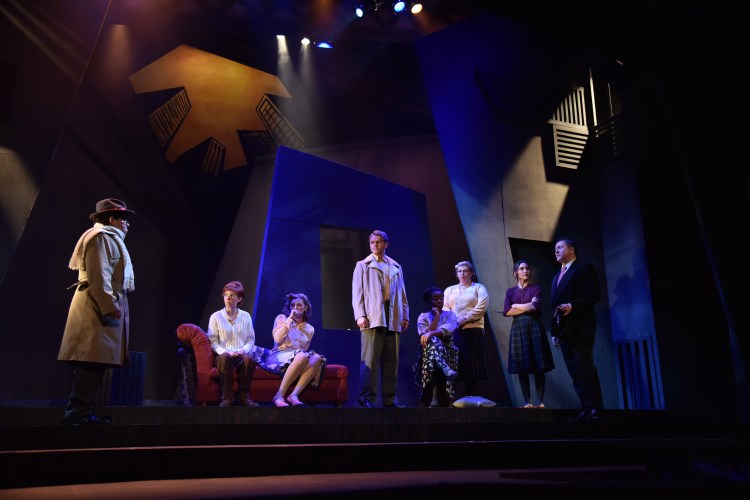
The show also benefited from a sleek and helpful design language. We inherited a large book as the prominent set piece (as this was in use for other touring shows) and had three different beautifully painted backdrops designed by Christien Fontaine: a cityscape, a countryside, and a castle atop a craggy mountain path. As the show started, the book was closed, hiding the players and a huge assembly of random props and costumes that were used to inspire casting choices. When a setting was selected by the audience, the book would open to the corresponding page which then framed the rest of the improvised action. We also deployed a trunk as well, as suggested in the show title, with the conceit that everything that was needed somehow magically came from that one source rather than the racks and crates of items backstage!
(Your) Opera was designed as a pedagogic outreach tool, but it wasn’t just our audiences that learned from the project. There was a great equalizing effect during these rehearsals in that most of the operatic company members were taking their first foray into improv, while I, as the director and deviser, was an opera novice and felt like a guest in a world in which they were experts. The resulting cross pollination was really joyful and rewarding. Opera is certainly not known for its spontaneity and abandon, and many company members have noted how the experience of (Your) Opera opened them up as performers and made them look at old arias in whole new ways after using them to improvise original whimsical lyrics. The depth of my admiration for this form of performance certainly grew exponentially as well as I saw firsthand the discipline, training and talent required to make singing like that happen at nine in the morning!
If you’re intrigued by this premise or way of structuring a show, go here for another peek inside the form. This remains a favorite project and I’d happily direct it again in a heartbeat!
The ninth commandment of Theatresports dissuades us from being needlessly clever on stage and reminds me of this exercise I know as Passion Statements.
The Basics
Players mull through the rehearsal space at a reasonable pace keeping equidistant from each other as best they can. One at a time, players announce “Me,” at which point the group pauses and forms an audience by merely adjusting their stances so that the speaking player is in focus. When this focus has been achieved, the self-nominated player provides a brief monologue or speech about a topic or cause that fills them with passion. Once the brief speech has concluded, the players begin to mull once more until a new speaker volunteers.
The Focus
This seemingly simple exercise can actually make players feel quite vulnerable and nervous. Reiterate that the goal is to connect to something that is truthful and personally inspiring or emotional. Humor may certainly emerge organically but avoid a one-upping environment with everyone seeking the most clever, peculiar, or unexpected angle. The goal is to be your vulnerable self.
Traps and Tips
1.) Allow sufficient time for full involvement. Some players who usually exert confidence and attack may find this exercise challenging, especially if they are unaccustomed to taking the risk of sharing personal information on stage. There can be a fine line between encouraging and coercing participation (the latter, obviously, should be avoided) but provide a tone and pace that gives everyone room to contribute. I might sidecoach just with a simple “Has everyone had an opportunity to share?” as the exercise is nearing its conclusion. Similarly, be careful of a few excited players offering multiple narratives in a way that shuts others out. It can be helpful to allow some wiggle room in case a participant who went early in the mix has a deeper understanding of the intent later in the game and wants a second crack or now feels deeply inspired by previous content or vulnerability.
2.) Avoid commenting on or judging contributions. If my experience with this exercise is typical, you will likely get a wide array of statements, from the simple or whimsical, to the more profound or revealing. All statements should be honored and listened to without interruption or commentary. (If something problematic or offensive emerges, I’d encourage addressing it during a closing postmortem.) Model focused listening during the first few rounds. When I facilitate this exercise, I will tend to play and share as well so as not to stand as an outsider. This also gives an opportunity to model sincere material if the group is struggling to get beyond the obvious or trivial, “I hate bad traffic…”
3.) Establish parameters. I use the term “passion” deliberately as it denotes something of emotional weight or import. The exercise can become a series of rants which is not in and of itself a complete departure from the exercise’s intent, but passion can include a much wider array of emotions than just frustration and annoyance. It can be helpful to reiterate this central question, “What are you passionate about?” as the mulling takes place. There are also likely to be honest moments of humor and laughter which is an important reminder that comedy need not be insincere nor disconnected from our personal truths.
4.) Take a moment to debrief. I’ve used this exercise a lot on college campuses, and I’ve found that these communities often struggle to announce their passions unapologetically in front of their peers (and probably their teacher too, I imagine). You might have a different experience when using this in other groups or demographics, but I’ve found the debrief can often be as important as the exercise itself. Did participants immediately have passionate subjects at their disposal, or did they have to search? Were there other influences at play that put players in their heads or made them “sort” or edit their choices? How did it feel to be vulnerable in front of the group? If there were problematic moments or opportunities to elevate marginalized voices, you can also use this time to engage in these important dialogues.
In Performance
An effective second step with this exercise can be to jump into scenes inspired or informed by the various passionate sentiments, but don’t underrate the value of the sharing in and of itself. The exercise can serve as a helpful and effective reminder that we need not look further than ourselves to generate rich, interesting, and dynamic material on the stage. This certainly involves taking a risk by revealing some of our own truths and peccadilloes, but the rewards are manifold and immediate: from building a deeper sense of trust in your ensemble, to forging new connections as players discover similarities and contrasts, to opening up new ways to use our stages to reflect the beautiful complexities and contradictions of the human experience.
Those who try to be clever are not, while those who are clever, do not try
Bowing at the altar of Cleverness can tend to put you in your head and prevent you from making simpler (and more personal) connections to your creative play.
Bringing More of Yourself to the Stage…
This is just a taste of this entry/concept. Go here for more information.
This entry is partnered with the concept of wimping as discussed in the eighth commandment. I often use this exercise as the culmination of my nuts and bolts of improv introductory class when time permits: enjoy Ad Campaign!
The Basics
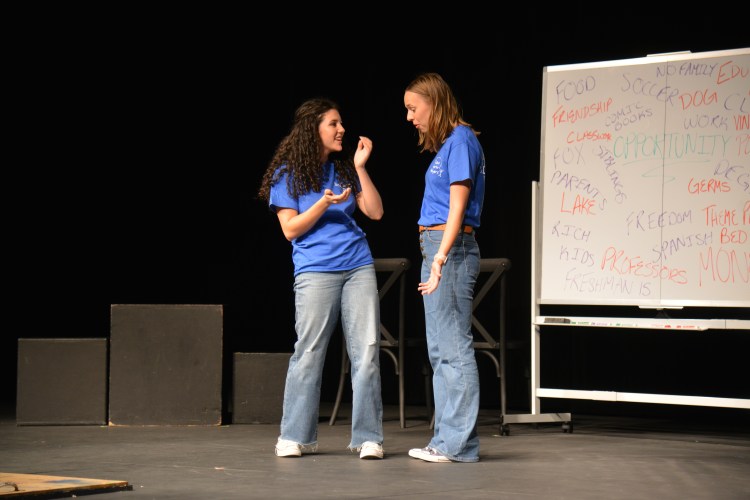
Players work in small groups of 4 to 6 players (ideally) and form a semi-circle in the performance area. I’ll often use chairs, especially if I’m working with novice improvisers, but this could certainly be played with everyone standing. A nonsensical or “impossible” product is provided, such as Instant Ribeye Steaks or Silent Party Noise Makers, and the team must work together to brainstorm an advertising campaign. All offers provided should be robustly and immediately accepted by the group with a loud chorus of “yes!”
Example
The group is provided with “Silent Party Noise Makers.”
Player A: (assuming the stature of the boss) “I’m glad I have our ‘A’ team here to pitch ideas about this exciting new product, Silent Party Noise Makers. It strikes me as the perfect product for people living in tiny apartment complexes…”
All: (enthusiastically) “Yes!”
Player B: “Don’t let noise ordinances stop you from having the party you deserve!”
All: (enthusiastically) “Yes! I love that…”
Player C: “That can be the slogan on the box! Beside an image of a grouchy old man sleeping while a huge party is happening next door…”
All: (enthusiastically) “Yes! Brilliant…!”
The Focus
This exercise is intended as an antidote to wimping or half-hearted acceptance of others’ offers. As each idea hits the stage, it’s critical to encourage the group to give unconditional and enthusiastic support. It is easy for this dynamic to wane as the exercise unfolds if it is not clearly and consistently encouraged. The ideas are likely to become increasingly absurd (although not necessarily so) but each idea must be met with growing joy until the ad campaign reaches a successful and energized conclusion.
Traps and Tips
1.) Brainstorm ad campaign elements. It’s foreseeable that many of the group may have little experience constructing or guiding an ad campaign, so I find it helpful to collectively brainstorm together the kinds of elements that might need to be resolved prior to the first performance of the exercise. Consider features such as the target demographics, slogans, product names, spokespeople, packaging images, price points, ways to reach your audience, bargains or incentives, cross promotion opportunities and the like. There is no expectation that any one campaign will hit all of these points, but it can help the group to have some strategies in their pocket in the event that the energy stalls.
2.) Rehearse the enthusiastic “yes” chorus. No seriously, this is a good idea. Invariably, groups take a while to warm to this concept, so it’s helpful to model it beforehand, and it’s likely that you might need to side-coach players to fully commit to this element as the game unfolds. This excited acceptance of every offer is the focus of the game (the content is nearly irrelevant in many ways) so don’t allow a wimping energy to emerge or go unchecked.
3.) Be wary of questions. I’ve written about questions in improv here and while questions can work in our scenes, they tend to grind the brainstorming session to a halt when they appear in this particular game. If someone does pitch a question rather than an offer (which will happen especially during your first efforts) encourage the speaker to immediately answer their own question with the first thing that comes to mind. It can be tempting as the facilitator or sidecoach to throw in a question or two if the campaign is lagging, but this can have a similar stumping effect, so perhaps offer more broad encouragement instead: “I love where this is going!” or “We need the next piece of the puzzle…”
4.) Watch out for “ors” and “buts” especially if they’re disguised as “ands.“ It can be tempting in this frame to shop for the best idea rather than fully embracing and polishing the current idea. With absurd products this is truly a fool’s errand as how could there possibly be best ideas? This tendency typically emerges with players offering alternatives or additions that actually negate or eclipse the prior choice. If someone offers that Beyonce should be the product spokeswoman, and then another player offers “and Maroon 5,” they’re generally knocking the prior idea off the table rather than elevating it.
5.) Encourage full involvement and group awareness. As in my little example above, one or two players may emerge as high status contributors or facilitators (which is fine) but make sure there is an awareness that everyone should have an opportunity to add to the campaign plan. Initially, this involvement can be providing full support in the chorus of “yes” that follows each shared idea, but it’s also nice to introduce the concept of sharing focus and the limelight. Often, players who take seats at the edge of the group can struggle to have their voices heard a little more than those in the middle of the action, or if someone assumes a “boss” stance they can end up dominating rather than empowering. Those who incline towards introversion may also need extra encouragement or room for their idea to be able to breathe.
In Performance
I would certainly appreciate a dynamic such as this in performance as it has a great build and game at its core, but I think the major gift of this exercise is more of a metaphor than a specific strategy. Players will often experience that the risk of offering something new to the mix feels drastically reduced when they are playing in an environment in which they know their idea will be met with such immediate and unbridled enthusiasm. Whether or not the final campaign yields creative fruit, teams will generally feel accomplished and successful if this dynamic of acceptance has been joyfully conjured. When we wimp as improvisers, we are robbing our partners and ourselves of this intoxicating environment.














 ImprovDr.com