
The last improv “H” is for “Hosting” – that critical fellow improviser that can make or break a short- or long-form experience.
Tag Archives: Long-Form
“G” is for “Game of the Scene”

“Game of the Scene” refers to the source of interest or dynamism that – given sufficient attention – can blossom into a site of joy and entertainment.
“E” is for “Experts”

The persona of the “Expert” has a lot to offer in terms of confidence, precision and crafting our characters from a place of strength.
A Peek Inside: ImprOvientation

“ImprOvientation” was developed as an original long-form to welcome new students to college. “Story Hot Spot” is an exercise that develops the personal story-telling skills that so deeply inform this semi-autobiographical style of performance.
Game Library: “Theme Scenes”

“Theme Scenes” encourages a more emotionally grounded and nuanced style of improvisational play well-suited to both short- and long-form expeditions.
“E” is for “Edits”
Edits come in many shapes and sizes. Here’s a working list of some options to help you craft and pace your improv action.
My First Improv Orientation: ImprOvientation
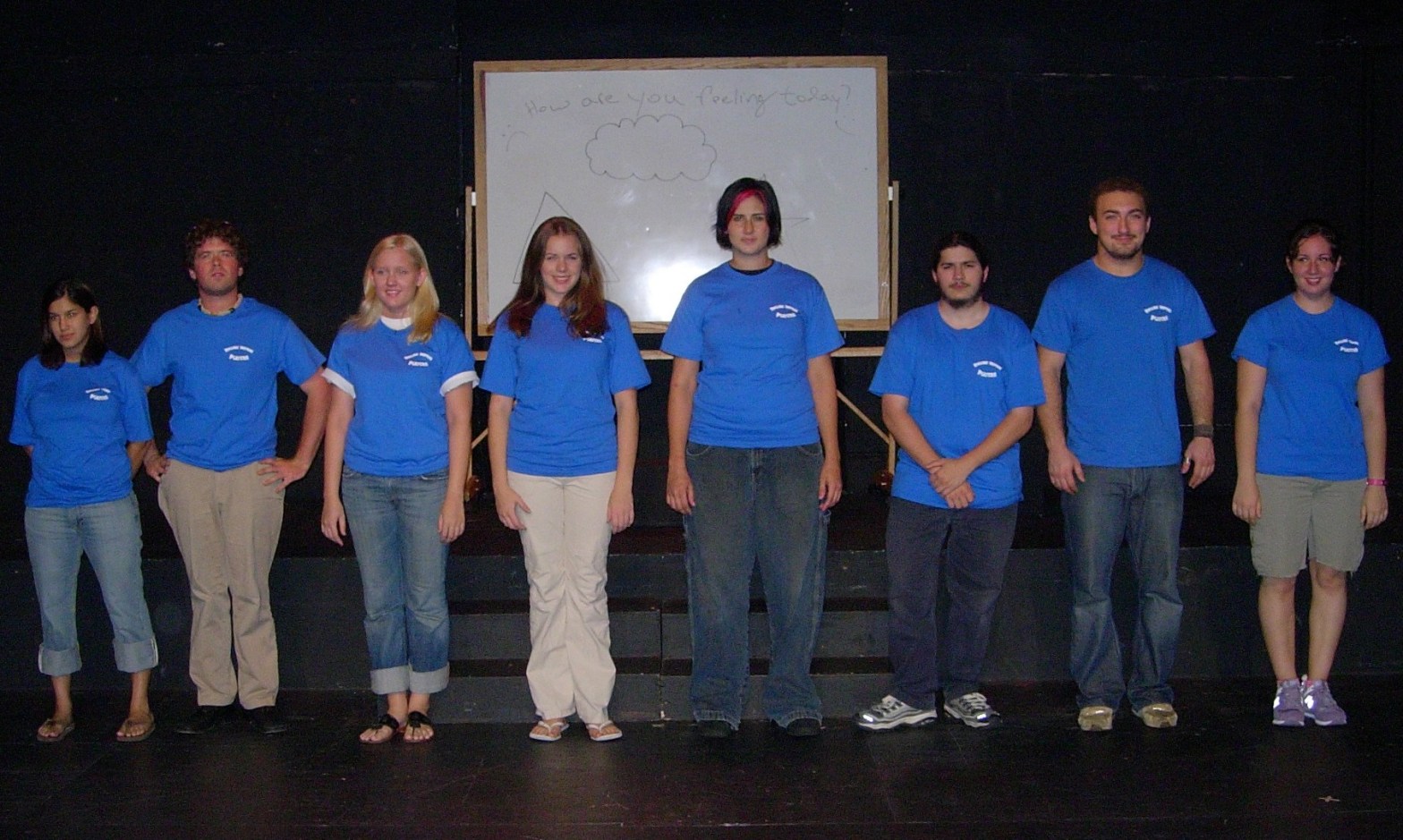
In 2005 I began a collaboration with the Office of Rollins Explorations designed to bring a fully improvised orientation show to the incoming class of students. We called the resulting format ImprOvientation. The production has become a campus mainstay. The title, on the other hand… no one ever uses.
Game Library: “Sequence Game”

The “Sequence Game” offers a way to brainstorm or refresh material before embarking on style-based or dramaturgically informed work.
“D” is for “Dramaturgical Improv”
“Dramaturgical Improv” is a term I’ve started to use that describes a particular approach to spontaneous theatre that is near and dear to my own heart as a deviser and practitioner.
Game Library: “Fantasy Scene”

Although the frame can seem a little complex at first glance, “Fantasy Scene” is well worth the time allowing a wonderful variety of tone and content.
 ImprovDr.com