While it’s helpful to avoid drama backstage, the same isn’t true when we’re performing. “D” is for “Drama” reflects on the more serious side of improv.
Tag Archives: Long-Form
Game Library: “Angel and Devil”

The central technique of “Angel and Devil” adds vibrancy to long-form pieces while also operating well as a stand-alone short-form game or skills building exercise in a workshop setting.
Game Library: “Phonebank”
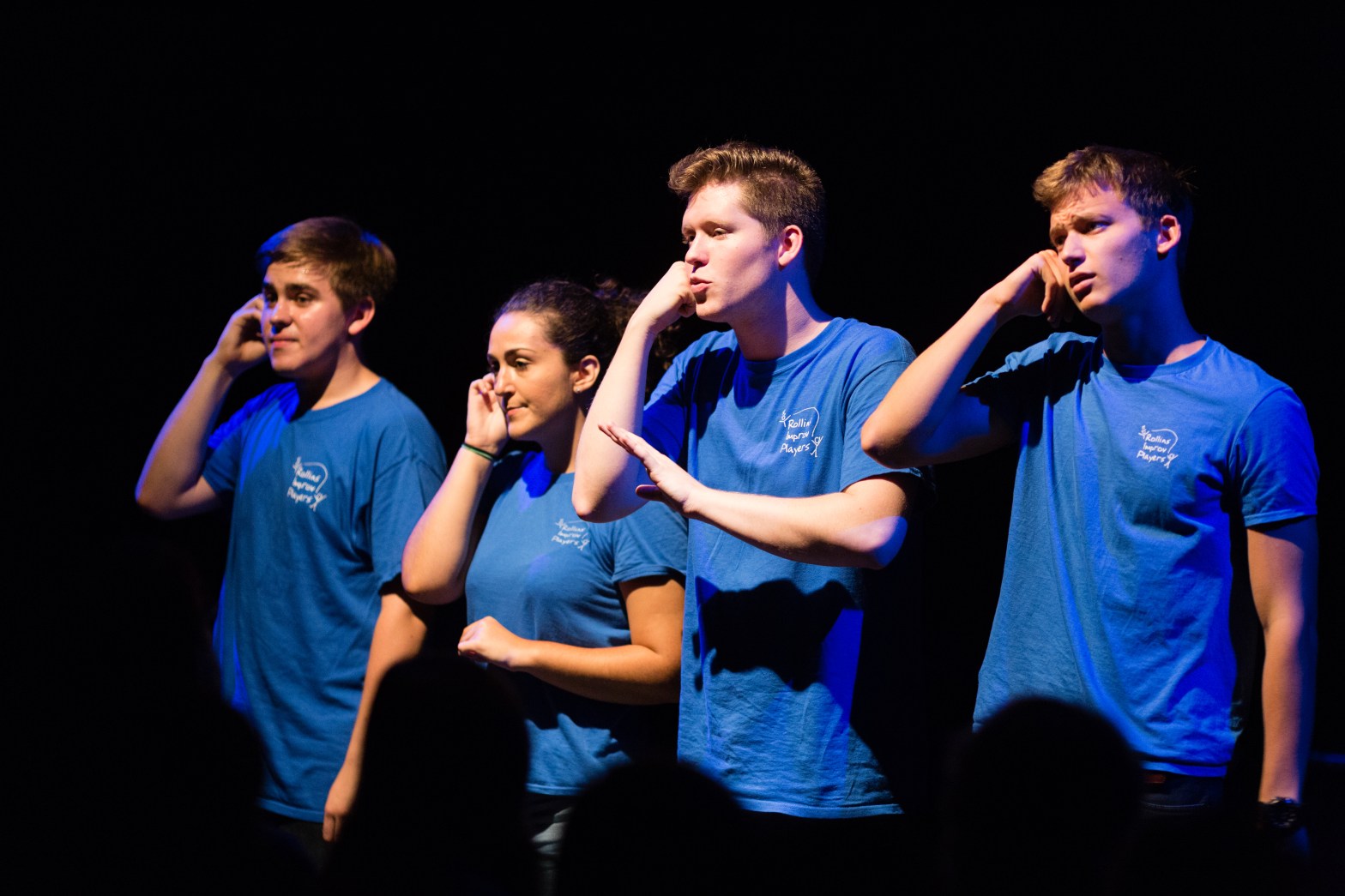
A resilient form that can contain a broad spectrum of styles and energies, “Phonebank” provides a strong ensemble-based game that both polishes and requires critical improv skills.
“C” is for “Connections”

I consider the concept of “Connections” as an overarching improv term that includes, but is not limited to, the similar tools of callbacks and reincorporations.
“C” is for “Comedy”
Consider the many faces of comedy in improvisation performance with “C” is for “Comedy.”
“C” is for “Character”

“C” is for “Character” offers some strategies for shaking yourself out of unhelpful patterns that might be restricting your work and play.
“C” is for “Canadian Cross”

We’re continuing our journey into improv theory and technique with “C” is for “Canadian Cross,” a gentle form of adding detail to your scenes.
“B” is for “Button”

How appropriate to end our series of B’s with “B” is for “Button.” For something so common in our work I find this element of improv isn’t particularly widely addressed.
“A” is for “Ask-for”

While not all improv companies use audience suggestions as an inspirational launching point, this approach remains common. “A” is for “Ask-for” considers some best practices for getting the most out of these moments.
“A” is for “Archetype”
The latest entry in my series exploring the “A” to “Z” of improv terminology and techniques.
 ImprovDr.com