Game Library: “Scene Ending in a Song”

Much like the next alphabetical entry in the Game Library, Scene Ending in I Love You (here), the title of this short-form game essentially provides the key information and parameters.

The Basics

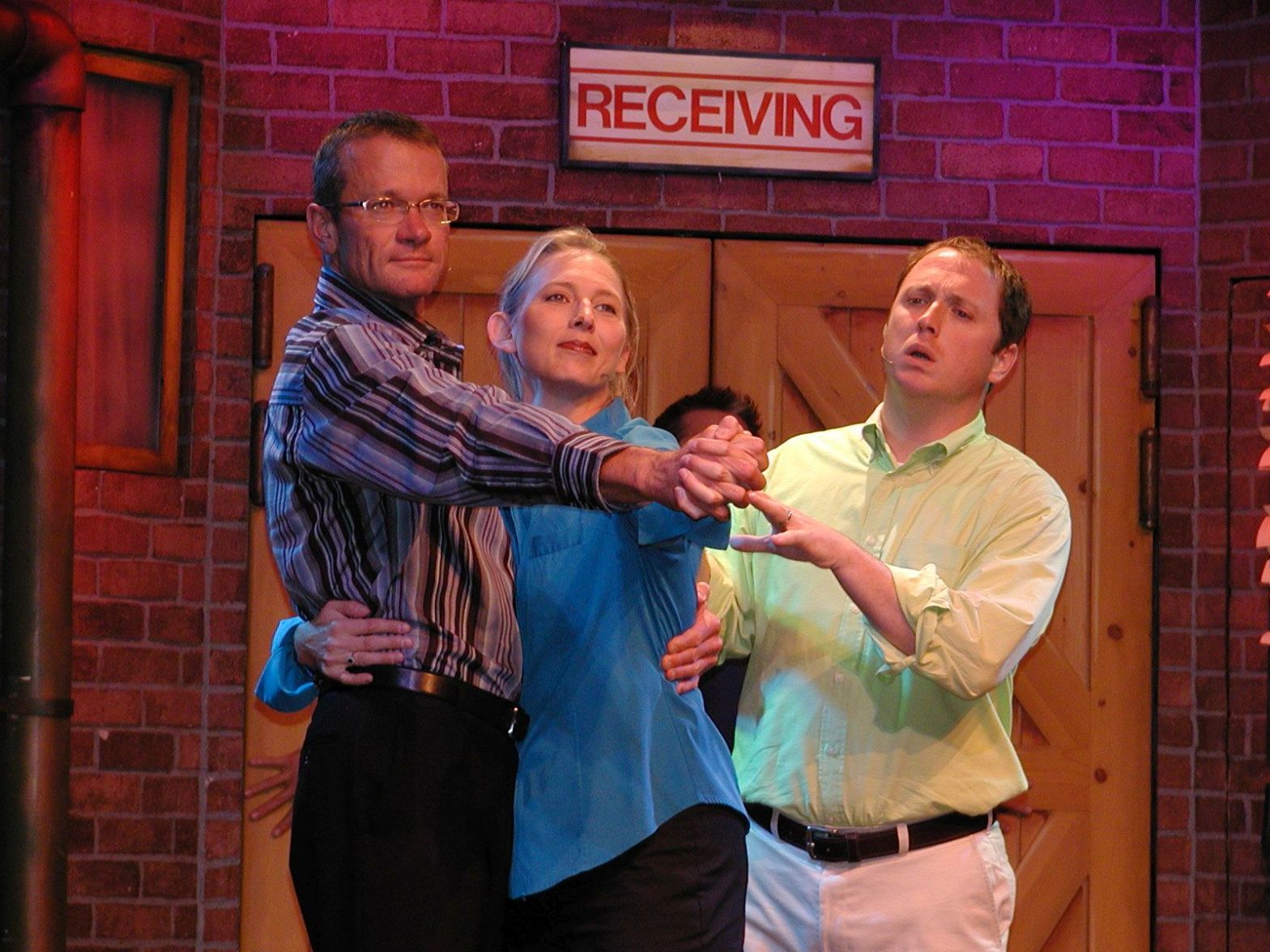
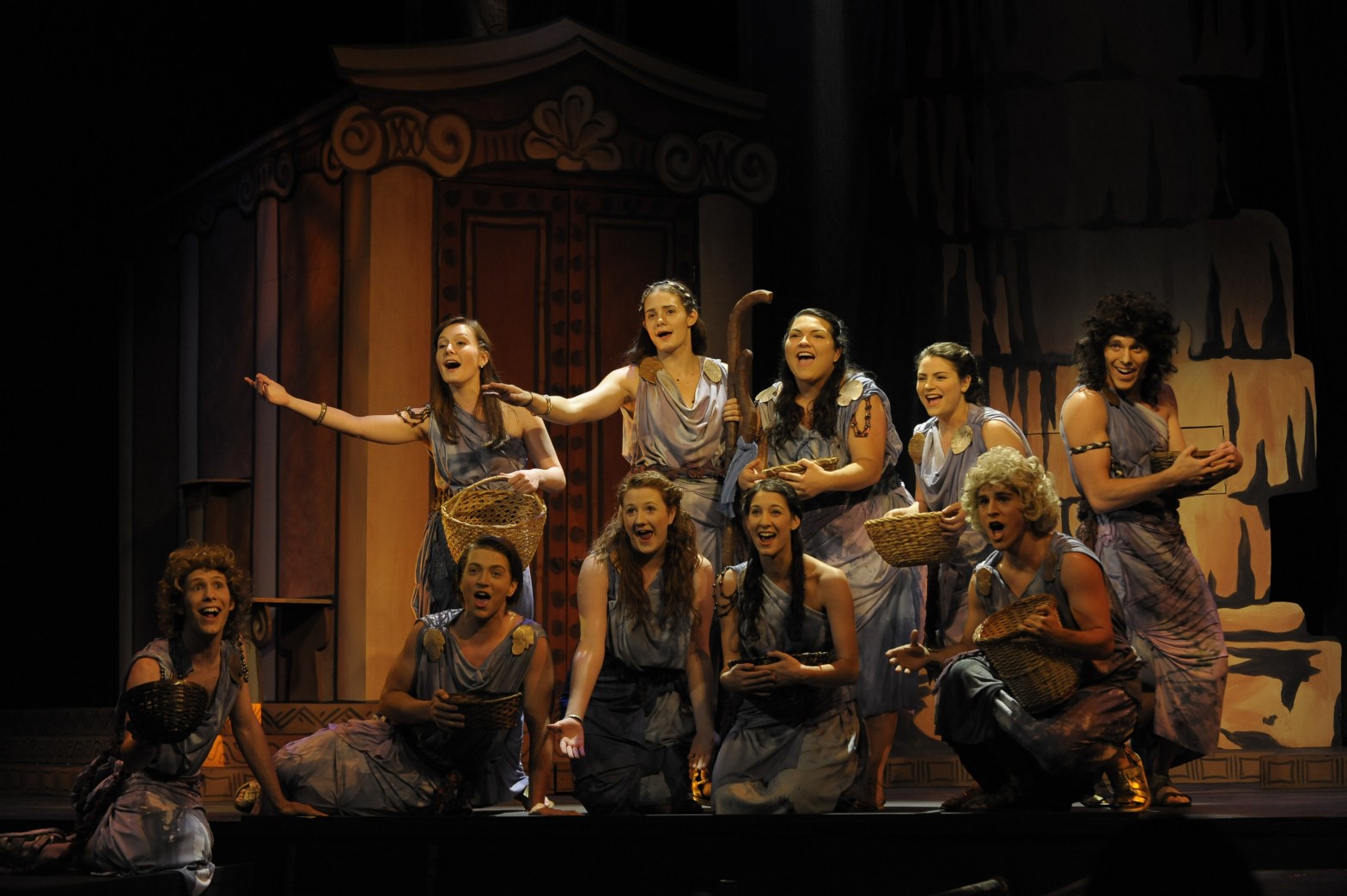
Players perform a scene based on an audience prompt. At the appropriate moment, the scene climaxes and culminates in an improvised song.

Example

Based on the suggestion of a koi pond, Players A and B begin with A gently skimming silt off the surface with a net as B watches on.

Player B: (gently) “I thought I would find you here, Avery.”

Player A: “The fish help calm my mind… and don’t ask me about it…”

Player B: (sitting on a bench) “If you don’t want me to ask you any questions, that’s okay. I can just tell you’ve had a rough day. “

Player A: “I’m not in the mood for any of your parenting book advice, Dad.”

Player B: (with a tender smile) “You’ve made that much clear…”

The scene continues for another minute or so, until Player A cues the song.

Player A: “…But why is the human heart so fragile?”

The improv musician starts to play as Player B sings their response…

Player B:

“So little is known of the human heart,
What makes it stir, tremble, or start,
How in one moment, it can seem so tough,
And yet, in another, it can’t work quite enough…”

The Focus

Create a world in which a song needs happen.

Traps and Tips

1.) Set your scene up for success. There are many fine ways to set up this game, but they generally have one thing in common: the inspirational suggestion creates a world in which a song is likely to happen. If the stakes ae too low or mundane, the conditions for a musical leap will not be ripe. You can build the musicality right into the set-up, asking for the name of an original song, or piece of (good or bad) advice, or a catch phrase that a family member often uses. Here, the general focus of the song becomes gifted, and the players now need to work up to this foreshadowed moment. Or you can seek given circumstances that are rich with potential without predetermining the content or focus of the musical interlude: the reason for an argument, intense prior moment, or dangerous location (or something of this ilk), all provide a strong platform from which to launch.

2.) Set your first singer up for success. As the scene starts to take shape (and hopefully build momentum and energy), you can also do a lot to lay the necessary groundwork for the musical climax. Seek to determine who is the best situated character to sing or at least launch the song. (Songs can be solos, duets, group numbers, or some delightful combination of all of these, but will generally be best served by at least starting with one singer in clear and undisputed focus.) There are lots of great ways of getting the musical ball rolling (one of my favorite workshops is teaching at least five of these techniques!) but regardless of the structural approach, you’ll be served by a strong focus give or take. If you think your partner is well positioned to sing, by all means give them a suitably energized lead-in and pitch. If you feel the music calling you, strive to signal to your fellow players that you’re ready to take the plunge by assuming a bold stage position.

3.) Set your musician up for success. And don’t forget your fellow improvising musician. Be cognizant of their cues and instincts, as they may see the fruitful potential for a song start before the onstage improvisers have come to the same realization. If the music starts, don’t let it peter out, but rather seize the chance to get yourself into a musical mindset. Alternatively, if the musician is patiently awaiting a cue from one of the scenic players, do your best to telescope your intentions (and, possibly, musical preferences). If you deliberately introduce a scenic style or tone, it’s more likely that the musician will be able to honor and gain inspiration from such choices (whether they elect to offer up something in the vein the onstage players expected or provide a playful inversion or contrast).

4.) Set your song up for success. Finally, all the tropes of musical theatre performance should also apply to this undertaking. A common adage shared in the performance lab is that characters in musicals sing because spoken language no longer can adequately express the intensity of their emotions and needs. So, if your scene never approaches this level of heat, it’s less likely that a song will organically and helpfully emerge. Want something (big). Feel something (deeply). Pursue something (significant). While it can be amusing to create a little ditty inspired by a rather mundane scenario, you’re more likely to craft a stirring opus if the scene plumbs the greater depths of human desire and passion. Generally speaking, a song probably won’t amount to much if it emerges out of an obligation to sing (and thereby meet the requirement of the game) rather than a powerfully felt need to sing on the part of one or more of the characters.

In performance

If you enjoy musical improv (as I surely do!) this is a simple but elegant structure that promotes both strong scene work and musicality.

Cheers, David Charles.
www.improvdr.com
Join my Facebook group here.
Photo Credit: James Berkley
© 2025 David Charles/ImprovDr

Game Library Expansion Pack I
Game Library: “Scene Collage”

Get ready to move for this fast-paced game that’s three scenes in one.

The Basics

You’ll need an attentive technical improviser and three distinct pools of light to make this game work. A team (of ideally two or three improvisers) obtains three different scenic prompts, and each one is assigned to a specific area of the stage (left, center, or right) that corresponds to your particular lighting abilities. For the duration of the action, the technical improviser randomly shuffles between the three zones, causing the team members to leap from space to space and scene to scene.

Example

Players A, B, and C acquire the suggestions of coal mine, travel guide, and embarrassment for the stage left, center, and right areas, respectively. The host facilitates a countdown, and the lighting improviser offers up the stage left area to begin, causing Players A and B to rush into the light while Player C waits offstage to see if they’re needed.

Player A: (crawling on their stomach) “And you’re sure this is where you heard the sound?”

Player B: (wiping the sweat from their eyes) “Yes. Just a little further up ahead. It was the unmistakable sound of the wind. “

Player A: “Then that means…”

Player B: (excited and shuffling forward) “I know. We might have finally found our way out of here..”

The lights move swiftly to the stage right area, prompting Player C to step into focus while Player A drops their prior character and rushes over to join them. Player B retreats into the darkness.

Player C: (apologetically) “I’m so sorry, Clark. I should have knocked.”

Player A: (covering himself with an imaginary towel) “You really should have. I was just getting ready to go swimming…”

Player C: (avoiding eye contact) “There is a lock on the guest bathroom…”

Player A: (awkwardly) “I thought you’d gone shopping…”

The lighting improviser shifts focus to the center region of the stage, causing B and C to dash into the light…

Player B: (with a dramatic gesture) “…And this painting is of King Louis the fourteenth’s prized blood hound…”

Player C looks suitably impressed…

The Focus

Agility, reactivity, and leaping head first into each scene as it grows and morphs.

Traps and Tips

1.) Leap. If you’re playing this as a traditional short-form game, you’re not going to get a great deal of time in any one scenario, so it’s important that each premise hits the ground running with clear and brave specifics. I particularly like playing the game with three actors as this configuration allows each improviser to field and then take initial responsibility for one premise and area. (Using just two players ups the challenge of the game even further, but there’s also something aesthetically pleasing about the different combinations enabled by three bodies.) If you take too long looking for the “deal” of the scene, the lighting improviser might have already edited you, so make bold choices.

2.) Leap. There is undeniably a torture dynamic at the core of the exercise, and the lighting improviser should be empowered to challenge and surprise the players. If one storyline is proving itself to be especially entertaining, by all means, return to it a disproportionate number of times! And vary the length of each episode to further add to the fun. (Scenes needn’t pick up exactly where they left off but can rather move forward through time at whim.) Throughout, the team should avoid needlessly slowing down the frequent transitions and should literally leap from one scene to the next (bodies permitting). Lethargically moseying from one vignette to the next does little for the performance.

3.) Leap. Also, pay heed to the “collage” designation in the title. Strive to craft wildly different scenes with clearly different moods and energies. (Eliciting markedly disparate initial offers from the audience can go a long way to assist in this regard.) Give each scene sufficient time (albeit condensed sufficient time due to the fast-paced structure) to find its own deal and footing so that the greater game benefits from variety. (I enjoy throwing in one style-based scene into the mix to keep the stories from quickly feeling too same-y.) Then, when the machinery of the game is up and running, look for possible connections and threads that might further enrich the current tapestry.  The further apart the vignettes begin, the more satisfying any later ties will become.

In performance

More recently, I’ve explored adding a “last line, first line” overlay where each new scene must begin with the repeated tag line of its predecessor, breathing new context into the line of dialogue. This adds an avowedly Pan Left, Pan Right vibe to the whole affair. (You can access that game in the library here.) This isn’t necessarily a good or bad adjustment, although it does tend to overshadow the more subtle connections that, for me at least, tend to feel like the signature element of Scene Collage.

We’re off to the races with new and reviewed “S” improv games and exercises. As always, you can search prior posts here.

Cheers, David Charles.
www.improvdr.com
Join my Facebook group here.
Photo Credit: Scott Cook
© 2025 David Charles/ImprovDr

Game Library Expansion Pack I

Game Library: “Roll Call”

We’ve just started playing this decider at Sak Comedy Lab in the last year or two, but the game has already itself to be a nice introduction and icebreaker.

The Basics

Players form a line at the edge of the stage as the audience is given instructions as to their role in the game. One at a time, players step forward and offer up a random name for consideration. If any audience member shares that name, they should raise their hand (or cheer or similar), thereby allowing the current improviser to remain “in.” However, if no one shares the player’s offered name – thereby providing an unsuccessful roll call – the offending improviser is “out,” and they strike to the sides of the stage. The process continues until only one player (or team) remains.

Example

Player A: “I’m looking for a John in the audience…”

Two audience members raise their hand, and Player A celebrates their good fortune while Player B now steps forward.

Player B: “Is there an Amanda in the house tonight?”

After a few seconds, it becomes clear there is not, and the host announces the loss, sending B into the wings.

Player C: “OK, I know there has to be a Catherine…”

The Focus

The mechanics of this game are rather simple, so players need to consider energy and charm if the decider is to have any performance value and payoff. To this end, my tips concentrate on how to raise the stakes of the whole affair.

Traps and Tips

1.) Build the expectation. I’ll admit I’m still polishing my own approach to this, but a lot can be gained or lost in terms of how the decider is set up. Without any contextualizing frame, the game will often feel rather perfunctory and anticlimactic. It should at least appear as if this is some feat of skill. Of late, I’ve been setting it up with the boastful notion that the cast are not only improvisers but also clairvoyant or mind readers and subsequently know all the names in the auditorium that evening. That particular lens might not appeal to your sensibilities, but it’s helpful to pitch something at least slightly more theatrical than “we’re just going to say a bunch of random names…”

2.) Build the heat. Depending on your venue and the diversity of your audience and company, the game might inadvertently favor more mainstream or vanilla names, and so it’s nice to seek some inclusive variety in your roll call. That being said, it can start the game off with a fumbly energy if the first few names are extremely unlikely to be in attendance (though this provides a fun level of risk if the decider is painfully limping on and on). On the other end of the spectrum, avoid “cheats” such as saying the names of friends or attendees that you know and can see in the house. Tactics of this ilk reduce the risk to zero (and likely cool everyone’s interest and engagement to zero as well).

3.) Build the suspense. This decider is now used with some frequency in Sak’s King of the Hill format, where it whittles down five competitors to the first two “kings” for the performance. With such a small bench, it can feel jarring if you don’t even successfully make it through one round of guesses as one elimination quickly follows another. To address this concern, we’ve introduced “a second life” to the process so that each player must chalk up two fails before being removed from the lineup. When played with energy and attack, I like this addition to the rules as it increases the momentum and volume of the game. I’d just caution that if players aren’t using the time to create rapport and playfulness, that such a move will only result in prolonging dullness rather than adding fuel to your improv fire.

In performance

If you play short-form shows a lot, you can quickly burn through the relatively short list of viable deciders (and all play warm-ups, too, for that matter). Hopefully, Roll Call can provide some variety if it wasn’t already featured in your repertoire.

And if you didn’t already know, you can keyword search other exercises and games by type, skillset, or name with the Game Library search engine located here.

Cheers, David Charles.
www.improvdr.com
Join my Facebook group here.
Photo Credit: Kalani Senior
© 2025 David Charles/ImprovDr

Game Library Expansion Pack I

Game Library: “Rock, Paper, Scissors, Infinity”

This is a fun and somewhat silly variation of the classic childhood game that serves as a quick and energetic decider.

The Basics

Players face off against each other in pairs (typically from opposing teams). The host or facilitator provides a countdown from three, after which the featured players must adopt and hold random frozen poses. Each player is then invited to name what they are (justifying their positions in the process). The host then prompts the audience to vote for which “thing” wins (in a loosely “scissors beats paper” kind of way). The victorious player gains one point for their team, and the process is repeated if needed to determine the overall winner of the decider.

Example

Two players stand toe to toe as the host begins the countdown. Both competitors snap into poses.

Host: “Alright, Player A, what do you have?”

Player A: (who is standing with their body contorted into a knot, and after a moment of thought) “The world’s largest pretzel. “

Host: (to the second posed player) “And what do you have?”

Player B: (with the palm of their hand outstretched and empty) “An ant playing a tiny piano…”

Host: (to the audience with sweeping gestures) “So, with your applause, which one wins? Is it the pretzel… or the ant pianist?”

The Focus

Don’t overthink it. And give no heed to the votes at all as it’s all rather delightfully random.

Traps and Tips

I generally avoid offering shortcuts, but there are competing styles of play that tend to coexist within this structure that are worth outlining.

1.) Embrace the risk. In theory, especially if you’re an improv purist, this is the way you should always play the game. When the countdown sounds, challenge yourself to empty your mind and strike a bold pose. Then, figure out what that pose might be when the host throws the spotlight to you in a very traditional Freeze Tag kind of way. The audience will revel in your struggle, and the results will be wildly uneven and unpredictable. And there’s a good chance you will lose! Especially if your opponent applies one of the following approaches…

2.) Embrace the moment. Again, noting my distaste for offering “solutions” to knotty improv riddles, it’s not uncommon for players to tackle the decider from an “answers first” method. Here, a topical celebrity, reference, or meme might inspire their pose, thereby setting up a more surefire quip or punchline. This certainly minimizes the risk of the game but, frankly, can elevate the overall payoff when done with charm and commitment. There’s a good chance your wittier construction will win over the audience on the vote, but the game may lose much of its danger if every offer is preloaded in this fashion.

3.) Embrace the obvious. And sometimes it’s fun just to throw rock, paper, or scissors into the mix as an homage to the original. I wouldn’t advocate this becoming your stock choice, especially if you play the game often, and my skin crawls a little even mentioning this technique, but it can add a nice flavor to the mix when combined with the two techniques above.

In performance

Approach number one will certainly serve you best in the training hall (unless you’re workshopping puns or punchlines), and my preference would be for this to serve as the norm in performance. Still, those who have played the game a while will likely confess to peppering in the other two methods (at least occasionally or perhaps even subconsciously). If you only play in the latter styles, however, you might be avoiding the inherent risk and silly beauty of the decider, and that might be something worth considering.

New to ImprovDr.com or the Game Library? You can find the ever-expanding collection of games, exercises, and warm-ups here.

Cheers, David Charles.
www.improvdr.com
Join my Facebook group here.
Photo Credit: Kalani Senior
© 2025 David Charles/ImprovDr

Game Library Expansion Pack I

Game Library: “Rhyming Couplets”

If you have a penchant for speaking verse or constructing lyrics both bold and terse, then saunter closer and now stand in view, for I just might have the right game for you…

The Basics

Players construct a scene in which they create (and share) rhyming couplets.

Example

A teacher and parent (Players A and B respectively) sit awkwardly in two undersized desks and chairs as their conference begins.

Player A: “Thank you for honoring my recent request…”

Player B: (nervously bouncing their leg) “You’d like to talk about my son’s last test?
He said that it was an anomaly…”

Player A: “He’s said something rather similar to me.”

Player B: “By your tone it seems you don’t believe him…”

Player A: (examining their gradebook) “Tom’s future in my class is looking grim.
I just don’t think that he’s doing the work…”

Player B: (standing) “I’m starting to see why he thinks you’re a jerk…”

The Focus

Language games can tend to place players in their heads, so keep your body engaged and seek physical actions to help ground the story.

Traps and Tips

1.) Embrace the pace. While you shouldn’t be afraid of earned silences and pauses, the poetic nature of the game benefits from a reasonably predictable rhythm, especially once a couplet has been started. Arguably, this requires you as a speaker to often leap into dialogue without a strong sense of where your line might go. This heightened level of risk and abandon is largely the gift of the game! Yes, some well-placed target rhymes (especially when they’re pitched to your teammates) certainly have a place, but you don’t want every verbal choice to become painfully measured and rehearsed in your brain before hitting the stage.

2.) Share lines and rhymes. It’s okay for a player to construct their own couplets, providing both the setup and its corresponding rhyme, and often this is a helpful way to start the scene just so that everyone can find their grove. However, if every couplet is constructed in this way, characters tend to become language islands, offering and playing largely their own individual games. When couplets (and even lines) become shared between the characters, the dialogue tends to become more dynamic, evolving, and dangerous, especially as a third or fourth character enters the fray. You’ll want to make sure that focus shifts are clear and directed to enable this level of attack so that lines aren’t left dangling without an obvious (and prepared) next speaker.

3.) There’s strength in lengths. I’ve loosely modeled iambic pentameter couplets in my example, and while this particular poetic structure isn’t required or necessary, it is important that you don’t throw out wildly erratic lines of varying meters and lengths as these will seldom hit the audience’s ear as a “couplet” which is part of the game’s title. If “I just don’t think he’s doing the work,” is completed with “Jerk!”, or “Look, I don’t think this is an appropriate style of teaching, and you’re starting to develop a reputation for being something of a jerk…” it will become difficult for those watching (or playing) to sense where you are in the poetic exchange. Setting more syllables (or poetic “feet”) as your standard norm can help establish a viable cadence as well. Too few, as in my first response here, will start to make your scene sound like a Dr. Seuss book. Too many, as in my second response here, will make it difficult to make each setup with its rhyme.

4.) Break the patterns. And sometimes the most memorable fun occurs when you break the patterns. If you’re playing fearlessly, you will hit the end of a line occasionally without arriving at a strong rhyme, or any rhyme at all, or may find yourself inventing a word, or just repeating the setup word. Some of this is part of the built-in joy. Similarly, a one-off “Jerk!” response is likely to land beautifully, especially if everyone knows this is a deliberate and powerful breach of the preestablished norms. (The key then becomes getting back on the rhythm horse as soon as you’re able.) On a more micro level, it’s also advisable to break rhyming patterns. If you keep circling back around the same word or sound, then it can prove challenging to find new territory and material. Whenever possible, it’s nice to consider a pair of rhymes “burnt” when they’ve been used in the scene (unless, of course, the game becomes weaving back to the same target sound again and again…).

In performance

I like to use this game and technique as a primer in many of my musical workshops and classes as it’s clearly a great way to introduce lyrical structure and organization. If you add it to your genre or Shakespeare scenes, you’ll find that you unlock whole new elements and energies as well.

New to ImprovDr.com or the Game Library? You can find the ever-expanding collection of games, exercises, and warm-ups here.

Cheers, David Charles.
www.improvdr.com
Join my Facebook group here.
Photo Credit: Tony Firriolo
© 2025 David Charles/ImprovDr

Game Library Expansion Pack I

Game Library: “Reverse Scene in the Dark”

This technically demanding game is probably a little niche to present regularly, but Reverse Scene in the Dark will certainly spice up your playlist if offered occasionally.

The Basics

Players improvise a scene in which they behave as if the lights are on when they are, in fact, off and contrarily move cautiously through the space as if they are in darkness when the lights bathe the stage. Shifts between these two states are cued by the technician (or, perhaps, the signal of a caller). Changes in the lighting should be acknowledged and justified throughout. 

Example

The scene gains inspiration from a real estate agent showing an impossible to sell fixer upper. When the countdown ends and the scene starts, the stage remains blanketed in darkness. Player A, the realtor, and their clients B and C move confidently around the unit stage.

Player A: “I think you’ll agree the house has undeniable character. And most of the wood flooring and accents are original…”

Player B: “Darling, you have to touch this fireplace. The craftsmanship is unparalleled.”

Player C can be heard approaching their beloved.

Player C: “And, if I’m not mistaken, these are the original fire bellows as well…”

The lights turn on (and, therefore off in the world of the scene). Players B and C are revealed by the fireplace while A stands nervously at the door.

Player A: (apologizing) “Some of the wiring in this room is clearly original as well.”

A starts to clumsily walk through the room in search of the wiring panel. B nervously holds out their hand in search of C’s.

Player C: “I’m sure it’s nothing. I’m right here.”

Player B: (crawling towards C’s voice) “You know I don’t like the dark…”

Player C: “We’re house hunting on a budget. We’re going to have to make some compromises, Jordan…”

The Focus

Grounded yet playful physical choices are a must, as are crisp shifts from one environment reality to the next.

Traps and Tips

1.) Consider your launch. You’ll want to set up your world and expectations quickly. Avoid overcrowding the scene as it starts so that the first characters can create a clear relationship and start to define the space. It’s helpful to use an indoor setting as the norm because it’s more challenging to justify lights changes if you’re in the middle of an open field during midday! (There can only be sooo many eclipses in one afternoon after all.) If the stakes are too low, or the given circumstances too vague, it’ll be difficult to mine consequences from the changes in the lighting levels.

2.) Consider your movements. If this is a new game in your repertoire, it can prove helpful to rehearse the dynamic in the more traditional orientation; that is, moving in darkness, and then light. Much of the fun of the inversion is seeing (or perhaps, more fittingly, hearing) players move through the darkness with great confidence, and then seeing their physicality becoming anxious and jittery when the lights change. A small but important detail: consider your line of sight and eye contact carefully. In the “dark,” it’s helpful to avoid looking anyone directly in the eyes as this sells the conceit that no one is precisely sure where anyone else is standing or lurking.

3.) Consider your justifications. Be careful of just allowing the lights to randomly switch on and off without any sense of recognition or justification. These transitions need to become part of the fabric of the scene and environment, pushing the characters into greater and greater turmoil and emotionality. (This is, in part, my hesitation to play this game too often as there are only so many ways to comment on the lights plunging on and off without resorting to overused schtick.) Once the general premise is established you may not need to comment on each change – “the lights have turned off again…” But your characters should certainly continue to react to each shift, hopefully with ever-increasing levels of fear, or panic, or excitement, or delight…

4.) Consider your transitions. On some level this game can benefit from a Freeze Tag approach to each offer from the lighting technician. When the fictional lights turn off (with the corresponding theatrical lights turning on) there’s enormous fun to be had by discovering the characters in drastically new or unexpected positions that must then be incorporated and justified. Inversely, resorting to a largely talking heads dynamic will rob the game of much of this surprise and delight. So, as you move around the stage confidently in the blackouts (which shouldn’t probably be complete blackouts for everyone’s safety), keep an eye towards adopting dynamic new poses and positions.

In performance

A little rehearsal and unpacking of the core strategies can go a long way to setting the cast up for success and the audience for joy. This truth was brought home to me in a recent R&D rehearsal where we laughed heartily at the challenges of the concept.

New to ImprovDr.com or the Game Library? You can find the ever-expanding collection of games, exercises, and warm-ups here.

Cheers, David Charles.
www.improvdr.com
Join my Facebook group here.
Photo Credit: Jame Berkley
© 2025 David Charles/ImprovDr

Game Library Expansion Pack I

Game Library: “Replay Scene”

As an amusing combination of a traditional Replay format and Actor Switch, Replay Scene offers an unpredictable and comically chaotic variation of the classic concept of repeating a scene with various styles or handles.

The Basics

Typically played in a team of four, Players C and D are sent out of the performance space while A and B improvise the template scene based on an audience suggestion. Once the base scene concludes, these original actors reset to their original starting positions, and the first absent player, C, returns and “tags out” one of their teammates. (Perhaps this selection is guided by the host to maximize the effectiveness of the resulting combination.) The replaced improviser strikes to the side of the stage, and the scene begins anew. The remaining original player (possibly B) should faithfully move through their exact staffing and dialogue as best they can remember it, leaving room for C’s responses, but not adjusting to them in any discernable way. Once this “reenactment” has played out, B and C reset to their opening poses, and D is summoned back into the theatre. They should assume the position of the last original player – in this case B – and now the scene is “replayed” again, with C doing their best to recreate all of their prior choices while D strives to make sense of it all. In this manner, the scene is played three times, with each iteration becoming more and more removed from its base.

Example

Players A and B begin a scene based on “posh restaurant,” and the action begins with A chivalrously standing behind B to pull out their chair.

Player A: “I got us the chef’s table so we can see all the action in the kitchen.”

Player B: (sitting down) “I’m really looking forward to this.”

Player A: “The reviews have been insane!” (They cross to their own chair.)

Player B: “I don’t know how you made this happen…”

Player A: “I have my ways…”

The scene continues for another minute or so before A and B return to their initial poses, and C returns from the foyer and takes A’s spot.

Player C: (standing ominously behind B) “I’m going to need you to answer a few questions…”

Player B: (sitting down as before, with excitement) “I’m really looking forward to this.”

Player C: (surprised at their suspect’s tone) “I think you might be underestimating the severity of the charges…”

Player B: (looking to where A was sitting before) “I don’t know how you made this happen…”

Player C: “We have informants everywhere. So tell me,  where did you hide the diamonds…?”

The scene continues for approximately the same amount of time as before. Again, the actors reset, and D now assumes B’s role on stage.

Player D: (assuming they are on a swing) “Higher, Daddy! Higher!”

Player C: (standing ominously behind B) “I’m going to need you to answer a few questions…”

Player D: (with unfettered glee as they swing back and forth) “Mummy told me not to tell you anything about her new boyfriend.”

Player C: (surprised at their suspect’s new tone) “I think you might be underestimating the severity of the charges…”

Player D: “You need to move on, Daddy.”

Player C: “We have informants everywhere. So tell me,  where did you hide the diamonds…?”

The Focus

Lock into a strong POV quickly and fight to hold onto your original text and staging. Much of the fun derides from the ridiculous contradictions in the resulting assumptions and premises.

Traps and Tips

1.) Season liberally with specifics. The comedic juxtaposition will falter if each premise fumbles along in the dreary darkness of ambiguity. Make sure you’re creating clear, concise, and dynamic CROW ingredients. The first scene has the benefit of the audience knowing the basic premise; this won’t be the case for the reenactments. So, while you can get away with a little specific ambiguity in the base scene (and this porous language can actually assist the development of the replays), generally err on the side of robustly revealing the central relationship, key objects, and foundational activities.

2.) Give the new player the first word. As this game thrives on delightful miscommunications and unexpected contradictions, it’s important to grant the incoming player the opportunity to plunge the action into new waters. Ideally, this should be based on an instinctual reaction to the opening tableau, hence the importance of starting with a bold physical choice. If the character that remained onstage begins, it’s much more likely that the scene will fall into an approximation of the first action. If the absent player begins (regardless of who uttered the opening line in the base scene) the action will probably veer into uncharted waters, and if it happens to mirror much of the first, that feels all the more remarkable.

3.) Fight for your established reality. When you are the character holding stage, be sure to doggedly push forward through the beats of the scene that you know and created. Some endowment style games seek to combine disparate worlds through justifying and compromising – this is not one of those games! Endeavor to repeat your exact staging and tone of voice in the face of your new partner’s inexplicable reactions. Similarly, as the new player in, fight to maintain the world as you first saw and perceived it. For this reason, try to get out as much of your assumed CROW and deal in those first few lines, and then hold onto them with all your might. Acknowledge, incorporate, and react to your partner’s stubborn behavior, but don’t succumb to their prior expectations or needs if that would result in you losing the integrity of your own reality.

4.) Establish the conceit. This probably falls under the “personal preference” category of tips, but I like introducing this game a little inaccurately. While it’s a given that each replay will be quite different from its predecessor(s), it can add to the fun to let the audience discover this for themselves.  Consequently, it can subvert expectations if you declare that the skill of the company is so great that they can diligently recreate an improv scene based solely on the starting poses (or some similar statement of bravado suited to your venue or personality). Then, when the story careens off the rails, the comedic disaster will be suitably amplified.

In performance

Played fearlessly and with precision, Replay Scene can truly bring down the house, and so it can serve as a great closer to an act or show. This is also sometimes known simply as Replay, but I’ve used that title to gather a series of games that you can find in this prior entry.

New to ImprovDr.com or the Game Library? You can find the ever-expanding collection of games, exercises, and warm-ups here.

Cheers, David Charles.
www.improvdr.com
Join my Facebook group here.
Photo Credit: James Berkley
© 2025 David Charles/ImprovDr

Game Library Expansion Pack I

Game Library: “Radio Play”

Imagine a family huddled around their living room radio in the 1930s eagerly awaiting the latest installment of their favorite narrated serial. This is the basic premise of the narrative game, Radio Play.

The Basics

Four players form a line in front of imaginary (or real) microphones on stands, perhaps with mimed (or real) scripts in their hands. Often the stage lights are lowered if not turned off completely. Each player is assigned a unique role. Player A (typically stationed stage right) serves as the narrator, Player B provides all the live Foley sounds, and Player C and D offer up all the needed character voices. Players shift organically between these three roles to craft a unique radio play.

Example

“The Wet Noodle” inspires the hero-based story.

Player A: (Narrator) “And welcome back to ‘The Wet Noodle'”

Player B: (Foley) Creates suitable improvised orchestration and punctuation.

Player A: (Narrator) “When we last saw our hero, she was blistering under the heat of the steamy desert, having been beaten to a pulp by her arch nemesis.”

Player B: (Foley) Makes hissing noises to suggest the baking sun, and the squawk of a vulture overhead.

Player C: (Character) “Oh cruel world! I’m losing every ounce of my moisture out here. I won’t be able to stand much longer of this.”

Player D: (Character) “Noodle?!? Are you out there?”

Player B: (Foley) Provides an echo of D’s voice.

Player C: (Character) “Is that you, Saucy Silvia?”

The Focus

Embrace the premise that the weight of the story is strictly verbal and aural. A lot is lost when this frame is forgotten or only passively approximated.

Traps and Tips

1.) For the narrator. Many helpful functions are housed in this position. Often, though not always, this player can provide the in and out of the game with suitably period-appropriate announcements. If the story is becoming stuck, the narrator can help by adding descriptive elements that heighten the stakes or embellish the physical features of the world. Throughout, strive to set up your fellow players for fun and then step back. Too much narration can overwhelm the story rather than enhance it, especially if the other players are primed and attacking the story. There are some inherited gimmicks which can serve if used sparingly and when they feel earned – such as major leaps in time or place, or the insertion of a “word from our sponsor” that results in a mini commercial. Though this game needn’t be superhero-themed, this is a helpful trope at least initially as you’re learning the mechanics of the format. I’m also fond of a “U-shaped” parabola story arc with each episode starting on last week’s cliffhanger and then leaving the audience on another so as to make them tune in again.

2.) For the Foley artist. My first suggestions are actually for the other players on stage as it is very easy for this function to fall out of the mix. If you have access to a musician or technician, generally they should take this game off and leave all audio elements to this player. (Sometimes a little underscoring can serve.) Narrators should strive to place their characters in interesting worlds and soundscapes so as to set the Foley artist up for joy and success. Similarly, actors should pitch strong actions, activities, and noisy props while being extra vigilant not to inadvertently provide these themselves. (If a character walks, it is the Foley artist who should provide these foot falls, for example.) It is difficult to find fun Foley moments if characters are just standing and talking in a nowhere land. Foley artists, however, shouldn’t feel wholly dependent on their teammates for cues and ideas, and should offer their own strategic and well-timed bold choices for incorporation and justification. When played with generosity and awareness, this role can and should be a great deal of fun!

3.) For the characters. These two players (if you’re working on a team of four) provide all the voices, so keep that in mind as new personae enter the mix. Once a player has established themselves as a character, it is typical for them to retain that voice for the duration. Make sure you are playing to the microphones (and possibly studio audience) rather than fully acting out the scene: there’s a delightful comedic juxtaposition when you’re hearing impassioned dialogue while watching the “actors” stand rather formally and still. (Just remember to fully commit to the reality and emotions as any voice actor would.) I really like having the non-Foley players holding imaginary scripts to sell the style of the format as well. Without overwhelming this rather elegant but challenging game, you can also explore fun tensions and contrasts between the radio actors and the characters they embody.

In Performance

I’ve found that student improvisers either love or loathe this format and that it’s difficult to get them from one camp to the other! At its core, it’s really just another storytelling frame, but its presentation provides a refreshing change from more traditional embodied scene work.

Cheers, David Charles.
www.improvdr.com
Join my Facebook group here.
Photo Credit: Tony Firriolo
© 2025 David Charles/ImprovDr

Connected Concept: Story Series for Improv I

Game Library: “Radio Dial”

You’ll need a flashlight for this warm-up that can accommodate a larger than usual number of players. And the facilitator needs to have their running shoes on, too!

The Basics

Players form a line in the lip of the stage or preformed space, thus forming an embodiment of a Radio Dial. Each improviser is given a unique type of radio station or program, such as “golden oldies,” “weather report,” or “current events.” If you play under theatrical lighting, these can be dimmed before the game begins. The host (with their flashlight) then scans up and down the radio dial, activating each actor (and their assigned style) whenever the light bathes their face. In this manner, each radio station is visited multiple times and offers a wide variety of playful content.

Example

The facilitator quickly moves up and down the dial with their light, creating a pleasing jumble of white noise as each station briefly comes to life for just a second. Eventually, the dial settles on Player A...

Player A: (golden oldies) “… and wasn’t that a stroll down memory lane? We’re going to keep those sentimental hits coming that transport us all back in time with this next fan favorite, ‘Don’t go under the stone tree…'”

The host’s light moves quickly over the line of faces (that briefly spring to life) until resting again on a new subject…

Player B: (weather report) “…squalls and driving train through the evening. If you haven’t taken a raincoat to work today, you might want to hunker down in place…”

The conducting flashlight moves again, cuing more white noise until settling…

Player C: (current events) “… you can’t mean to say that you believe the current misinformation circulating and being crafted by the…”

The Focus

Look for smooth and brave transitions – it’s worth rehearsing the white noise dynamic in particular as it’s a cool and peculiar feature of the game that builds energy and playfulness when executed well. Embracing a “starting” or “caught in the middle” attitude further heightens the risk and surprises; that is, try to avoid joining each new station “at the beginning” of its beat, whether that’s a song, intro, or sentence. There are many different types of games that can also be featured (or that can just organically emerge), and these are the subject of my tips below.

Traps and Tips

1.) Embrace randomness. I can’t overstate how much fun can be mined from simply hearing the stark and competing styles of stations weaving and jamming, and even if you decide to lean into one of the strategies below, I’d still recommend that, particularly in this first wave of the game when you’re hearing and establishing each station, seeking disparate material initially will open up richer and more complex games for later. To this end, endeavor to provide as much variety as you can in the ask-fors. If you’re working with a larger ensemble – more than six or so – it might prove wise to elicit or determine the stations prior to the performance as it can be daunting to quickly gather a dozen offers that feel promising and different. There can be a tendency to lean heavily on dialogue as players primarily have little more than their voices to create the channels, but it can be fun to include singing, music, and Foley elements as well.

2.) Embrace connections. If you’re looking for a longer offering, leaning more heavily and deliberately into connections and callbacks can level up the entertainment. (I’d still recommend a first wave of more disjointed material just to give you more shades of paint to add to your final mural.) In the above example, when we wind our way back to the weather channel, we might learn of some trees being uprooted in a local tornado, or our events might start including apple-inspired commentary, with words such as juicy, tart, or crisp (while our golden oldies channel similarly looks to weave in details stolen from their teammates). If you clumsily force other offers into your shtick, the exercise will take on a tone of desperation, so still maintain your own deal and incorporate and justify others’ ideas judiciously. The host can also help in this regard by moving the focus to well-suited next channels to facilitate ongoing runs and bits. (If you have a lot of channels to remember, it’s helpful for players to have their inspiration printed on paper stock held below their chins for everyone’s reference as well.)

3.) Embrace story. And this is another joyful dynamic to explore. You’re probably not setting yourself up for success if you strive to make every shift between stations a linear story progression – this is more the comedic terrain of Conducted Story and Story, Story Die anyway. However, teasing out common themes, reincorporating (and, more importantly, justifying) prior elements in new contexts, and weaving recurring characters across multiple genres opens up rich and new fertile creative soil. Does the weather report now serve as a grand metaphor for the political landscape being described in the current events program? Or perhaps one of the guests references Newton’s experience with the falling apple. Or the golden oldies channel provides a series of songs (or song lead-ins) that add commentary to other tensions and dynamics currently in the mix. It might be unlikely (and ultimately unhelpful) to seek a unified story arc across all the stations on the dial, but a few glorious whimsical throughlines are frequently possible. As are some well-situated continuations of thought where one channel “finishes” the incomplete thought of its predecessor.

In performance

For larger groups, pre-preparing a nice variety of channel options beforehand (that represent suitable targets and aspects of your local demographics) can help set the stage for abandon. If these are then shuffled (and, for the benefit of the host, displayed) then you’ve enabled a quick entry into the action.

New to ImprovDr.com or the Game Library? You can find the ever-expanding collection of games, exercises, and warm-ups here.

Cheers, David Charles.
www.improvdr.com
Join my Facebook group here.
Photo Credit: Scott Cook
© 2025 David Charles/ImprovDr

Game Library Expansion Pack I

Game Library: “Pulse”

A simple and short circle game that can quickly focus your company.

The Basics

The ensemble forms a circle by holding hands and closing their eyes. One player begins by sending a gentle pulse around – a gentle squeeze of the hand of the improviser to their right. This pair, in turn, continues the process. Once one pulse is successfully moving, others may be added in the same or opposite direction.

Example

Player A sends a single pulse to their right, and after a successful circuit is complete (and continues), they begin another single pulse to their left.  Soon, multiple pulses are flowing around the circle.

The Focus

Breathe, connect, focus, react.

Traps and Tips

1.) Breathe. Due to the simplicity of the exercise, it doesn’t take much to undermine the serene flow, so make sure you’re entering the circle with a helpful and sincere focus. A cloud of freneticism, idle chatter, or distracting side games will challenge the very energy the game seeks to foster.

2.) Connect. There’s a quiet vulnerability in standing silently while holding (possibly strangers’) hands. Don’t let a desire to “succeed” eclipse the potential to connect. Squeezes should be kind and pleasant in spirit and not brash or needlessly harsh. It’s good practice to model consent even in such a seemingly straightforward dynamic.

3.) Focus. If you’re so inclined, you can add more involved pulses to the chain, especially if you’re working in a larger group. Double or triple taps are easy next steps, or perhaps rhythmic variations if you’re working on musical skills. That being suggested, don’t overwhelm the elegant premise of just calmly echoing the stimuli moving through the ensemble. Too many (different) pulses will tend to strain rather than bolster focus.

4.) React. Lastly, strive to keep the flow moving just by accepting each gift as it arrives. There can be an initial tendency to impulsively “squeeze back” the hand sending you the signal, so avoid this whenever possible. Having different kinds of pulses moving in each direction can reduce this issue if it becomes systemic. In a very “Improv grand metaphor” kind of way, the game asks us to merely become a transitory vessel for the energy and to keep it moving forward.

In performance

If your cast is feeling a little scattered, Pulse can joyfully bring you back together.

Cheers, David Charles.
www.improvdr.com
Join my Facebook group here.
Photo Credit: Olivia Skvarenina
© 2025 David Charles/ImprovDr

Game Library Expansion Pack I