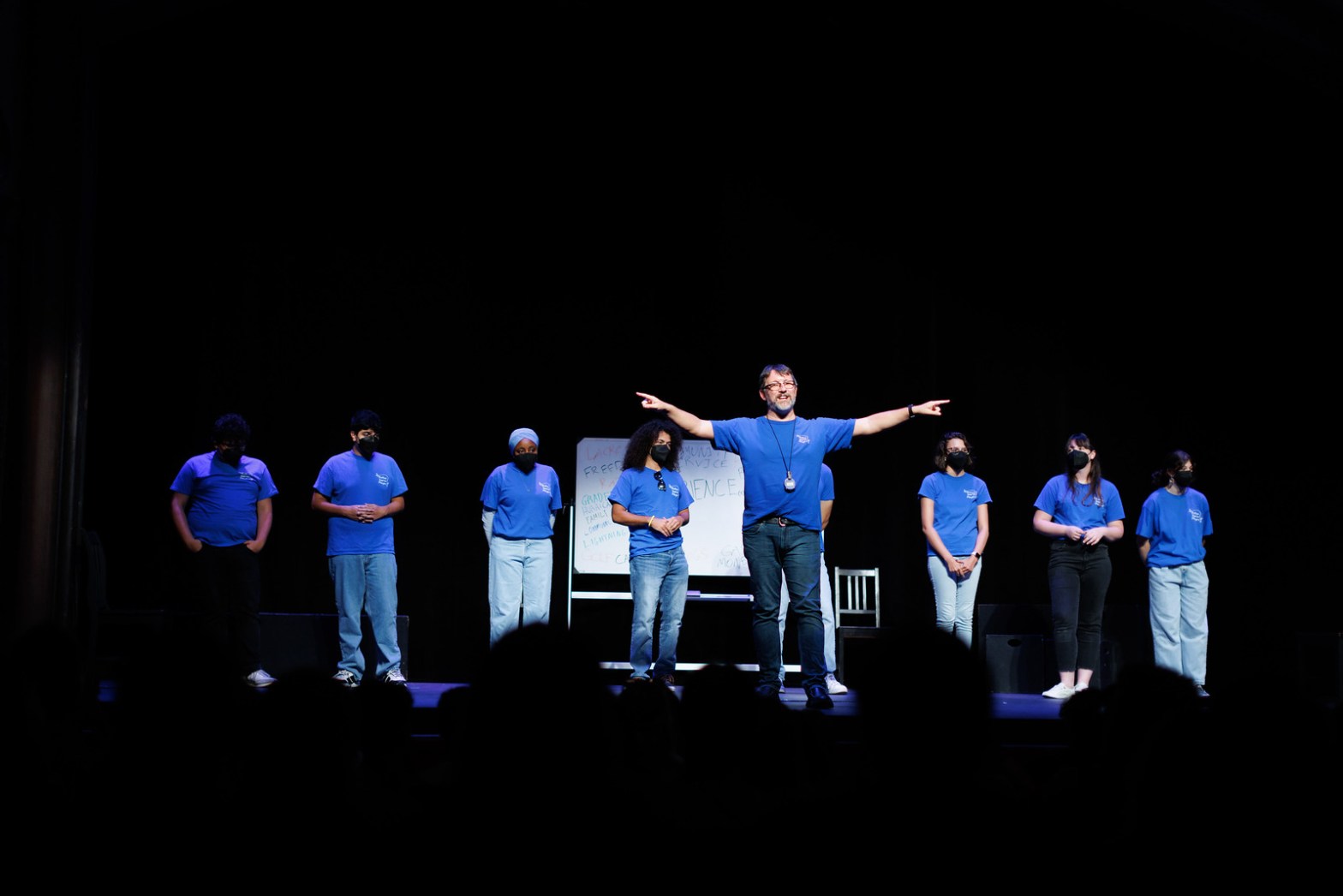
Game Library: “Orchestrated Party”

This character-based game tills similar improv terrain as Animal Kingdom and can readily be retooled to incorporate a wide variety of other essences or types of personae. Though it isn’t strictly speaking an endowment game (see Party Quirks for a variant of this ilk), Orchestrated Party does involve a related skill set in that players should seek to unlock the innate potentials hidden in each other’s audience suggestion.

The Basics

After each player is assigned a random musical instrument from the audience, a party scene is explored in which anthropomorphized versions of these ask-fors interact and “jam” together.

Example

Player A, inspired by a trombone, finishes cleaning their living room in final preparation for their party. They effortlessly swish their broom under and around their furnishings while humming to themselves as their roommate, Player B (an electric guitar) returns from the kitchen with a flourish.

Player B: “This is going to be the best party of the year. Are you ready to rock this joint?”

Player A: (continues to clean) “You promised you were going to help me set up, Darren. You know I hate doing these types of things by myself…”

Player B: (brashly, and with expansive gestures) “You got this! And I promised I’d take care of the drinks. “

Player A: (pausing and collapsing into themselves a little) “And have you taken care of the refreshments?”

Player B: “I’ve got some friends taking care of it…”

Player A: “You promised me that you weren’t going to invite them again after what happened last time…”

But Player B has already darted back into the kitchen before A can finish their thought. There is a knock at the front door…

The Focus

I’ve introduced this as a character driven game, but when you start to view it as relationship based, you’re more likely to unlock the magic.

Traps and Tips

1.) Seek variety. For most of us, the nuances distinguishing an alto saxophone from its tenor kin are likely a little obscure and difficult to embody on stage. Subsequently, the team will be better served by acquiring instruments with pronounced differences. In the setup, I find asking for choices from various sections of the orchestra a useful conceit – perhaps an instrument from the brass, wind, strings, and percussion sections, respectively (without getting too hung up on distinctions that the average audience member might not appreciate such as where a piano might rightfully belong).

2.) Explore nuance. It’s likely that your first salvos as an improviser might not be the most elegant as you strive to encapsulate the feel of a possibly unfamiliar instrument. However, as the scene progresses, look to mine the subtle potentials of your source material. Initially, the verbal (musical) qualities will probably come more easily, but as this game works as an investigation of character essence, look for opportunities to take the musicality into your whole body. How might a flute walk, timpani sit, or glockenspiel eat finger food?

3.) Consider pacing. Undoubtedly, the audience will want to see the whole orchestra in action together, but it’s advisable to build to this climactic moment. Smaller characters based on smaller instruments, in particular, will get lost in the cacophony if they haven’t had some space to introduce themselves and establish their games and contributions. Excitement to play can cause improvisers to rush the stage a little (or a lot), which, in turn, can unfortunately cause the scene to prematurely crescendo. So let the piece start with some subtler melodies and softer movements so you have somewhere to go as a team (band).

4.) Pursue combinations. My standard advice for this type of character-centric game is to deploy a little of the philosophy behind Entrances and Exits (discussed in the Game Library here). In a nutshell, this game limits the onstage cast to two players at a time. While you needn’t strictly follow this guideline, there is clearly wisdom to rotating through as many smaller combinations of your constituent instruments as you can before assembling the whole ensemble for the grand finale. In this manner, you also get to unpack all the delightful subgames: how does the piccolo relate to the oboe as opposed to the harp or triangle? Remembering all the while that these interactions should reveal and deepen relationships and points of view

5.) Enable others. Finally, I mentioned above that essence games are kin to their endowment siblings. The crucial distinction is that everyone (ideally) knows each other’s source of inspiration – repeating the suggestions a couple of times in unison before the scene begins will help a lot in this regard. Nonetheless, an attitude of setting each other up (or endowing scenic potentials and connections, if you will) elevates the play to a new level and encourages improvisers not to spend the entirety of the game in their heads trying to come up with their own clever or witty next move. Instead, ask the “trumpet” character if they’d be willing to make an announcement, or harpsichord if they’d help set up the decorations, or start to flirt with the French horn…

In performance

To keep the game fresh, you can replace the instruments with essentially any other category of items to inspire the essence work – pieces of office equipment, modes of transportation, kitchen appliances… Keep in mind that objects that have some innate movement and acoustic qualities will prove richer than inspirations that are truly inanimate or homogenous – construction materials, types of trees, library books…

If you like the party aspect of the scene, consider reviewing Emotional Door (here) that retools this idea in a slightly different way.

Cheers, David Charles.
www.improvdr.com
Join my Facebook group here.
Photo Credit: Tony Firriolo
© 2024 David Charles/ImprovDr

Game Library Expansion Pack I

Game Library: “Opera Moment”

Gorilla Theatre enjoyed a ten-year run at Sak Comedy Lab in Orlando, and it was a rare month that I didn’t play in this format at least once or twice. Our Sak version of the format, while very much in keeping with Keith Johnstone’s intent, definitely evolved into a unique hybrid that reflected our audience’s tastes and expectations (the journey of bringing the format to SAK is worthy of a post all its own). There are many things I greatly enjoyed about our version of the form, not the least of which was our ability to experiment with new short-form structures and ideas. Sometimes, these may have been seen at far-away venues or festivals; in other instances, they were just imagined musings. On some occasions, we tried an idea once and then quickly abandoned it to the sands of time (!); at least as often, a director kept visiting and polishing an idea if there was some latent promise in it that was particularly fun or intriguing.

Here, I’m sharing one of my creations that fit into this second “I kept tinkering with it” category: a musical game I’ve come to call Opera Moment although initially it went by Opera Fugue or Big Opera Finale in my notes, and I like these titles nearly as much. It’s closely related to my alphabetically previous post, Opera Minutiae (here), although its reliance on a conductor creates notably different – though equally joyous – results.

The Basics

An exciting event (historical or otherwise) is obtained, and each improviser is assigned a character to embody (logical or otherwise). To begin, the players assume highly evocative poses in a tableau. As the musician provides a stirring operatic introduction (typically clearly metered) the director/conductor signals various players in turn who unfreeze and sing their inner-most thoughts about their current predicament, usually culminating with all the characters weaving and riffing together in a grand musical climax.

Example

A steady rhythm begins on the keys as the lights rise to reveal the performers in place, each in a sharp pose inspired by the premise of the opening night of a new show. The conductor gestures to Player A, who was assigned the role of the nervous playwright.

Player A: (singing)

“Sick. Sick. I’m going to be sick.
Someone, please, get me out of here quick…”

The director gestures for A to return to their frozen pose and for B to take focus. They are holding a notepad and pen, assuming the guise of a merciless critic.

Player B: (adjusting their pose and turning to the audience)

“A flop. It’s a flop! An unprecedented flop.
Again, my pen must make this travesty stop.
A flop, a whoppingly shockingly floppity flop….”

The conductor moves their attention onto the third singer…

The Focus

As our Gorilla was a very theme-centric form, the premise and focus of the game differed widely in its development stage, although I usually set it up as if we are about to stage the climactic resolution of an operatic first act – think Les Misérables. Depending on my theme for the night, I then solicited a deliberately unlikely assembly of characters or scenarios for the three singers. Much like Madrigal, I love the contrast between the typically ridiculous content and the formal and almost stoic physical staging. Past performances have been inspired by marginal characters at large historical events, famous character combinations unlikely to be seen together, or just strong relationships and points of view that connect to a common experience or scenario – one of my favorites dealt with unlikely characters the moment before a nuclear plant meltdown courtesy of the miniseries Chernobyl.

Traps and Tips

1.) Sparse content and lyrics go a long way. There’s a fine balance in the game between providing almost too much content (full verses with multiple rhyming couplets) and providing no new content at all. (The singers above might be teetering on this, especially if these are these first contributions to the fugue.) I think a lot of the fun comes from winking at preconceptions of opera and using soaring notes, cadenzas, and interesting rhythms rather than an over-abundance of new lyrics. Obviously, you also want strong character points of view, and there is a lot to be gained from this along with some well-placed target rhyming, but it’s helpful if the conductor and players keep initial offers succinct so that the piece can build as a whole. Such an approach also enables you to circle back to the characters two or three times each without them completely expending their ideas.

2.) Make use of your conductor. This role is key to sculpting the build of the piece, and they can be particularly helpful when it comes to guiding the piece home. It’s fun to hear the depths of each character’s passion and, when needed, how they are connected to this bizarre or unexpected moment. If each character eventually condenses their game or subtext into a shorter phrase, this also sets up a fun potential for weaving as the musical number culminates, which the conductor can help facilitate as well. (In the above example, Players A and B might keep circling around the words “sick” and “flop.”) We’ve also had great success ending the piece with the singers combining around one unified lyric, perhaps recognized and then signaled by the conductor. (This latter technique is a great and standard way of ending Madrigal scenes, too.) And it can help add interest for previously activated but currently frozen players to offer soft and subtle echoes of their lyrics behind the featured singer when the piece is looking for a fuller sound.

3.) Embrace the physical stillness. While this game could certainly play well with additional movement, I’m a big fan of really limiting the physicality of the players, as if they were caught in a climactic tableau from which they can only momentarily break to sing their thoughts. I love the look of this from the audience’s perspective, and I think on a simple level, it also allows the singers to really focus on the musicality of the piece. Contained and deliberate movement further facilitates sharp and clear focus shifts as there isn’t busy activity muddying where the audience’s attention should lie.

4.) Build the accompaniment gradually. The musician should be wary of overly augmenting the accompaniment, especially as the game begins, so that the actors’ voices are providing the majority of the interest. Obviously, once the ensemble has settled into the style and discovered how their voices complement each other, everyone – including the musician – should play at full tilt. To a similar end, if there’s a really strong voice in your mix, it’s nice to make this the third (or final) entrance to the fugue (rather than the first) as it can inadvertently cause a dynamic decrescendo when smaller voices follow.

5.) Be on the lookout for your ending. I’ve found that this musical scene can burn brightly and quickly, so be prepared to grab the button when serving as the conductor if a strong “out” emerges unexpectedly. In the Chernobyl rendition mentioned above, I still recall a janitor revealing they were responsible for causing the meltdown with their bucket and mop which was a delightful surprise (in an admittedly rather dark scenario).

In performance

I’ve had the pleasure of seeing this format land really well in numerous different ways, from flat out actor charm selling peculiar points of view, to astounding vocal gymnastics and counterpoints, to a lovely combination of both when the improv magic was really flowing. For Gorilla Theatre specifically, it was a nice dynamic to have at the ready if we needed a big act or show closer, or an energy boost from a softer, simpler, or (frankly) less successful scene or forfeit.

And that’s Opera Moment! Happy singing to you all.

Cheers, David Charles.
www.improvdr.com
Join my Facebook group here.
Photo Credit: Olivia Skvarenina
© 2024 David Charles/ImprovDr

Game Library Expansion Pack I

Game Library: “Opera Minutiae”

Obviously, virtually any performance style can easily become the source material for a long-form homage, and this is certainly the case with classical opera with its larger-than-life characters, scenarios, and voices. This deliberately shorter offering takes all of that size and condenses it into a bite-sized musical scene. I call the resulting fun Opera Minutiae.

The Basics

I usually introduce this scenic device by playfully declaring that the world of opera can make any seemingly mundane action or chore truly epic. To prove that point, a simple activity is obtained – such as changing a coffee filter or cutting a hang nail – and the improvisers craft a soaring operatic treatment.

Example

Two improvisers stand beside a hastily assembled approximation of a car with its concerning flat tire as the musician begins playing.

Player A: (gravely, singing)

“The tire. The tire. Our poor, deflating tire…”

Player B approaches their partner slowly and grandly, softly echoing their sung cry.

Player B:

“Oh tire, dear tire. Do we have a spare tire?”

Their voices continue to weave and build as they hopelessly and musically consider their plight…

The Focus

Similar to Ritual Scene, mine the inspirational suggestion for its smaller constituent elements. If you gloss over the individual steps, you’ll quickly run out of material!

Traps and Tips

1.) Think extending. The “story” of an Opera Minutiae is usually rather simple and obvious and largely dictated by the audience’s premise (although there should always be room for some delightful surprises even if they are subtle). If you jauntily advance, there won’t be much of a scene at all, so endeavor to explore the details and imbue them with energy, emotion, and finesse. Loitering in the land of description and extending provides the majority of the fun and playfulness.

2.) Think small steps. When you view the small event or activity as essentially the entirety of your play, you’re more likely to build something of lasting value and interest. The flat tire (or dirty coffee filter or painful hang nail) should take on tragic proportions for the characters. As such, each interconnected action should be the cause for musical and physical luxuriating. Just seeing or discovering the problem should be significant enough to warrant a prolonged emotional exchange.

3.) Think (musical) movements. For the singers and musician alike, it’s helpful to think of the scene as comprising of a series of distinct (and building) movements each with its own equally unique soundtrack (as opposed to one consistent mood or “song” underscoring the entirety). I find it helpful to think of the game as an entire opera rather than merely one moment – a dynamic I explore in my next Game Library entry. Our characters discovering the flat tire might be fast-paced and overlapping. If Player B learns that they never replaced their spare, this might become a soaring solo aria. If Player C arrives as a tow truck driver, the scene might take on a recitative feeling before morphing into a multilayered fugue…

4.) Think (physical) movements. And don’t forget to explore the physical conceits of opera, too. Acknowledging that there are many varied styles of modern opera (and that they don’t all involve singers somewhat stoically “parking and barking” on the forestage), the taxing vocal demands of the form do tend to encourage more reserved and formal movement choices. Embracing this seriousness and simplicity will only create more comedic opportunities. Make your gestures and physical choices as deliberate, expansive, and indulgent as your vocalizations!

In Performance

At the time of this writing, I’ve been working on a new hybrid long-form/short-form experiment called The R&D Show (with Robby Pigott and Ashley Evans providing the R and A to my D). While our first act re-envisions a different stock short-form game each show as a full offering in its own right, our second act brings improv students to the stage to look at classic games through the lens of a specific theme or skill. We’ve taken to closing that act and show with this game as we love musical improv, and it provides a high energy ending in which we can likely get the more willing sections of the audience singing along. (You can find out when this show is next running on my homepage here.)

Come back and check out my next entry for another operatic potential, or explore the Game Library here for a wider assortment of possibilities.

Cheers, David Charles.
www.improvdr.com
Join my Facebook group here.
Photo Credit: James Berkley
© 2024 David Charles/ImprovDr

Game Library Expansion Pack I

Game Library: “On the Right Track”

We’ve experimented with several audience-centric formats at my home venue, Sak Comedy Lab, for our purchased “Slice of Life” segment, and this has become the standard in recent years. It’s also a common feature of our corporate shoes as it allows us to showcase the boss (or a memorable personality) of the hosting business.

The Basics

The featured guest in question is brought to the stage and interviewed by a company member or emcee of the event (perhaps with the benefit of a pre-show questionnaire). After some basic biographical and/or work details have been elicited, the guest is provided with a bell and microphone (or equivalents) and coached as to how they will steer the action of the improvised scene to follow: if players get facts correct, the honored spectator will ring the bell encouragingly; if choices are incorrect (typically comically so), the coaching observer will make a game show buzzer sound, thereby prompting the onstage players to gently rewind and offer up a new and improved alternative. The scene continues, tracing a typical day in the life of the narrator, with an assortment of guiding bells and buzzes.

Example

After the interview and a brief modeling of the editing instructions, the players have struck backstage in preparation, and the lights fade and then rise again to reveal Player A, who assumes the role of the audience member. Player A yawns as if just waking from their slumber…

Player A: “It’s bright and early and 6am: time for me to get up…”

Player A looks to the audience guest for feedback as the scene pauses. A moment later, the guest makes the corrective buzzer sound.

Player A: (replaying their first moment) “It’s ten o’clock and I suppose I should finally get ready for work…”

Another strategic pause followed by another buzzer sound.

Player A: (replaying their first moment again) “7:30 and time to face the day!”

The guest rings their bell, prodding the actor forward as Player B (assuming the part of A’s aforementioned spouse) enters the scene.

Player B: “Are you off for your daily five-mile run, darling…?”

The guest rings the bell, perhaps to everyone’s surprise.

Player A: “I wouldn’t start my day without it.”

Player B: (while opening the imaginary curtains to their bedroom) “I’ll have your usual breakfast waiting for you when you return…”

A buzzer sound.

Player A: (preparing to go running instead) “Last one back has to make breakfast…”

The Focus

As the game so heavily features an audience member, players should endeavor to put the corresponding improviser on a playful journey. This will generally consist of featuring an array of their family members and colleagues, likely in humorous or exaggerated situations.

Traps and Tips

1.) Before the interview. Our best practices regarding background information on the guest continue to evolve at Sak. When we play this format in front of a general audience, we’ve moved away from asking for expansive lists of facts beforehand, save perhaps for the recipient’s name, the event being celebrated, and the identity of the purchaser or those likely to be in attendance. This is usually ample as the majority of the audience won’t know the featured guest and so will want to learn about them along with the players onstage. (I will note, however, that it’s enormously helpful to know of any potentially sensitive areas of their life, such as if they’ve recently lost a job or loved one so that the interviewer and performers know to avoid these topics). When performing this game in front of a more homogeneous audience – employees who all work in the same division of a company, for example – it can facilitate more joyful play for the improvisers if they’re provided with some basic foundational information that their audience will largely know – such as occupational buzz words or jargon, well-known personalities in the office, or workplace customs and norms. These more recognizable elements can then be woven into the scene (as if by magic) with a greater likelihood that the audience will more instantly recognize and appreciate the details.

2.) During the interview. It’s important to know what kinds of information best serve your actors and venue, especially if you’re looking to keep the scene reasonably contained and efficient (which is a particular concern when it is offered in lieu of other scenes for a general paying audience for whom the guest is likely a stranger). Yes, seek entertainment value in the interview process, especially if you’re blessed with a personable and charming guest, but prioritize ascertaining specifics that are likely to make it to the stage and help launch the improvisers into strong energies and games. (That great story about how the protagonist met their spouse or founded their company might be “interesting” but if you’re honoring the “slice of life” quality of the format, it’s typically unlikely to influence the seen action.) And remember that the game actually benefits from the improvisers not knowing too much so that they can make brave, wrong choices and receive nudges accordingly. Finding out about key relationships provides fertile terrain – who does the guest live with, work with, see on a regular basis, and is, perhaps, currently sitting in the audience? A few strong adjectives about each person (and from a few of them, some adjectives to describe the guest in return) will often generate more than enough source material. Consider also eliciting a “bucket list” item as well to assist with the out. More on that below…

3.) As the scene begins. Usually, it’s wise to begin with the improviser who is taking on the identity of the featured volunteer. More times than not, a singular actor provides a more elegant and controllable launch as well. There’s a lot technically happening when the scene begins, and it’s important to clearly establish the conceit of the bell and buzzer with the onstage guest. This easily becomes messy if there are multiple improvisers pitching ideas all at the same time. With a solo start, Player A can develop some rapport with their doppelganger and calmly model and establish the needed give and take between each new significant choice and the guest’s judgment of its accuracy. It’s good form (even if a little formulaic) to deliberately offer up some wildly unlikely stances initially – and throughout the scene in general, for that matter, much as one might in a New Choice or Should’ve Said game. This strategy keeps the volunteer (and audience) engaged, and every now and then, you might actually land on something delightfully and unexpectedly on point. Don’t lose sight of the fact that, in most cases, the central player is a featured guest of note (even if only for their family), so keep choices light and whimsical; the protagonist should generally emerge as the “hero” even if they do so somewhat haplessly. (This approach should hold similarly true for other characters also watching from the auditorium.)

4.) As the scene gathers steam. During the first few beats of the scene, you’ll want to build in some air after each big move or offer so that you can check in with the audience member. (A visible turn and look towards them doesn’t hurt in this regard either.) While you’ll want to be mindful not to omit this element as the scene finds its footing, it’s helpful to tighten these moments for feedback when the dynamic has been successfully practiced and deployed. Doing so allows the scene to become less jarringly stop and start. Don’t be afraid to leap the action into new locations, especially if you feel obliged to feature several groups of characters that might not easily coexist in one location – we could see the guest’s family at home, then jump to their place of work to see their coworkers, before transitioning to a karaoke bar where they always hang out with their friends. Just be aware that multiple edits will invariably lengthen the scene, so if you’re performing for just one of the above social groups, you might be best served by narrowing your focus to those interactions. It’s admittedly difficult to craft a deep and nuanced story out of this game as it tends to become more of a pleasing stroll through an average day populated by delightfully not-so-average characters and relationships. Having a known “bucket list” item in the cast’s pocket can help manufacture a landing when something more organic doesn’t present itself. Another character presenting the protagonist with an opportunity to fulfill their dream serves as an oddly satisfying out for all concerned.

In Performance

For another possibility utilizing similar tropes, consider Family Dinner discussed here. This scene deploys the same corrective device of bells and buzzes, so you’ll find some helpful musings on those topics to help you keep your improvising on the right track.

And speaking of other games, you can find the hundreds more in the ImprovDr Game Library index here.

Cheers, David Charles.
www.improvdr.com
Join my Facebook group here.
Photo Credit: James Berkley
© 2024 David Charles/ImprovDr

Game Library Expansion Pack I

Game Library: “Old Job, New Job”

This less common short-form game became a player favorite during the decade-long run of Gorilla Theatre at Sak Comedy Lab and is a user-friendly introduction to the sometimes-difficult-to-explain mapping technique.

The Basics

One player obtains two starkly different occupations from the audience. One will serve as their old job, informing how they approach the tasks of their new job. Think drill sergeant in a nursery in terms of contrast. The remaining players provide the additional characters subjected to the hijinks of the resulting persona.

Example

Player A takes on the character of a massage therapist who used to be a butcher…

Player A: (welcoming their next client into their home studio with an incredibly firm handshake) “Thanks so much for giving me a second chance…”

Player B: (anxiously) “Your methods were a little unconventional, but I can’t deny that I didn’t feel the difference afterward.”

Player A: “Would you like to get on the slab yourself this time, or should I hoist you up again?”

Player B: (starting to regret their decision) “No, I’m perfectly capable of getting myself onto the massage table, thank you…”

Player B struggles to get onto the table as A mimes putting on a big chain mail glove.

Player A: “Now, what needs tenderizing today…?”

The Focus

Enjoy the process of discovering the various contrasts and conflicts between the two professions, noting that everyone should aid in the subsequent mapping feat.

Traps and Tips

1.) Start small. I’ve leaned into the butcher overlay quite quickly above to provide clarity, but in performance, this might feel a little too aggressive. It’s helpful to begin rather squarely in the “new job” territory, allowing just a hint of the past to infuse the opening moves – the firm handshake is probably closer to the mark. You might find your mind fixating on that really funny connection but do your best to exert patience so that the scene can….

2.) Build gently. This dynamic benefits from a curve of absurdity approach whereby the story begins in the world of normal before gradually escalating to the ridiculous. Let each individual move land before scrambling onto that next “clever thing” your imagination might be conjuring, for in relishing the simplicity of the moment, you’re more likely to discover the hidden gifts that the scene needs to go the distance, especially when you’ve expended the handful of bits you envisioned upon hearing the dueling ask-fors. Focus on your unique POV and processing each new action through that lens.

3.) Embrace contradictions. In the supporting roles, avoid any reactions that are tantamount to “naming the game” for the protagonist. It’s likely that Player A will pepper the scene with some butcher-specific language (a little more so than might be judicious in a traditional mapping dynamic). Teammates should take such moments in their stride, choosing to accept each picadillo joyfully as nothing more than a delightful idiosyncratic quirk (until, perhaps the very climax of the scene). Performed with light playfulness, Player B’s “table” correction could certainly provide a fitting example of this approach. If players question every odd move, there will be little momentum or action, so…

4.) Justify generously. Perhaps Player B believes this is a new and trendy style of massage, or is incredibly conflict adverse so doesn’t want to question the therapist’s technique, or was given this session as a birthday present and had no prior experience with massages… (I’m not usually a fan of “I’ve never done this before” attitudes as they can lower the stakes and put all the work onto your scene partner, but this game might serve as an exception as it widens the playing field of acceptable choices for the “new hire.”) Generally, the more willingly the rest of the cast of characters go along with the peculiar behavior, the longer the shelf life of the scene.

In Performance

As a behavior-based dynamic, this lens can easily be applied to characters in a wide array of styles and performance vehicles. The key is that the audience is “in the know” so that they have the requisite tools to translate and enjoy the odd breaches in decorum.

New to ImprovDr.com or the Game Library? You can find the ever-expanding collection of games, exercises, and warm-ups here.

Cheers, David Charles.
www.improvdr.com
Join my Facebook group here.
Photo Credit: James Berkley
© 2024 David Charles/ImprovDr

Game Library Expansion Pack I
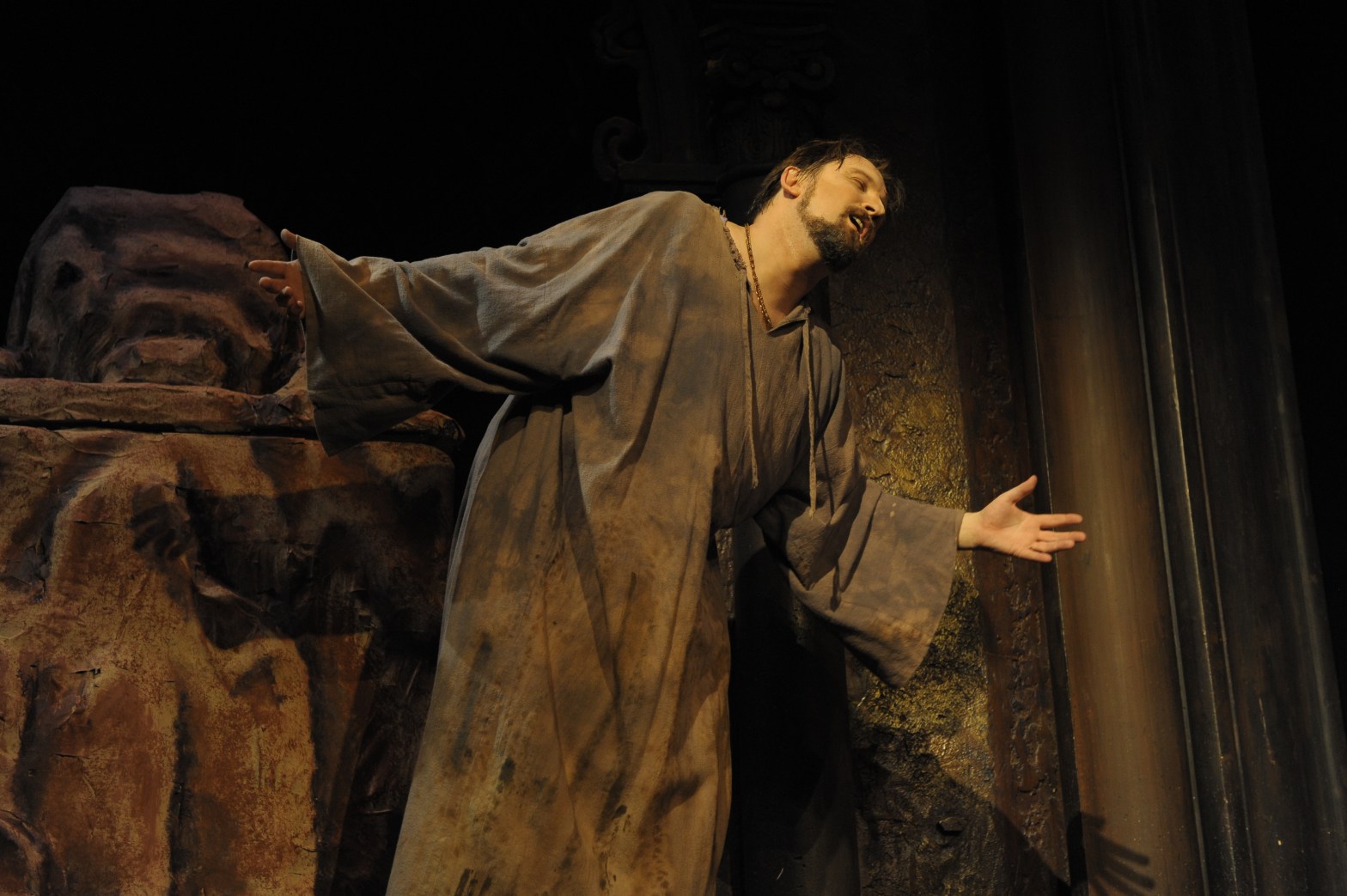
Game Library: “Occupation Endowment”

This structure provides a performance-ready application of the skills explored in Gibberish Job Mime (which you can read about here).

The Basics

One player (A) leaves the space, and while they are unable to hear, the team acquires a specific (and perhaps fictitious) occupation. A scene is played in which the returning improviser must be endowed with this role. While Player A can speak in English (or your native tongue), their fellow performers are limited to the use of gibberish, gestures, and physicality. The scene continues until the previously absent improviser successfully assumes and names the correct occupation or a preset tone limit is reached.

Example

The team accepts “skyscraper crane operator” as the job to be endowed. Player A returns to the space while the host leads a countdown for the action to begin and notes that the players have “four minutes” to complete their task. Player B waits onstage for their teammate, holding a mixed object that the audience assumes is a clipboard. (Player A is understandably much less sure!) Players C and D wait at the ready just offstage.

Player B: (huffing with impatience) “Cashesh oam fanuppo…”

Player A: (apologetically) “Traffic was awful. Sorry I’m late.”

Player B: (assessing A’s clothing and finding it woefully lacking) “Dush? Da sheeky dush?”

Player A: (only partially understanding B’s intent) “Of course I’m going to change. I just haven’t had time yet…”

Seeing an opportunity to help, Player C enters and quickly establishes a locker room and begins to mime getting dressed in their work clothes. Player B looks nervously up into the sky before nudging A to the next element.

Player A: (accepting C’s clue and starting to change their clothing into something currently nondescript) “Watch out. Our boss is in a mood this morning…”

Player C nervously plays with a safety harness, suggesting to A the danger of what is to follow.

Player A: “When you’ve been doing this as long as I have, it gets a little easier. People have been descending into mine shafts for centuries…”

Player C laughs at the unintended “joke” before looking skyward as B had done before them. Player A grabs a hard hat and puts in on, prompting C to do the same with encouragement.

Player C: (knocking on their pretend hard hat before fastening it) “Laveen haneedy.”

Player A: “Our ancestors went into the ground; we soar above it. Is it really that different…?”

The Focus

Find the story behind the endowment game so that you’re not merely wandering from one unsuccessful clue to another.

Traps and Tips

1.) Don’t overload. While it can be tempting to initially swing for the fences and offer the endowee (A) the missing information in its entirety, it’s more fruitful to treat the scene like any other and offer one small piece of the puzzle (or brick) at a time. Player A has a lot to process and will struggle if they are met with an avalanche of competing or clumsy choices. Give them some basic ingredients clearly and calmly before expecting them to identify the entire meal. With that in mind…

2.) Don’t split focus. in addition to the traditional audience, players should endeavor to keep their energy flowing towards the endowee. The most creative endowment will do you little good if it doesn’t occur in view of Player A or gets lost in the clutter. Make sure the guessing player always has a moment to see and respond to each important move (and the steering improviser has a chance to quickly give positive or corrective feedback). The greater audience won’t appreciate inelegant focus battles either and wants to see every delightful moment of struggle and success.

3.) Don’t (overtly) show. As the scene is predominantly played in gibberish, players should lean into demonstrative gestures and subtext infused physicality. Empty gibberish, after all, won’t communicate much of value. While you privilege bolder movement, be cautious not to stray into “showing” territory where you do, or use, or introduce the needed action, prop, or element of the occupation. As with all endowment games, think complementary (rather than parallel) and strive to let the endowee offer up key ingredients. Lead the proverbial improv horse to water but let them name it as water and drink it first.

4.) Don’t wimp. While this is good advice for everyone, it’s particularly important for Player A to move through the action as if they completely know what they are doing. You’ll want to carefully pitch your specifics so as to avoid just making a list of possibilities or asking a series of fear-based questions. It’s a tall order for the endowers to guide the action (while deploying gibberish, no less) if the endowee exudes tepidness. When A offers the mining idea in the above example, C needs to provide a playful correction, but this will often allow for a helpful course adjustment as well  (There will be moments when the endowers can’t truly accept a “wrong” idea without detailing the trajectory completely which is akin to wimping in other contexts but here is a little unavoidable – you just want to make these nudges with a sense of playfulness and joy..)

In Performance

Like most endowment games, Occupation Endowment needs a little room to breathe, making it a little more challenging to slate if you’re playing under tight time restrictions. While I teach it at Rollins to reinforce the concept of complementary actions, we don’t tend to play it in our short-form shows (or any endowment game, frankly) as I try to squeeze a dozen scenes and warm-ups into a 50-minute window.

If you’re looking for some more general endowment pointers and strategies, review my earlier Game Library entry on Native Expert. You can find it here.

Cheers, David Charles.
www.improvdr.com
Join my Facebook group here.
Photo Credit: Tony Firriolo
© 2024 David Charles/ImprovDr

Game Library Expansion Pack I

Game Library: “Object Naming”

I encountered the general conceit of this exercise in Keith Johnstone’s Impro, although I’ve tweaked the specifics to suit my own pedagogic needs and now often use this gentle variant in my introductory “Nuts and Bolts” master classes and workshops.

The Basics

Players work individually and are instructed to walk through the space. With each new step taken, participants should pause and clearly point at a different object while exploring the following rounds of play.

Round one

Players name each selected object by its correct name in their given language. This iteration is largely about setting the rhythm and pattern of the exercise and, consequently, serves as the bedrock for the more challenging dynamics below: step, point clearly, name the given object, and repeat

Player A takes a step as their classmates do the same. They point at a window and say “window,” before taking another step – possibly in a new direction – and gesturing towards a chair…

Round two

Players continue the physical pattern above but are now required to name each object aa something that it is not. These new names shouldn’t be synonyms of the selected item, nor merely the correct name in a second or third known language if players are multilingual. Improvisers should endeavor to retain the same jaunty pace of the first round.

Player A takes a step and points at a window and says “portrait,” before taking another step – possibly in a new direction – and gesturing towards a chair which they rename as a “blanket…”

Round three

The logistics of this round remain largely the same as its predecessor; however, players are coached to avoid certain spontaneity “cheats” that might have inadvertently infused their prior process. Participants are encouraged not to repeat words they’ve heard others utter in the space or use others’ ideas (or their own, for that matter) as prompts with which to word associate – someone else said “dog,” so now I point at a random object and announce that it is a “cat” or similar. Players should also avoid merely listing a series of items in a category – “shoe,” “baseball cap,” “cardigan…” Or utilizing other methods for defusing the innate challenge of being truly spontaneous, such as using words that all begin with the same letter or sound, or scrolling through the alphabet in order – “alligator,” “beach ball,” “charisma…”

Player A repeats the exercise while now taking care not to use shortcuts or “solutions…”

The Focus

Being in the moment, reacting instinctually and without judgment or overthinking, and rediscovering the potential boundlessness of creativity all serve as powerful takeaways.

Traps and Tips

The mechanics of this game are quite straightforward; the lessons it affords, on the other hand, are more nuanced and complex, so here are a few of my common questions that I use to debrief the experience after the completion of all three rounds…

1.) Which of the rounds did you find most difficult? There will always be outliers or participants prone to contrary stances, but generally, students experience unexpected difficulties in the second and then third versions. Unless your space is woefully limited in terms of objects (this can be somewhat the case in my current acting classroom, which primarily houses chairs, blocks, white boards, schoolbags, and little else), round one doesn’t usually pose significant problems. The later rounds, which theoretically offer a great deal more freedom, often stump players. I’ll note that young children will typically find endless imaginative possibilities in a relatively empty sandbox (sandpit) and that adults can lose this effortless ability to create if they don’t continue to exercise that muscle – which this game modestly strives to do.

2.) How many words are there in our language? In English, there are over 150,000 words (many more when you include archaic and scientific terms, notably less in terms of how many words must people commonly use). Regardless of the precise number, it’s telling that when you take one word out of the mix (in round two), the newfound freedom of choice can become debilitating. And yet, to truly revel in the world of spontaneity, we need to joyfully embrace this potential for discovery. It’s also notable that players will often create limiting rules for themselves – there is no explicit expectation that original names should be exclusively nouns, for example, and yet this will often become a presumptive limitation. When we’re seeking a culture of play, we need to be wary of imposing unhelpful boundaries beyond those needed for a game or scene to find its course.

3.) How did the instructions prior to round three affect your play? This is one of those delightful accidents that I stumbled into when I added the above well-intended parameters to the routine. Yes, it’s important to earnestly face each new object and not rely on other external impetuses to solve the riddle. (I use the image of “empty slating” as you approach each item; that is, doing your best to have a visceral reaction to that source of inspiration as if you were facing a new, blank piece of paper without any other influences on it.) However, noting “traps” invariably puts judges on the improvisers’ shoulders which only further hampers their efforts. While I believe it’s important not to actively seek “cheats,” it’s noteworthy that this awareness comes at a cost as well.

4.) And a word of caution. As you move into the “name things as they aren’t” territory, some cheeky players will usually discover the potentially divisive side game of pointing to fellow students and offering whimsical critique – “talented,” “smart,” “handsome…” It doesn’t take much for this misplaced joviality to eclipse the stated intent, in part because it’s another way to avoid the innate discomfort of the exercise. It can prove helpful to forewarn players of this “gag” just to reduce the likelihood of its unwanted appearance.

In Performance

I’ll end the exercise with some observation to the effect of how it’s an improviser’s job to reconnect with effortless creativity, freed from self-imposed strictures, and the shadow of internal and external judges. That’s not a small feat, as I’m reminded every time I engage in this exercise alongside my students after more than thirty years of playing it!

You can also revisit these rounds as a launching pad into adjacent skills. For example, if I’m looking at rhyme, I might add a replacement or fourth round so that participants now name an object (as it is or isn’t) and then must immediately offer up three unique rhyming words. So, if they were to point at a wall, they might then say, “Wall, ball, cattle call, enthrall…” before moving into the next random object in the room.

I’m continuing to edit the Game Library as i move into the Os. Keep up with my progress here.

Cheers, David Charles.
www.improvdr.com
Join my Facebook group here.
© 2024 David Charles/ImprovDr

Game Library Expansion Pack I
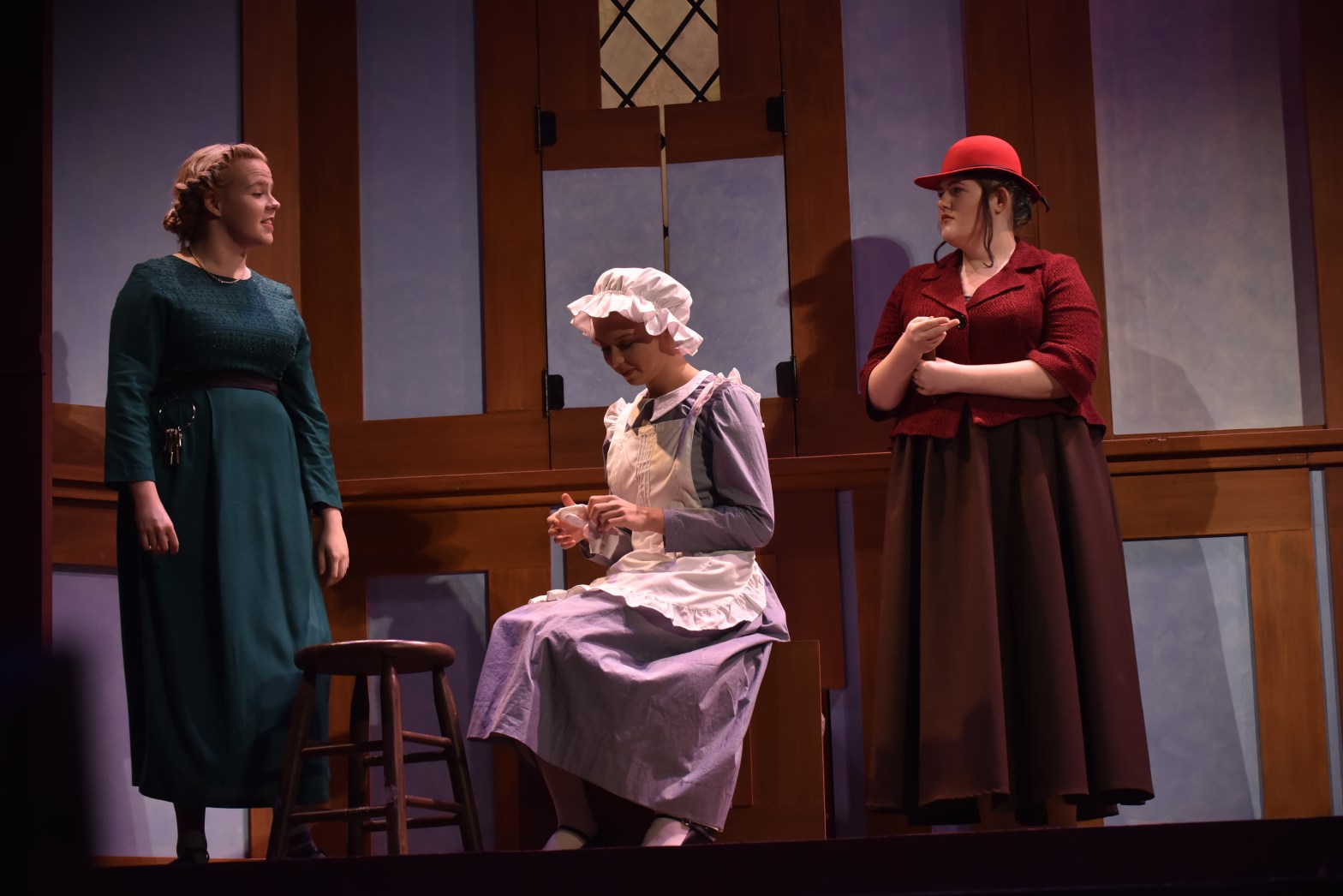
Game Library: “Numbers”

I know this game primarily as a warm-up, but the malleable central dynamic could easily be expanded into a larger offering as well.

The Basics

Players form a line at the back of the performance space and are each assigned a number from stage left to right. (Player A becomes 1, B is 2, and so on.) A prompt – such as a theme, weird, or location – is obtained, and the host or emcee orchestrates a series of brief vignettes by providing various number combinations that bring the corresponding players to the foreground to play out an improvised scene. On a suitable button, the host signals each edit (perhaps with a whistle, musical sting, or quick blackout), the current players return to the backline, and a new random combination of numbers is provided.

Example

The actors stand in place and announce their assigned numbers. The host fields “anxiety” as the initial theme, and after explaining the basic premise, calls Players 1 and 2 to the forestage. Player 1 (A) quickly assumes a seated position on the ground, while player 2 (B) watches over them with concern.

Player 2: “I’m truly sorry. I didn’t realize you’d arranged your books in such a specific order.”

Player 1: (gently rocking) “It’s nothing. I know you were only trying to help…”

Player 2: “It clearly isn’t nothing. You’ve just been so generous, Ghina, letting me stay with you while I get back on my feet. I just wanted to do something to show my appreciation…”

Player 1: “So you decided to reorganize my entire library by book cover color?!”

Player 2: (looking at the shelves and reconsidering their gesture) “I just thought it would look nice this way…”

Player 1 rocks a little quicker and buries their head as the host signals the end of the vignette.

Host: “And scene. Players 3 and 6.”

The first two performers scurry back into the line while 3 and 6 spring into action.

Player 3: (holding an imaginary clipboard) “And all that’s left to do is give you a tour of the construction site.”

Player 6: (looking high into the sky with excitement and nervousness) “And I’d be working… up there?”

Player 3: “That’s right! Up on the 38th floor; that is, until we start building the 39th floor…”

The Focus

Bold, clear choices and getting to the point swiftly but without needlessly hurrying the improv will serve you. Much like a Freeze Tag game, the scenes will likely err on the shorter side, especially when you use the frame as a warm-up, but they should still feel like scenes (rather than gimmicks or punchlines).

Traps and Tips

1.) Consider transitions. Don’t meander between the various called scenes. When your number is called, leap into action. If players defer too politely to each other before making any substantive choice, the vignettes won’t amount to much of anything. Similarly, push to the button or out so that the caller can easily move on. You might find that quick blackouts between each scene can help but be wary that these don’t bog down the momentum. And when the caller offers an edit, make sure you leave the stage as spryly as you entered it so that the next scene can exit the gates without impediment.

2.) Consider combinations. As the caller, look for new and helpful player combinations. Pairs provide a nice default, at least initially, as the more characters in a scene, the more likely it is for the action to begin a little clumsily. Once you’re up and running, however, look for new dynamics and discovered games. A few solo scenes can raise the stakes and delight, especially when pitched to a player (number) that has successfully built rapport with the audience. Well-placed group scenes will add further spice, and repeating memorable actor combinations can invite joyful scenes and characters to reappear.

3.) Consider connections. You can handle the initial ask-for in numerous ways. It can serve as no more than the impetus for the original action with subsequent scenes having no obligation to explore that same conceit (other than, perhaps, tangentially using the prior vignettes to inspire the current offering). Or every new combination of players can strive to investigate the same core idea but from a new or unexpected angle. Often, the game exists organically somewhere between these two poles. Regardless of your stated intent, look for pleasing ways to weave prior details into the mix, especially if you’re looking to present a more robust experience.

4.) Consider the audience. In lieu of using a host to randomize the players, you can also hand this playful power over to the crowd (noting thar you may lose the ability to artistically manipulate and pace the resulting scenes a little). If you use judges and scorecards in your venue (and you’re playing with an appropriate number of improvisers), these spectators can be instructed to hold up one or more (or possibly none) of their cards on the host’s signal. The accumulated list of numbers is then announced, and the assigned players improvise accordingly. (If judges happen to hold up duplicate numbers, then they just count as “one” vote.) Alternatively, a few random spectators could just display a handful of fingers from one (or none) to the total number of players available. Appropriate sided dice can also serve this function. You’ll probably still want a host or designated player to help facilitate these “votes” so that they are crisp and elegant.

In Performance

Perhaps every warm-up exercise holds the risk of struggling if players lethargically hit the stage, but that’s particularly the case with Numbers due to the quick turnaround between scenes. On a related note, also make sure that the scenes themselves don’t become frantic, rushed, or approximated, or you’ll struggle to build the overall experience in an aesthetic fashion.

If you’re looking for a longer improv serving, it’s a simple matter to increase the length of the scenes, and if company members are instructed to take on the same persona as their first appearance, the format quickly takes on a “village full of characters” vibe as numerous different relationships define the action.

Looking for more games, exercises, and warm-ups? Go here.

Cheers, David Charles.
www.improvdr.com
Join my Facebook group here.
Photo Credit: James Berkley
© 2024 David Charles/ImprovDr

Game Library Expansion Pack I
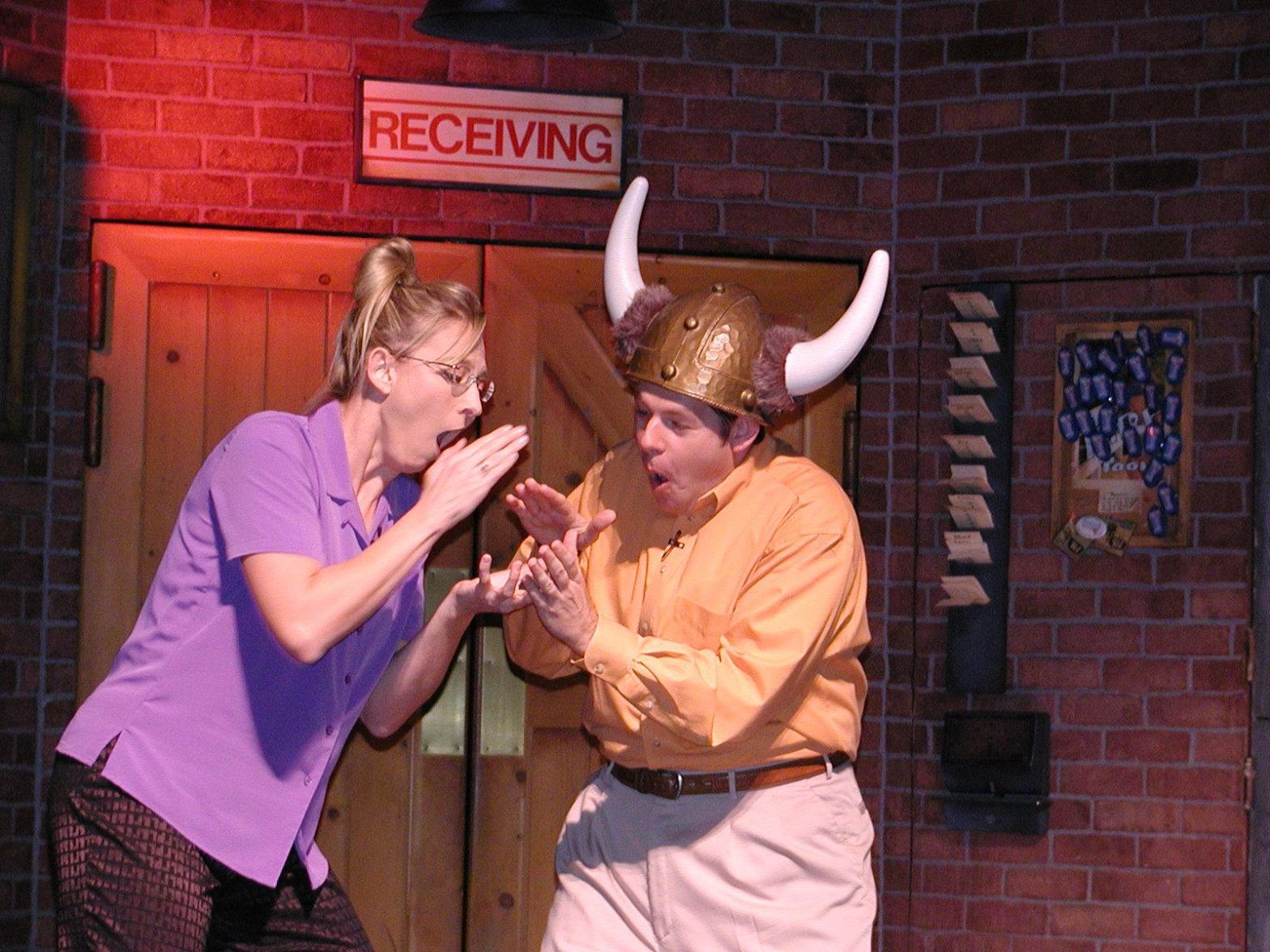
Game Library: “Noise and Action Circle”

Played energetically, this warm-up will have everyone exercising their bodies and voices in a matter of minutes.

The Basics

Players form a circle. The first participant, A, introduces a unique noise and accompanying action. Starting with the player to their immediate right, this offer quickly ricochets around the circle in a counterclockwise direction (with each subsequent player not waiting for the prior player to fully complete the action before mirroring it and passing it along). When the choice makes it back to its creator – Player A initially – they repeat their own contribution. The next improviser, Player B, now introduces a brand-new motion and sound that passes around the circle with similar rapidity. The pattern continues until C, then D, and so on, add their own playful creations. When the last player’s noise and action make it back to them, the exercise is complete.

Example

Player A introduces the gesture of clasping they hands above their head while making a little jump, which moves swiftly around the circle.

After A repeats their movement, B now lunges into the circle with a whooshing sound. C mirrors this idea, as do the remaining players in sequence.

When it’s C’s turn to initiate, they perform a little “cha cha” step while whistling. D approximates this as best they can, and the noises and accompanying actions continue apace.

The Focus

It’s a simple little physical warm-up, so that’s the primary focus. However, it can also be used to build your movement vocabulary and develop bravery and reactivity.

Traps and Tips

1.) Move boldly. Avoid making wimpy choices in the initiating position. When introduced to new exercises, performers can become surprisingly reluctant to make a large or revealing offer, but the game will fall flat if every movement and sound utilizes the bare minimum of energy and attack. A particular pet peeve – that often occurs when the game has developed some momentum – is when a player unhelpfully and anticlimactically introduces an unenergized gesture (often some iteration of a “boop” with a small finger point) thus bringing the joyful wave of attack to an abrupt halt. Don’t be that person!

2.) React swiftly. I’ve used the term ricochet above as the game benefits from this approach rather than a more stop and start dynamic of each player waiting for their predecessor to finish each action in its entirety before adding their own voice and body. You want to make sure you’re honoring all the details of each new element, and so the first few participants are likely going to need a second to process the specifics, but as you get a few places around the circle, players should start to anticipate the wave of energy and diminish any pause between echoes until, ideally, the motions actually start to overlap.

3.) Build gradually. While I caution against fear-based little offers, there is a value in letting the overall size and volume of the initiations increase slowly with each new addition. To this end, perhaps don’t start the game with the biggest or most extreme move in your repertoire so that there is somewhere to go. In a related sense, it can also be fun to let each new movement build just a little with each echo around the circle so that the owner of any given noise and action finds that it returns to them in a slightly elevated or exaggerated state. In this way, each suggestion grows a little while it moves around the circle, and then each new suggestion continues to build a little from where the prior idea left off (remembering that choices ate not literally cumulative so much as responding to the earlier dynamics).

4.) Participate graciously. And just as an annoyingly under energized “boop” can put a damper on the fun, so too can players who provide impossible physical feats of strength that will only thwart their fellow ensemble members. Unless you’re workshopping in a group of trained (and well stretched) dancers, challenging the group to mirror your gymnastic splits or high kick will likely cause consternation and possibly injury.  Keep in mind what will give your teammates joy rather than strive to show off a unique and perhaps unrepeatable skill.

In Performance

There’s also a version of this game called Noise and Action Backs, which exploits the same basic premise. Here, players form a line all facing forward. The player at the back of the line, A, taps the improviser standing directly in front of them, B, causing them to quickly turn around. A then introduces the inspirational first sound and action before running to join the front of the line and turning their back away from the activity. B now taps C on the back or shoulder and models the provided combination before joining the front of the line. C then does the same for D, and so on, with the movement and sound being passed through the line at an ever-increasing speed. In this warm-up, the same choice now slowly grows and morphs and heightens (in a “telephone game” style) as waiting players can’t see the exact movements of those who came before them. If you like the original and have a reasonably robust space to play in, this provides a useful variation on the central theme.

Cheers, David Charles.
www.improvdr.com
Join my Facebook group here.
Photo Credit: Olivia Skavarenina
© 2024 David Charles/ImprovDr

Game Library Expansion Pack I
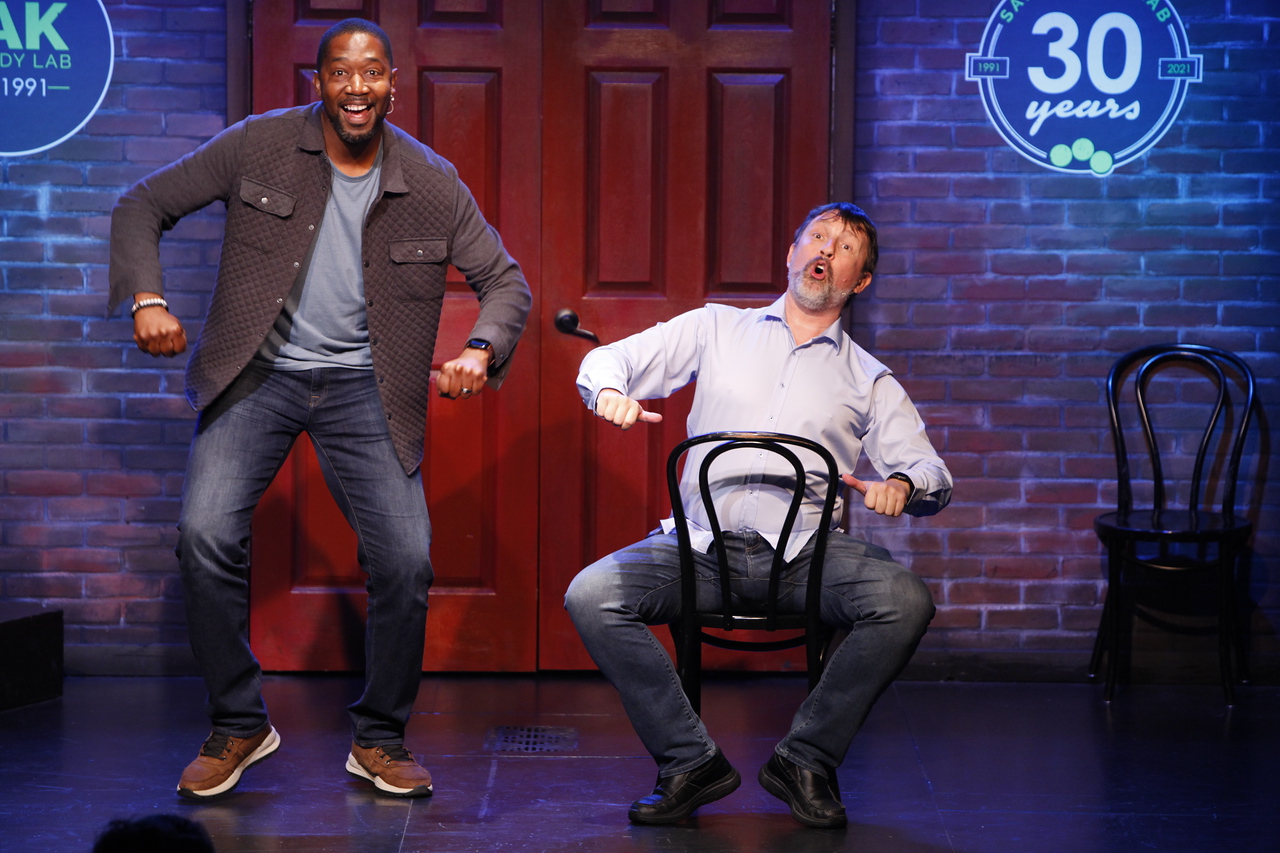
Game Library: “Ninety-Nine Jokes”

I’ve encountered this line game by various names (and featuring different numbers), yet the mechanics remain consistent regardless. It requires quick wit and charm and more than a little inclination toward gagging (or, perhaps more kindly, joke telling).

The Basics

Improvisers wait on the back line, often with a microphone placed center stage before them.  (I like the touch of placing a stool with a water bottle on it in frame as well, as these props strike me as particularly emblematic of a stand-up venue, but I don’t think that’s standard practice!) The emcee or facilitator obtains a prompt, such as an occupation or object, from the audience. When inspiration strikes, players take turns stepping into the “spotlight” and delivering a formulaic joke (as outlined below). After several efforts, new offers can be elicited to refresh the well of creativity. If the game is being used as a decider or toe-breaker, the host can award points for particularly well received or ingenious jokes (or even punny groaners) until a winner (or winning team) is announced.

Example

The host elicits “mushrooms” and Player A volunteers to go first.

Player A: “Ninety-nine mushrooms walk into a bar. The bartender says, ‘I can’t serve ninety-nine mushrooms,’ and the mushrooms say, ‘Why not? We’re fungi [pronounced fun guys].'”

Other players soon follow with new variations on the same model…

Next Player: “Ninety-nine [blanks] walk into a bar. The bartender says, ‘I can’t serve ninety-nine [blanks],’ and the [blanks] say… [original punchline].”

The Focus

Like most line games, you need to attack and balance quality with quantity. If there’s too much time between the jokes or a pervasive tentativeness, you’ll likely lose the audience (if you ever found them to begin with).

Traps and Tips

1.) Prime the audience. If you set up the expectation that every punchline will be a zinger, you might be raising the comedic bar unhelpfully high. I like it when the host encourages the audience to make a variety of enthusiastic responses – obviously laughter for a successful finesse, perhaps a joyfully loud collective groan for a less impressive showing and chirping crickets for the poorest constructions. It can be a lot of fun to pre-rehearse these options, and it adds a safety net of sorts to the game for the players as it’s quite disconcerting to have your joke greeted with stunned ambivalence. Loud judgment at least keeps the space infused with playful energy. And it can set a struggling player up for glorious redemption of they managed to finally make the comedic grade.

2.) Sell the lemonade. Obviously, it’s easier to perform a punchline when you feel confident that it’s likely to land well. However, even (especially) when you’re peddling something of more dubious merit, you’ll want to do your very best to sell it. Don’t rush through the stock components of the set-up but rather infuse them with personality, charm, and specificity. In adept hands, the audience will find great joy in otherwise mundane material.  (Similarly, even great and clever wordsmithing can become undermined by a blasé delivery.) There’s a reason pleasant and amiable kids sell more lemonade at street stands than sour-faced and bitter adults.

3.) Support your teammates. This is stock advice for line games, but make sure your energy is flowing towards the current improviser in focus. The audience frequently takes its cues from the ensemble, so if you look like you’re in agony trying to concoct a passable joke or are harshly judging the efforts of others (or your own shortcomings) the crowd will reflect those less-than-helpful energies back to the stage. Play with joy, applaud other’s successes (and valiant struggles), and keep the energy building. To this end, sometimes it’s critical to step forward and take your turn even when you know you have nothing, just so the proverbial spotlight doesn’t go cold. A moment of well-timed self-sacrifice also buys your teammates a little space to hopefully compose something more nuanced to wash away your cruder contribution as well.

4.) Pursue the novel. In past venues, we’ve used the term “Rolodex” to refer to tried and tested punchlines for oft-pitched ask-fors. (My fungi example above serves as an homage to perhaps the most seasoned of such perennial “favorites.”) If you play these types of games often, it’s unavoidable that you’ll develop some running lists of past successes. However, be careful of making the exercise nothing more than trotting out old material. Firstly, that’s not really the spirit of improv! Secondly, it tends to create an inorganic and rushed experience with players scrambling to repeat that idea that was really funny twelve years ago. If you’re hosting, look to challenge the company with original prompts whenever possible. (Then, if the game isn’t landing, you can always resort to more familiar terrain to find firmer footing.)

In Performance

While this frame can certainly invite ribald material, it can be more family-friendly than Pick-Up Lines and other similarly saucy line games. I personally like playing it in larger ensembles just as that depth of a bench increases the likelihood that someone will be able to come up with something to fill the potentially oppressive silence!

New to ImprovDr.com or the Game Library? You can find the ever-expanding collection of games, exercises, and warm-ups here.

Cheers, David Charles.
www.improvdr.com
Join my Facebook group here.
Photo Credit: Jame Berkley
© 2024 David Charles/ImprovDr

Game Library Expansion Pack I