Game Library: “Pop-Up Story Book”

Look no further if you’re searching for a short-form game that can exercise your Narrative muscles while also stretching your literal muscles a little too! Pop-Up Story Book offers a lively frame for creating a delightfully theatrical story. You’ll just need a wide and recently mopped stage space!

The Basics

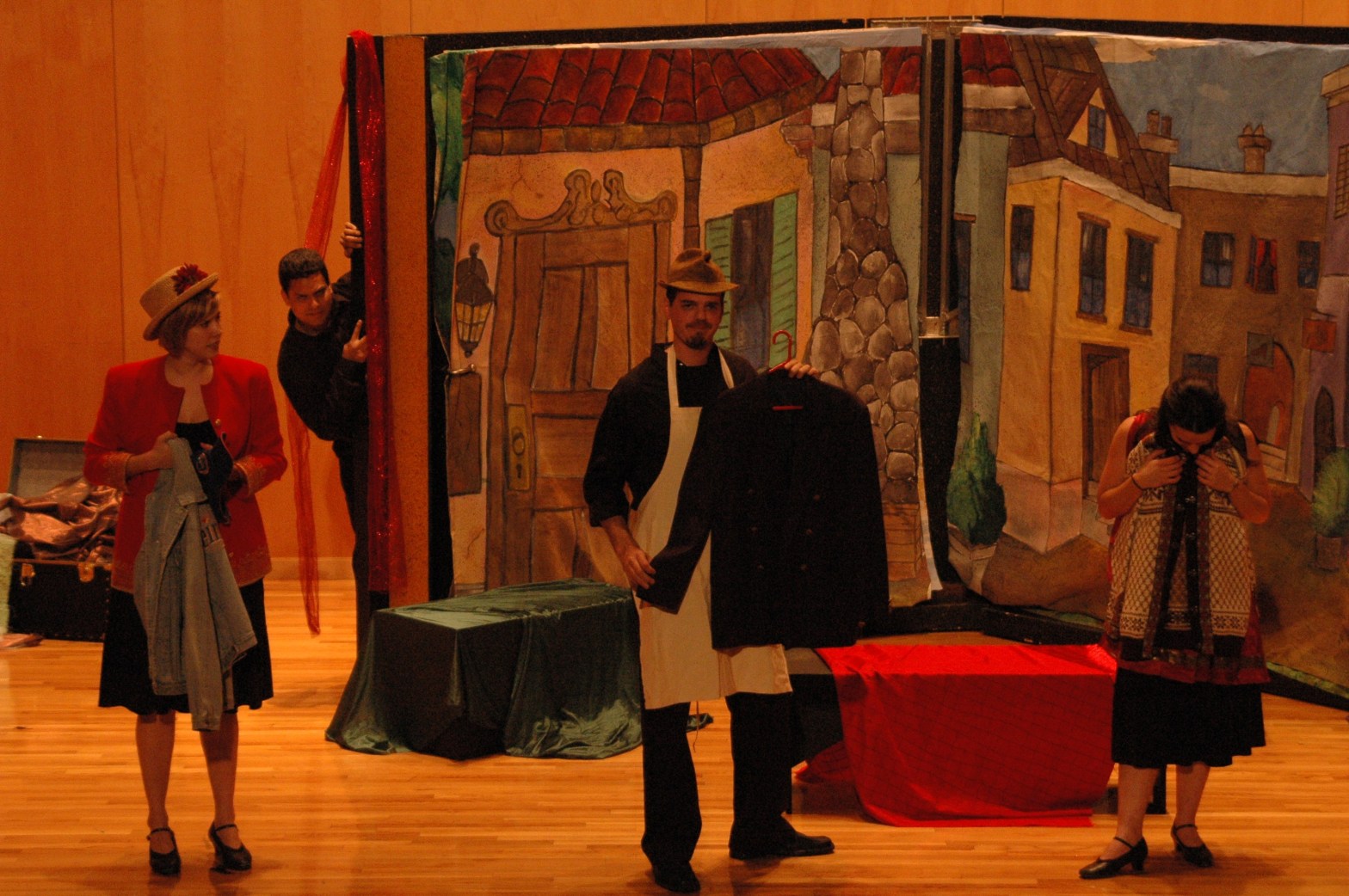
One player serves as the storyteller while their remaining teammates become the characters “trapped” in the pages of an oversized story book. The mechanics of the game are similar to Freeze Frame (which you can read about here) with the notable exception of the image transitions. The game begins with the narrator introducing today’s story (probably inspired by an audience elicited title) as they stand to one side of the performance space. One or more other players pre-set themselves by lying on the floor as if they are squeezed between the pages of the book. When the narrator is ready to begin, they jauntily zip across the stage (usually starting from stage left), and mime turning an enormous page as they go. When the narrator passes any waiting actor, they immediately spring to life and assume a static pose as if they were a cardboard cutout. From their new perch stage right, the narrator now provides the first step of a story that fully justifies the poses of their teammates. When they are ready for a new image, they stroll back across the stage, thereby signaling any standing actors to once more lie down in preparation. (At this point, any player waiting in the wings can roll onstage to prepare for the next image, or an onstage actor wishing to leave the action can roll offstage and out of sightlines.) Once more, the narrator dashes stage right, turning the giant page as they go, and any stowed player quickly springs up to form a new pose. In this fashion, the narrator moves through multiple tableaux – justifying each one as they go – until the story reaches a natural conclusion. Narrators can also deploy “pull tabs” (discussed below) to briefly animate the current image.

Example

The team acquires “The Lonely Alligator” as the title for their story. Player A dons the role of the narrator and pre-sets themselves stage left while a fellow player (B) lies down on the stage in preparation. The remaining players stow themselves in the wings.

Player A: (to the audience) “I’m so glad to see so many familiar faces at today’s reading session with Librarian AraBella! Is everyone ready to visit the everglades?”

Player A encourages the audience to assume the role of children, and some react with fitting excitement.

Player A: “I’m excited to read today’s story that is all about a lonely alligator. Let’s look at the first page…”

Player A mimes turning an oversized page as she jogs from stage left to stage right. As she does so, Player B jumps up and assumes the titular role, their arms extending before them to represent giant jaws.

Player A: (assessing the image as she continues) “It had been a strangely hot summer, and all the creatures in the everglades were particularly weary, and particularly moody, especially one irritable alligator by the name of Allie that lay quietly in the waving tall grass…”

Player A moves downstage of the image signaling a page turn is imminent and begins to walk stage left as Player B (Allie) lies back down and another player (C) quickly rolls onto the stage. Player A grabs another imaginary page edge and runs across the stage as Players B and C assume new frozen positions.

Player A: “On sweltering days such as these, Allie the Alligator always turned to her trusted friend, Bella the Pelican” (justifying Player C’s bird-like demeanor.) “Though the two animals seemingly had little in common, they both shared a distaste for the scorching summer sun, and Allie liked to cool herself beneath the great bird’s wings.” (Looking to the audience) “Let’s see Allie enjoy Bella’s shade…”

Player A steps into the image and pantomimes grabbing a giant pull-tab. With a self-provided creaking sound, Player A pulls and then retracts the tab three times, causing both frozen players to sharply shift their positions and then return to their original poses three times as well. Player A then steps back to the side of the image…

Player A: (as she moves in front of the image once more so that the onstage players can drop to the floor) “Let’s see what happens on the next page…”

The Focus

Concentrate on the give and take between the narrator and those crafting the images. Ideally, both the verbal and physical components of the game will work together to inspire a cohesive (although potentially unpredictable) story arc. There are several critical physical conceits that need polish in order to elevate the game’s entertainment value – clumsy staging will quickly diminish the charm and effectiveness. On a simple but important level, you need to have performers who are comfortable and able to safely and joyously roll around the stage and leap up and down. If this level of attack is of concern, you might want to consider a related format such as Freeze Frame instead.

Traps and Tips

1.) Practice the logistics. While I’ve endeavored to paint as explicit a picture as possible of the needed techniques and tempos, it’s unlikely this game will soar without some focused workshopping and, frankly, some spaces just aren’t conducive to the heightened physicality that the game demands. Make sure that tableau players are able to roll on and off the stage without necessitating collisions and bumps. There should also be ample room for the narrator to clear these transitions downstage of the commotion. When executed well, the transitions between pages can look quite simple, but in reality, there are a lot of moving pieces that need to be in alignment. The narrator needs a set pattern for striking prior images (generally walking downstage of the image from stage right to left) and then a clear prep for turning the next page (spryly jogging from stage left to right while holding the lip of the imaginary page.) Tableau players need to drop quickly on the first cue, and spring to life with an unequivocal physical choice on the second. None of this is particularly challenging, but it typically takes a few rotations for it to become second nature for the company. For this reason, this format isn’t a great choice for a team thrown together on the night that has never workshopped the basics of the game together.

2.) Pull-tabs need predictability. Firstly, don’t feel the need to insert pull-tabs into every page; in fact, there is a great value to holding off on this element a little until the story has found its footing. (I’ve used one on my second page in the example above so as to provide a walk-through of some of the finesses but in performance I’d usually wait until the third page or later unless the team has stumbled upon an image that simply demands animation!) There is some pull-tab etiquette forged in the improv trenches that I would highly recommend. As the narrator, it’s extremely helpful to verbalize a clear intent for the pull-tab, even if you’re not pitching a specific choice. To clarify further: which characters (all, some, or one?) are you hoping to see in action, and how does this connect to the story at hand. Phrases such as “Let’s see Allie defend her territory…,” “Let’s see how the panther responds…” or “Let’s enjoy the couple and their celebration” offer clear clues to your teammates. This is particularly important if you’re hoping to break up the stage picture into two or more isolated pull-tabs. Narrators should provide a clear verbal cue (I use a creaky floor-board type sound) that has a distinct pull and then release energy so that actions can be matched to this tempo accordingly. Often, posed players won’t be able to see these cues, so a distinct verbal offer is key. Making three such cues in a row provides a helpful template and establishes a norm even if you decide to break this later in the scene. It can also prove tricky in terms of staging for the narrator during these moments: I like the conceit of stepping slightly into the image when you’re cueing the tab device, and then at least briefly returning to the narrator’s perch stage right afterwards so that you don’t accidentally muddy the signal for everyone to drop to the ground between page turns.

3.) Justify for inspiration. Underneath the rather pleasing staging bells and whistles, Pop-Up Story Book is a justification game at heart. It’s helpful to launch the game as the narrator with a strong sense of character and style but be sure to truly elevate and embrace surprises and gifts that should invariably come from the tableaux. So, while it may seem helpful to frame each new page with clear directions – “Let’s see Allie venture into the everglades and then stumble upon her arch enemy the panther devouring its prey” – such choices, especially if this heavy-handedness becomes the norm, will greatly impinge upon your teammates’ ability to shape the action. The other side of the coin is that tableau actors need to fearlessly leap into strong and dynamic poses. There truly isn’t time to consult with other players as the page turns, so part of the appeal is seeing how disparate (desperate?) choices become incorporated by the narrator. Physical players should also be sure to balance helpfulness with a little playful mischievousness. Once Allie has been established, for example, it won’t typically prove helpful to have this character disappear for multiple pages in a row. But it could be joyful to suddenly see this character in an inexplicable pose. Just don’t let a little joyful torture or shivving scuttle the story needs.

4.) Enjoy the unique presentation. Pop-Up Story Books tend to appeal to younger readers, and so this reality provides a common frame for the game. Savor the opportunities such an approach affords. Endow your audience and encourage their involvement when and if it feels appropriate. Play with language and storylines that might appeal to a younger demographic (even if you’re doing so with a satiric or more knowing wink). Explore a narrator persona and narrative devices that can maximize the potentials of this more youthful genre. When you’re playing an evening of short-form, scenes can all start to feel a little alike in terms of content and approach; including Pop-Up in the mix can really add a different texture, especially when the physical players truly attack their roles with excitement and playfulness. There is something ridiculously magical about watching improvisers roll all over the floor – and perhaps each other – in their efforts to honor the conceit of the ludicrously oversized story book. If these mechanics are executed with a sense of jadedness, much of the spirit and appeal of the game is quickly lost.

In Performance

This game provides rich opportunities for the exploration of narrative as the storyteller must pleasingly and instantaneously combine unexpected elements in a way that utilizes the images and charts a journey of note. As this format is a little technically complex, many of my pointers have focused on best staging practices. I’ve referenced an earlier Game Library entry several times in this description, Freeze Frame, and it’s definitely worth visiting this post here for additional narrative pointers as both games draw from a similar creative well.

Cheers, David Charles.
www.improvdr.com
Join my Facebook group here.
© 2022 David Charles/ImprovDr

Connected Concept: Narrative
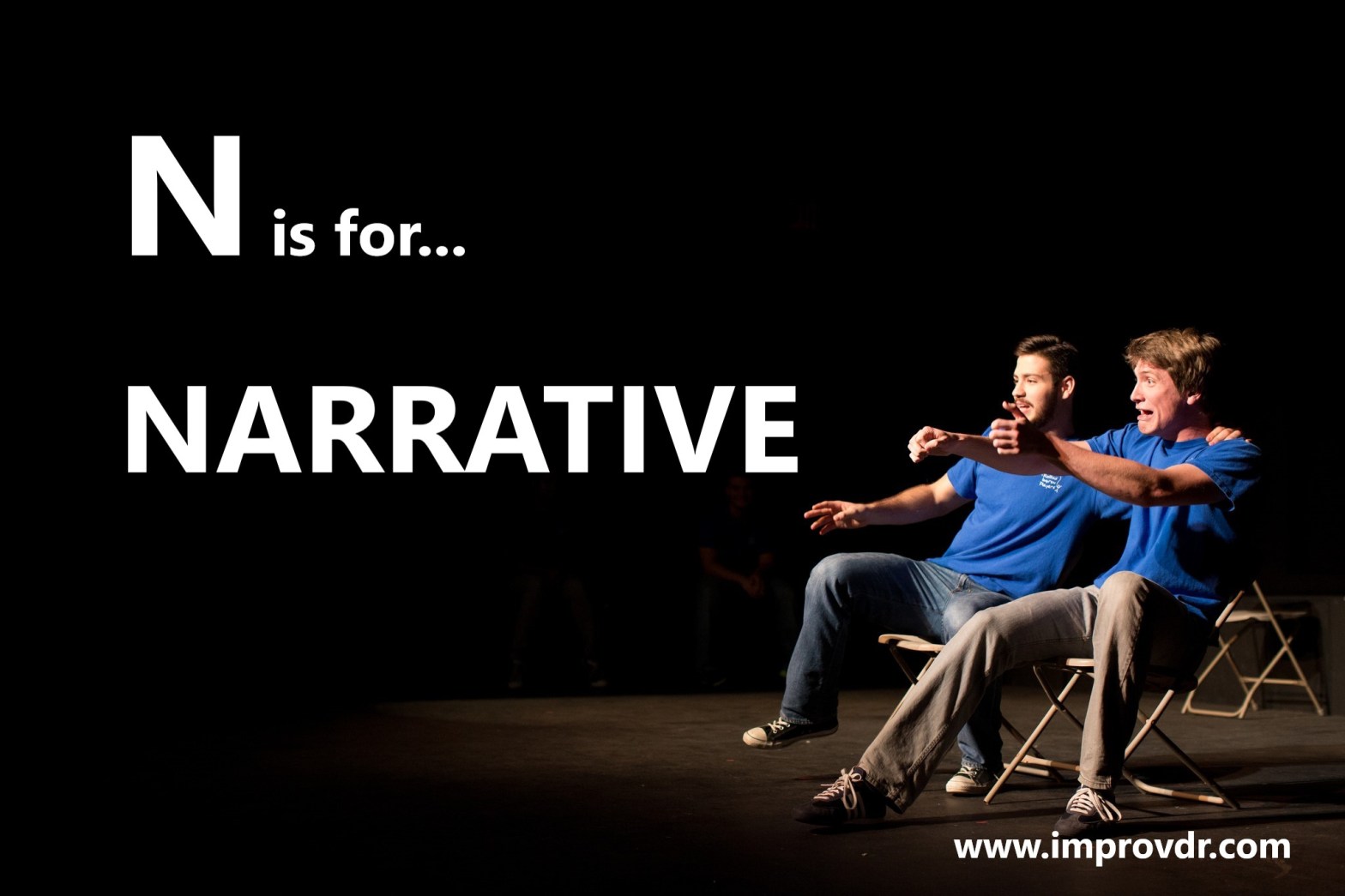
“N” is for “Narrative”

The story or storytelling elements of an improvisational production.

Qualities of Strong Narrative

This is just a taste of this entry/concept. Go here for more information.

Related Entries: Advancing, Bulletproof, Extending, Hosting, Long-Form, Looking Backwards, Shape of Show, Specificity Synonyms: Storytelling, Structure

Cheers, David Charles.
www.improvdr.com
Join my Facebook group here.
© 2022 David Charles/ImprovDr

Connected Game: Pop-Up Story Book

Game Library: “Name Circle”

Just as Names are critical components of our scenic work – offering insights and details for each original characterization – so too are they important in our workshops and rehearsal halls. Most processes start with some form of “getting to know you” exercise, especially if you’re working in a newly formed ensemble. As is likely the case with most instructors, I’ve made a point of collecting and adapting Name Circle warm-ups so as to keep my own repertory fresh. These activities routinely serve as great icebreakers, energy boosters, or simply drills for gaining comfort with the names of your fellow players. I’m breaking with tradition a little and including examples and pertinent tips alongside each of the nine variations as each one provides slightly different opportunities and challenges.

The Basics

The group forms a circle. And one player begins…

Version One – Adjective Actions: Player A takes a step into the middle of the circle and introduces themselves by providing an adjective (typically that shares the first letter of their name, their given name or nickname, and an exaggerated gesture. Once completed, Player A steps back, and the rest of the group repeats the three elements – adjective, name, and gesture – with gusto and full attack. Players can tend to make the smallest, least committed gesture possible, especially if you are working with newer performers, so encourage abandon and full commitment. After all, “no one looks silly if everyone does it!”

Player A: (steps into the circle) “Hi, I’m delirious David!” Player A performs an outlandish sweeping bow and then steps back. The rest of the group then takes a step forward and mirrors the introduction.

Version Two – Original Acronyms: Player A steps forward and provides an on-the-spot acronym that utilizes each of the letters of their first name in sequence. The challenge is markedly more formidable for those who go first (as those later in the circle will invariably start to solve the riddle a little beforehand). This doesn’t necessarily matter, especially if everyone is playing this warm-up together for the first time, but if you’re looking to also stretch players’ verbal or risk muscles, you could have players state their names and then provide an acronym for a random word provided there and then by the instructor or coach. At the conclusion of each acronym, players can chime in with a welcome to the speaking player in return or perhaps physicalize the probably absurd statement. Be wary of well-intended players offering up solutions if others are struggling (unless it’s a true move of desperately sought-after kindness) as a little struggle is built into this dynamic that rewards bravery over perfection.

Player A: (steps into the circle) “Hello, I’m David and I Delight At Vicariously Inspecting Daffodils.” The group responds with an enthusiastic “Hello David!” and all begin to pantomime examining flowers…

Version Three – Passing Names: This works best as a review of names or following a round of quick introductions. The first player, A, begins the process by clapping towards another random player, B, and clearly saying their name. Player B now continues the process by selecting someone else randomly across the circle and claps towards them with this new player’s name. Players continue passing the focus in this fashion, clearly stating each other’s names with energy and conviction while simultaneously striving to make sure that no one is excluded. Seek a steady rhythm and encourage players to risk getting a name wrong rather than leaving someone out of the mix, especially if you’re early in the process of getting to know each other. When such missteps occur (and they nearly always do), the player in question should just quickly share a correction and then keep the energy moving. More significant stumbles for this or any of the following variants can be met with boisterous applause (a great tradition for dealing with fumbles in general) and then a reinvigorated restart. Also, make sure that the claps don’t become too loud, or they will start to obscure the accompanying names.

Player A makes a clear gesture (usually a soft clap) across the circle to Player B and says “Dwayne.” Player B (Dwayne) then shifts the focus and claps towards Player C and says “Ciara”…

Version Four – Rhythm Circle: The group softly begins a rhythm (not too briskly at first) that consists of two thigh slaps followed by two finger snaps. Once this tempo is steady, Player A begins sending around an evolving exchange of player names by saying their own name twice (on the thigh slaps) followed by their intended recipient’s name twice (on the finger snaps)  This newly named player has now been tagged and should strive to immediately repeat their own name twice on the next two beats, followed by a new player’s name twice on the two finger snaps. Larger groups tend to increase the tempo (and volume) through excitement, so strive to keep it at an even keel, especially as the game is being taught. If the name passes are falling wildly off the rhythm, slow it down and prompt a re-start. Should the ensemble find comfort in the logistics, you can then introduce a second syncopated sequence that passes around the circle with your own name twice on the snaps and your intended partner on the thigh slaps (but this will almost invariably grind things to a halt if you were already struggling with the base model!) When a player is tagged at the same time in both sequences, they should avoid passing them both on the same beat thereby erasing the syncopation. This can be achieved by the player in question either pausing for two snaps or slaps between their offers (“David, David, Dwayne, Dwayne, pause, pause, David, David, Ciara, Ciara”) or omitting their own name between the two tags (“David, David, Dwayne, Dwayne, Ciara, Ciara”). If this strategy feels opaque, it will make much more sense the first time it is called for, I promise!

Player A: (on the established rhythm) “David, David, Dwayne, Dwayne”

Player B: (on the established rhythm) “Dwayne, Dwayne, Ciara, Ciara”

Version Five – Marching Tags: I have to confess that I probably play this one too much, but it tends to quickly increase the energy and focus in the space while also reinforcing names. Similar to version three above, players now add movement to the process: Player A says their own name twice and then repeats the name of another member of the group, B, while walking towards this selected player. Player B then accepts this “tag” and vacates their spot in the circle by repeating their own name twice and then the name of another random player, C, while walking towards them. Avoid tagging players to your immediate left or right as it tends to bunch up the exercise in unhelpful ways and be sure to make each focus pass energized and clear. As players become comfortable with the general conceit and flow, you can generally add new chains into the mix, which necessitates even more deliberate focus gives and articulation. I’ll initiate four or five new threads by the end of the game as this tends to give a dramatic energy boost and some delightfully climactic chaos.

Player A: (leaving their spot in the circle and walking towards Player B) “David, David, Dwayne, Dwayne…”

Version Six – Decaying Pass: This one has a few stages and requires a little more time. The first round, similar to version one above, requires each player to introduce themselves by saying their name twice with an accompanied and repeated gesture that is unique and dynamic. It’s particularly important that gestures are not too similar to others already in the mix. Players should take care to closely observe and then repeat everyone’s first choice as these become the foundation of the game. For round two, players now pass the focus around the circle by first repeating their own name and gesture twice and then that of their intended recipient. This new player responds by echoing their own name and movement twice and then that of a new player in the circle. After everyone’s name and physical action has been suitably burnt in a few times (make sure no one is accidentally omitted) the ensemble can move to round three where players no longer repeat their own name and gesture when they are tagged but rather just perform twice the name and gesture of the new player in the sequence. Round four consists of abridging the tag even further, and now players drop the verbal component completely and merely pass focus through the use of the established repeated gestures. And if you have the appetite for a fifth round, players can then half the gestures of their intended recipients, so now each motion is only performed once and in silence. Each new round should ideally increase the tempo and attack of the exchanges without them becoming needlessly frantic or ill-defined.

After all the players have established their names and gestures, Player A begins round two by saying “David, David” with two outlandish bows, followed by “Dwayne, Dwayne” (Player B) and their established action of two disco points to the ceiling. Player B continues the game…

Version Seven – Torture Names: I wouldn’t recommend this one at all for an initial name circle salvo, but it can be a playful refresher for a more established group. Focus is moved around the circle with clear claps and stated names (as in version three above). However, now when Player A claps towards Player B, they must say someone else’s name in the circle (Player C.). Player C has now, in fact, been tagged (not the person Player A was clapping towards), and they must now clap towards a new player in the group, D, while naming yet another different player, E, the latter of whom then continues the game. This can be a bit of a mind melting warm-up as players need to, on some level, almost separate their listening and observing skills. I’ve also played it where the person who is clapped towards continues the chain (as opposed to the named player) but for reasons a neuroscientist might have to explain, it doesn’t seem to have the same effect or challenge.

Player A: (while clapping towards Player B “Dwayne”) “Ciara.” Player C (Ciara) continues the sequence.

Version Eight – The Snake: This is a favorite iteration, but I’m not exaggerating when I say that it can easily take 60 to 90 minutes if you’re working with sixteen or more players. Round one begins as Player A turns into the circle and stands opposite Player B. Both players greet each other (shaking hands, a high five, or whatever works in your company culture) while saying and repeating their names. Each player then provides a brief factoid or truthful experience – something that they are comfortable ultimately sharing with the whole group. After this exchange, Player A continues around the circle to Player C and repeats the introduction process of sharing names and completely different brief facts – each new pairing should be sure to share two new pieces of information. Once Player A has moved several players down the line, Player B follows behind, greeting first Player C, then D… This continues with each following player replicating the pattern of their predecessor. Eventually, Player A will make it to the last player in the circle (Player L for our example) and will then fold back into their original place. Round two overlaps in that as players meet for a second time (so Player B has just talked to Player L and is now faced again with Player A). Now, improvisers no longer introduce themselves but rather repeat each other’s names and the original factoids they shared when they first met (if they can!) Players continue to return to their original spots in the circle with Player L being the last to weave around the whole group in sequence. Round three commences once everyone is back in the circle, having had two brief moments with everyone else, first providing names and an original fact, and then striving to repeat them. The final round consists of players taking turns stepping into the middle of the circle with an energized announcement of “Let’s meet [player’s name]!” Other players on the peripheral then randomly chime in with the host of facts that they can recall about the featured improviser. This process continues until everyone has been introduced in this celebratory fashion. This iteration requires a greater willingness to share and risk than merely providing a goofy gesture but will also forge richer and more unexpected connections.

Player A: (turning to Player B and greeting them) “Hi, I’m David.”

Player B: “I’m Dwayne.”

Player A: “Hi, Dwayne.”

Player B: “Nice to meet you, David.”

Player A: ” I’m the third of four siblings and have two sisters and a brother.”

Player B: “I have been a vegetarian since I was eight years old.”

Version Nine – Categories: This is a nice amplification of the third game above and starts in much the same fashion with players passing names around the circle (to their correct owner) with a directed clap motion. Once there is general comfort with this first step, a new category can be introduced with players first sequentially offering up their fact before then using these words to shift abs pass focus. In this manner, the group might share astrological star signs, birth cities, favorite hobbies, and the like. Some words might hold true for multiple ensemble members, which is foreseeable and fine, but will require especially strong and clear focus passes so as to avoid needless confusion. Old categories may then be reintroduced and shared simultaneously (perhaps with the improviser who offered the idea serving as its shepherd and captain). Alternatively, players may also just shift between categories at will, so A may use B’s name, only to have B use C’s star sign, who, in turn, passes the energy to D with their favorite color. In either case, it’s important to give each new category sufficient time to be memorized by the group before raising the hurdles higher!

Player A: (in round one while pointing towards B) “Dwayne.”

Player A: (in round two while pointing towards B) “Ares.”

Player A: (in round three while pointing towards B) “Canberra.”

In Performance

Just in case it doesn’t go without saying, be mindful of the specific needs and abilities of your group. Some of these exercises are more boisterous than others (Marching Tags tends to have folks bumping into each other a little). Others may be a little more challenging if several players share the same name.

If you’ve a favorite name game that you’re willing to share that isn’t featured here yet, I’d love to keep this list growing. You can post it below or email me the details here.

New to ImprovDr.com? You can check out other improv games and exercises here, or explore the “A” to “Z” series of improv terminology and techniques here.

Cheers, David Charles.
www.improvdr.com
Join my Facebook group here.
Photo Credit: Tony Firriolo
© 2022 David Charles/ImprovDr

Connected Concept: Names

“N” is for “Names”

Naming people, places, and objects in our spontaneous creations provide detail and endless avenues for further exploration and discovery.

What’s in a Name…?

This is just a taste of this entry/concept. Go here for more information.

Related Entries: Character, CROW, Endowing, Inclusiveness, Relationship, Specificity Antonyms: Gagging, Pimping, Vagueness Synonyms: Details

Cheers, David Charles.
www.improvdr.com
Join my Facebook group here.
© 2022 David Charles/ImprovDr

Connected Game: Name Circle

Game Library: “Tag-Team Song”

Some of my favorite musical improv moments have been collaboratively crafted as a Tag-Team Song. It’s an accessible and dynamic frame for combining original Music and lyric that, when played with finesse (or just joyful abandon) proves itself time and again as an audience favorite.

The Basics

This game is often introduced as a combination of tag-team wrestling and music. If it’s available, a microphone is placed center stage with the team of improvisers standing ready behind. As original music begins – inspired by an audience suggestion – one player steps forward and begins to sing. A unique song follows with players periodically tagging each other out and picking up the song narrative from exactly where it left off, be it mid-sentence, mid-word, or mid-sound!

Example

An original title is obtained, “It’s a lot to ask,” and the improvisational musician crafts a stirring introduction with an up-tempo country feel. The players stand behind the situated microphone, and as the music segues into a new verse Player A self-nominates and begins…

Player A: (singing)

“When I wake each morning and I see you lying there
With that glowing face and flowing auburn hair…”

Player B tags A out as they deliver their last word and steps up to the microphone…

Player B: (singing)

“And you gently breathe, I feel each cool caress
I can’t help but ask myself, could I love you…

Player C tags in…

Player C:

“…less.
I haven’t slept one moment all through this dreary night,
Kept wide awake as you tumbled…”

Player A:

“…left and right.
Snoring louder than the bells of the hunchback,
I used to sleep soundly but now…

Player C:

“I’m an insomniac!
It’s a lot to ask, I tell you,
To roll around our bed in vain…”

Player B:

“It’s a lot to ask, I tell you
To live in this glorious pain…”

The Focus

It’s critical that singers and the musician are working closely together and picking up on each other’s cues and instincts. Even (especially) if the song becomes up-tempo, it can prove helpful to start more gently – perhaps even with a freer rhythm – so that everyone can begin on the same page (or sheet of music!)

Traps and Tips

1.) Tagging best practices. Clean and well-timed tags are critical for the joy and success of the song. Players should be wary, on the one hand, of tentative taps that may be missed or unclear for the singer and other waiting players. On the other hand, overly aggressive tags that more closely resemble slaps could throw off the singers or cause injury. Tags need to unequivocally signal that you’re about to sing so that the current performer can quickly clear the space for you. If you have a tendency to loiter or hover (perhaps weighing when to go in) this can prevent others from entering or stall the song if the active singer assumed you were good to go. For flow, it can prove helpful for exits to move in the same direction so as to avoid traffic jams, or players can make their tags gentle pushes to nudge the leaving player to safety. Also, look to gently build the frequency of the tag outs as the song builds. It’s part of the fun for it to look like players are eagerly awaiting their turn at the microphone, but it’s hard to establish the song initially if tags are coming every third word.

2.) Structure is your friend. Although this game certainly benefits from strong singing voices, players with modest experience and ability can also find success, especially if everyone leans into the song structure. Creating clear verses, a repeated chorus, and perhaps a bridge that breaks up the routine, provides a helpful template to elevate your storytelling and lyrical efforts. This also empowers the improvising musician to help if everyone has agreed upon clear structural markers. In some show formats I’ll actually deploy a director or conductor who can help by recognizing and signaling these benchmarks. A simple and memorable chorus, specifically, can serve as a real song-saver as it provides a home base to return to if the narrative goes astray or players lose each other (or the accompaniment) a little.

3.) Try some target rhyming. My entry on rhyme (now in The Improv Dictionary here) deals with this technique more fully, but this format provides some unique opportunities to set each other up for strong end rhymes. Players have a little more downtime and can step forward when they feel inspired which isn’t always the norm in musical improv games (although, it should be noted, that players should also be hyper aware of when a fellow player is running dry and step up to save these teammates from the microphone.) Target rhymes – or saving the better theme-connected word for the payoff – provide strong lyrical punctuations and can also gift fellow players dynamic tag moments: this was the intent with the “hunchback” set up for “insomniac” in the example song. The heavy lifting certainly resides in the set up so it can be kind to share this responsibility amongst the team especially if everyone has a similar comfort level and proficiency.

4.) Hold onto your point of view. It can be easy to emphasize the technical and structural aspects of this musical game and overlook the fact that, at its core, it is really an opportunity to craft a strong story. More often than not, singers assume the same point of view and character as opposed to having the “voice” of the story shift with each subsequent tag, although this can serve as a legitimate approach too. I find it useful to allow the first singer sufficient space to establish a clear angle into the narrative and material. If tags come too quickly it’s much less likely that everyone will have processed the specific tonality or objective of the song’s protagonist. The point of view may shift or develop as the song unfolds – a bridge is a particularly good moment to explore a sudden tilt or discovery – but the song will typically struggle if players aren’t in agreement on the story fundamentals. If our singer is tortured by their lover, for example, reversing or resolving this attitude will likely herald the end of the song so such a move shouldn’t be made accidentally or lightly.

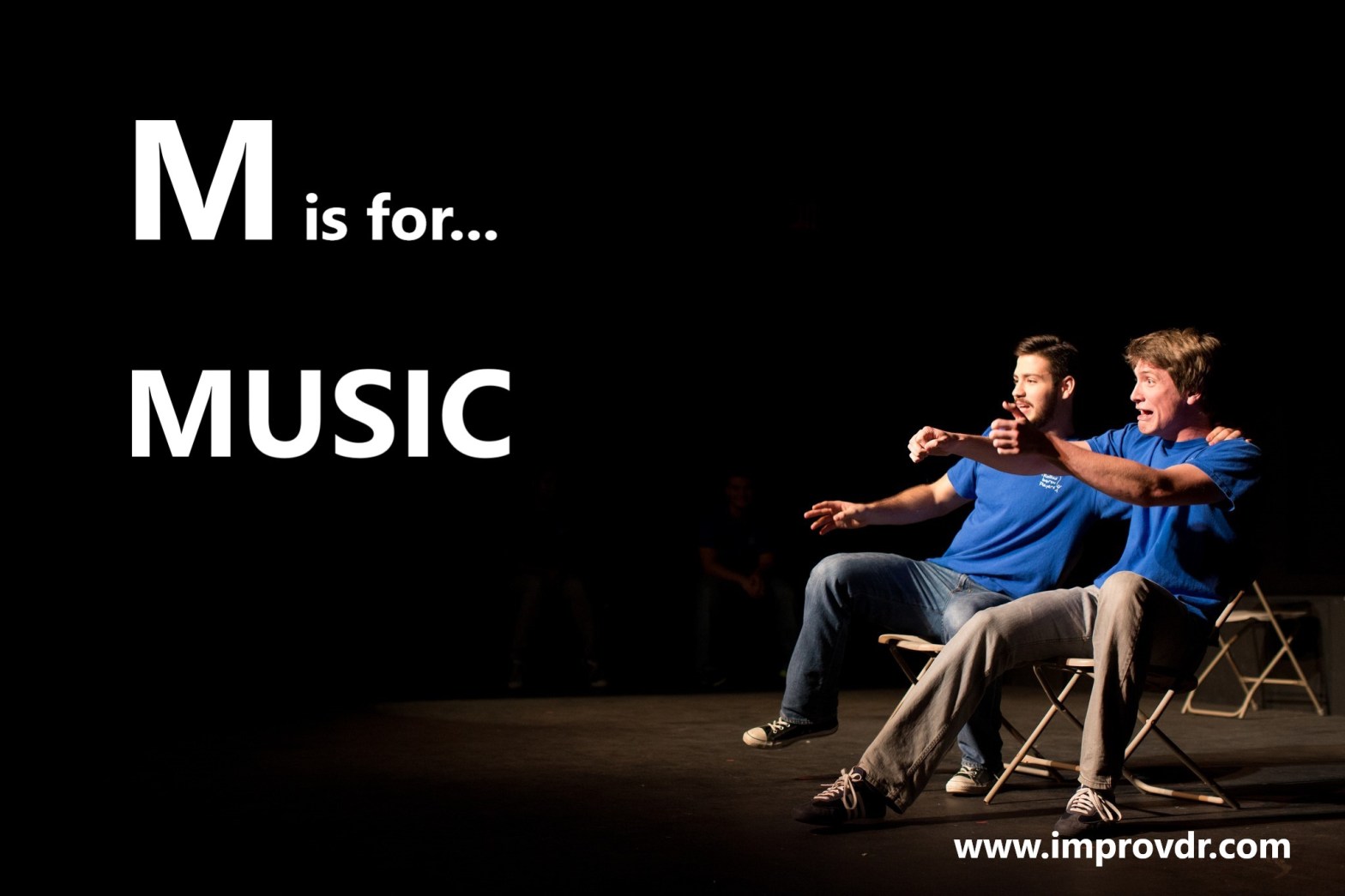
5.) Sell your ending. Most Tag-Team Songs end in a very similar way in terms of the structure which isn’t accidental as it just works. While the body of the song should consist of single voices tagging each other in and out, it’s become a best practice in most of my home venues for everyone to join in for the final word or refrain. Hopefully the song has created a recurring and recognizable chorus or hook as this allows greater confidence if everyone “knows” the climactic lyric. If your company includes strong singers, this is also a great time to add a little harmony or embellishment. The image above shows such a moment from a Gorilla Theatre performance at Sak Comedy Lab.

In Performance

As you become comfortable with the logistics of this game there are so many ways to add new layers. Be on the lookout for discovered games within the song or tags – perhaps one player always grabs the target rhymes but does little else, or the same singer always cues the chorus with increased gusto each time. I’ve also messed with this frame with some frequency as a Gorilla Theatre director. Sometimes I’ll have one player deliberately undermine all the beautifully set-up rhymes in a Bad Rap kind of way or have a point of view that directly opposes that of the protagonist. That being said, the base model is rather delightful in and of itself.

Cheers, David Charles.
www.improvdr.com
Join my Facebook group here.
Photo Credit: Charlotte Brown
© 2022 David Charles/ImprovDr

Connected Concept: Music

“M” is for “Music”

A wonderful way to enrich your work and generate new ideas, moods, and moments.

Releasing Your Inner Muse-ic

This is just a taste of this entry/concept. Go here for more information.

Related Entries: Rhyme, Verbal Skills Antonyms: Emptiness

Cheers, David Charles.
www.improvdr.com
Join my Facebook group here.
© 2022 David Charles/ImprovDr

Connected Game: Tag-Team Song

Game Library: “Asides”

It’s tempting to relegate the device of Asides to style-based scenes or formats as it is a less common practice in contemporary (Western) scripted theatre, but this conceit can be deployed to dynamically break the fourth wall in a host of different performance situations. In addition to developing narrative, subtext, and staging skills, this performance overlay also playfully connects improvisers to the audience in interesting ways. Furthermore, if you struggle with Mugging, this technique can redirect an inclination to step out of the action to a more productive and aesthetically pleasing end.

The Basics

Improvisers construct a scene in which one or more players can momentarily pause the action to share their character’s inner thoughts with the audience through the use of an aside. Players may cue this device by either distinctly turning their head away from the action or stepping to the forestage and conversing with the audience directly before returning to the scene. A story develops punctuated and informed by a series of these theatrical interruptions.

Example

High school reunion attendees (Player A and B) are sipping punch in their old gymnasium as angsty music plays in the background. It is several – painful – hours into the event...

Player A: “…And that was when I broke up with my third spouse…”

Player B: (kindly, though only just) “You certainly have lived quite the life since graduating twenty years ago.”

Player A: “Nearly graduating – there was that mix-up with my credits, remember? I’ve always meant to go back and fix that…”

Player B: “It’s never too late…!”

Player A: “Tell that to my second husband!”

Player B: (taking a step downstage as A gets a refill: an aside) “Well, I’ve done my part and made the rounds. It looks like Nandeeta didn’t come anyway.”

Player B steps back into the scene and continues…

Player B: “It’s getting late, I really should be heading back to my hotel…”

Player A: (handing B another drink) “You’re not going to make me drink alone! These events are always just one drink away from depressing…”

Player B: “Okay, just this last one.”

Player A: (raising their glass) “To the good old days…”

Player B holds their glass aloft as Player A steps downstage for an aside…

Player A: (aside) “Those really were the best years of my life, even if I don’t have a diploma to show for it…”

The Focus

Enjoy using the asides to deepen and expand upon the characters’ lives, feelings, and objectives. While there are gimmicks that you can fold into the asides, this device can also work well at face value without commenting on its presence. Leaning into the gimmicks will incline the scene towards a broader comedy: prioritizing the subtextual undercurrents and potentials will move you towards more dramatic hues. Obviously, both approaches have their merits and place.

Traps and Tips

1.) Establish and maintain a clear aside conceit. It’s helpful to adopt and maintain a particular asides approach within any one performance. A more subtle turn and talk to the audience (perhaps with a hand gesture signifying privacy) can support sincere or contemporary scenarios, while a grandiose step to the proverbial footlights evokes more Shakespearean or commedia dell’arte hues. That being said, inverting these norms can also work extremely well and provide an effective juxtaposition. The key is that performers make a clear signal when they move from the scenic world through the fourth wall and back again so that their fellow players and the audience understand their intent. It’s a well-worn gag to mistake a character’s aside as dialogue (and not one I’m particularly fond of) but if this continues to happen in earnest then it’s likely that players aren’t sharply creating this important distinction and that would be a waste of the game’s inherent promise.

2.) Use deliberate staging to support others’ asides. There are simple and helpful ways to assist players during their aside moments that further add to the clarity and theatricality of the scene. It’s generally good form not to look directly at a character as they engage in these transitions and verbal commentaries (or even in their general direction) This broken eye contact reinforces the notion that these stolen moments are private. Depending on your stylistic preferences, the background scene could essentially freeze as well, although in most cases I’ve found a softer freeze – where characters quietly continue minor stage business – provides a nice sense that the scene has remained active all the while. In both cases, there is fun to be had from players snapping back into prior scenic activities or emotional energies. Player A could step out and back into their toast, for example, with an accompanying shift in tone. If you elect to have asides delivered on the forestage, it can prove effective to not use this area as a part of your primary location as well.

3.) Give asides purpose and oomph. Asides provide a great opportunity for mischievousness and general silliness but I’d caution against only using them as a way of exercising your wit and whimsy. These private moments are uniquely able to unlock dynamic elements of the scene, adding urgency and stakes to otherwise run-of-the-mill situations. Consider using this device to explore character backstory, secrets, or CADs (confessions, accusations, and discoveries). Asides offer a rare tool for jumpstarting games, heightening tensions, and establishing rich given circumstances. The power of these choices can quickly become punctured if strong asides are cheekily echoed or diffused. In this way, while Player B could immediately mention Nandeeta from A’s aside, by patiently shelving this hidden offer, its potency and import will likely build. Asides, after all, are pitched as secrets rather than everyday dialogue, and improv secrets tend to have more dynamic pay-offs when they are earnt.

4.) Pay extra attention to gives and takes. If you’re using a single character as your aside provider (as might be the case in a film noir detective piece, or a Malcolm in the Middle parody), issues of focus tend to be a little simpler as this player will likely emerge as the protagonist and subsequently serve as the default focus in the scene. When asides can come from any quarter (such as is the convention in the cutaway moments in Modern Family or a Moliere comedy), players need to display extra diligence so as not to step on each other. Generally, it’s helpful not to try to “sneak in” an aside in these cases but rather wait until your character clearly holds the attention of your scene partners and the audience. It’s also helpful for characters to telescope a little their intent to grab an aside so that others can let them take the needed room to do so. But even better, when characters start to consciously give each other windows for these moments as opposed to hurriedly trying to take them from each other, the scene benefits greatly.

5.) And why not explore a variety of genres and styles. In my introduction I note that Asides shouldn’t only be considered as a way of infusing bold styles into our work: undoubtedly I would love to see this tool deployed more often in everyday contemporary scenes and situations. But the use of asides can also serve as a gateway into a myriad of stylistic options, from dime store novels, to high-school dramedies (think Saved By the Bell), to mockumentaries and a wide array of period-specific theatre parodies. I particularly enjoy this scenic game as it can easily house all of these genres and more, so don’t feel that this tool can only support one type of scene or period. The same holds true in terms of tone.

In Performance

As a stand-alone short-form game, or as a device woven into the fabric of a long-form homage, Asides provides a dynamic and malleable tool for getting into the minds and motivations of our characters. Not to mention, it’s also a theatrical way to establish, intensify, and explode powerful secrets.

Cheers, David Charles.
www.improvdr.com
Join my Facebook group here.
Photo Credit: Tony Firriolo
© 2022 David Charles/ImprovDr

Connected Concept: Mugging

“M” is for “Mugging”

The amateurish tendency to break character and look out into the audience (often for approval).

When Is a Mug Not a Mug…?

This is just a taste of this entry/concept. Go here for more information.

Related Entries: Approval, Commenting, Corpsing, Gagging, Speaking Your Truth, Wearing Your Character Lightly Antonyms: Cheating Out Synonyms: Breaking

Cheers, David Charles.
www.improvdr.com
Join my Facebook group here.
© 2022 David Charles/ImprovDr

Connected Game: Asides (or you can just review the Game Library in general by going here.)

Game Library: “Word Association”

If you’ve taken a few improv classes, I would imagine you have already come across some version of Word Association. This perennial exercise provides helpful insights into the creative process and how we can generate new Material from an open and reactive process.

The Basics

I’m including three versions of this warmup that I use often (and one that’s a newer addition to my lexicon) as they all have a little something different to offer. The basic premise remains largely the same: one player begins by providing a random word and offering it to another who must then quickly respond with the next unfiltered word that comes to mind. This new word then becomes the impetus for the next player’s contribution. Working at a quick pace, players create a sequence of associated words conjured in this manner.

Version One – The Classic: Players form one large circle and someone volunteers as the first contributor: this improviser then provides the first offer for the exercise. The sequence moves in a set direction (generally clockwise) with players turning and giving their new word to the next player. Words travel around the circle for multiple rotations, and you can reverse the direction just to shake it up a little. If you are working with a larger group, it can be helpful to model the exercise and then break into a couple of smaller circles to decrease the lag time between offers. Waiting for too long between contributions almost invariably invites players to retreat back into their heads unfortunately.

Version Two – Word Ball: Players work in a circle once again but now the word and focus no longer move in a steady and predictable pattern. The first volunteer pitches their random word across the circle with an energized gesture to a specific player who responds by sending their own associated word to a new random person. In this manner, the sequence darts quickly between players thereby keeping everyone a little more “on their toes.” If you use the classic model often as a warmup, this iteration provides a freshness and further prevents players from planning or getting ahead of the chain as they no longer know where they will fall in the sequence. As this variation introduces the possibility that some players may become under-featured, be sure to encourage an awareness of involving everyone equally in the game. (Sound Ball, discussed here, can provide a nice prequel to this offering.)

Version Three – Word in the Middle: This variation has become a standard warm-up for some of my theme-based long-forms. In addition to exercising spontaneity, this approach also serves as a brainstorming session of sorts. The director or a member of the ensemble offers up a concept or theme word such as “power,” “support,” or “sincerity,” and this word is proverbially placed in the “center of the circle.” One player initiates the game Word Ball style (sending the focus randomly around the circle) with the chosen theme serving as the first offer. Players now associate with the word immediately offered, the predetermined theme word, or (more commonly) an organic combination of them both. Players can return to the chosen word if they are momentarily stumped, want to pull the group focus back to the central idea, or feel that the exercise has served its function. In the latter instance, we’ll usually wrap up the warmup when four or five players have all opted to say the given theme word in a row. Admittedly, this version refocuses the dynamic of the base Word Association a little, and contributions can become a little headier if players are not careful. Ideally, however, the process retains the playful abandon of the original.

Version Four – The Third Thought: This is another iteration that shifts the foundational focus a little, although you reap a powerful device for finding new angles into old material. You can move in sequence around the circle or play randomly Word Ball style (I prefer the latter). Now when a new word is passed the responding player actively skips an association, responding instead with their third thought. So, if Player A passes Player B “Chicken,” Player B hears “Chicken” (first thought) then associates “Drumstick” (second thought) and then makes one more connection before passing “Drum kit” (third thought). Again, I’d caution that this invites a more intellectual experience which can work against the intended immediacy of the original exercise, so still encourage bravery and attack. If you’re looking for ways to jumpstart new ideas from old suggestions though, this warm-up can squarely fit the bill: an audience suggestion of dentist could now inspire a scene on a deep-sea oil rig rather than in a dentist’s chair when the initiating player associates from dentist to drill to derrick before beginning the action!

Example

Players form a circle to play the first version. Starting with Player A, they pass words around the circle: “Mountain… Summit… Peak… Spy… Magnifying Glass… Insect…”

The Focus

Players should strive for immediacy, reactivity, and silencing any internal judges that might be influencing their word choices. A steady and jaunty tempo often indicates that the group is working well in these areas of focus.

Traps and Tips

1.) Keep an eye out for… invented rules. The central premise of Word Association is beautifully simple: listen to the prior player’s word and then offer up the next word that leaps to mind. I’ve found that players will often self-impose additional rules that are not part of the contract. It’s fine to say a word that’s already been said or even to repeat the word that was just said if this is your honest and immediate response. It’s equally fine to have your reaction resemble onomatopoeia in that it is part word and part guttural reaction. Or you might find yourself responding with two words, or a word in another language, or a short phrase, all of which are more than okay too. There is no expectation that contributions are breathtakingly unique; in fact, the expectation is the very opposite. Players should allow themselves to just let their instincts play. There really isn’t a “wrong” in word association in terms of your response, although there are some habits or “cheats” in terms of your technique that might inhibit the risk of spontaneity. I address some of these pitfalls below.

2.) Keep an eye out for… judgment. It’s difficult to take the risk and leap into the corners of your subconscious if you feel yourself playing in a judgmental environment. On some occasions this may be coming from the director or fellow players; more commonly, however, the judging tends to come from the players’ own inner voice. Encourage bravery and ownership of each new word association. When words are offered with a questioning or apologetic tone – “I really don’t like this word but it’s all I can think of…” – the exercise quickly loses its generative energy and joy. It’s good practice for us to pitch our contributions with passion and conviction, and this can start with a seemingly simple little game like this one. As a coach you can assist with this atmosphere by focusing feedback on the way the group is playing and riffing rather than highlighting specific content whenever possible. Establishing content parameters, which may feel necessary in some academic environments in particular, can prove a little tricky in this game as when you actively discourage risqué material you may actually end up increasing the likelihood of its appearance, although I hope it goes without saying that the game should not be used as a tool to deliberately offend or divide the ensemble.

3.) Keep an eye out for… thinking three steps ahead. The human mind can prove quite remarkable in its efforts to avoid looking unprepared! I’ve found that patterns can often emerge (especially in the first version of the game) where players are subconsciously pre-selecting their words several players before it’s their turn. If the sequence has been “Purple… Red… Blue… Bird… Bath… Green,” it’s highly possible that the “Green” player may be inadvertently continuing the “list of colors game” rather than responding openly to the word “Bath.” (It’s also possible that they might just have a green bath at home!) I use the image of a blank piece of paper and invite players to imagine that they only “see” the word immediately prior to their own so as to avoid the potential trap of listing. While there is something comfortable about just adding another item to that long list that’s already going, this approach doesn’t fully embrace the creative gifts of the game. On rarer occasions, players may also start forming or continuing sentences rather than associating random words. This is another great exercise in its own right (you can find it here) but is a bit of a cheat as well when it’s done in lieu of taking the risk of adding something more personal.

4.) Keep an eye out for… over-originality. A related trap anxious players can fall into is deciding their contribution well in advance and inserting it into the flow regardless of what has come before. As opposed to perhaps holding onto a list category as described above, this approach tends to reveal itself in disjointed offerings that are extremely peculiar or are pitched with a clear intent to amuse or surprise – “just wait until I keep saying pineapple every time it’s my turn to play…” Again, it’s probably futile and ultimately unhelpful to dwell on these moments as one player’s obvious might be another player’s bizarre, but generally it helps to emphasize the import of making simple and honest reactions without feeling the pressure to appear clever. No-one can win at Word Association – it’s about connecting to the group and allowing yourself to be fully present, engaged, and changed. Which, lastly, brings me to…

5.) Keep an eye out for… poor eye contact. This might seem like a small consideration, but it is often telling of more systemic issues when players only passively pass the words. They may avoid eye contact with their initiator and receiver, looking skyward or to the ground instead, or in the randomized versions send the focus without clear intent or direction across the circle. This may occur due to anxiousness or a fear that their words aren’t “good” enough, or just a general inability to commit to the task at hand. It’s important to really connect to your fellow players in the circle, and to accept and offer the associations with conviction and deliberateness. Overly casual passes and physicality are often accompanied by overly casual articulation, and this exercise lives and dies based on whether or not you can hear and comprehend the words that are being pitched. And it’s a good habit, after all, to make sure that your intended partner has truly received your improv gift. In the event that you didn’t quite catch the prior word (or it is in a language you don’t know) my strong preference is to associate with the energy or feel of what you did hear rather than pause the game to repeat the missed offer.

In Performance

When I’m utilizing these exercises for the first time with a group, I’ll often just ask what was happening when the game was on a roll? What did this feel and look like and what were players experiencing individually and as a group? Generally, players are adept at knowing when they were fully present (the words just kept flowing at a brisk tempo) or when they were struggling (their eyes floated to the ceiling each time they were offered a new word as they sifted through several possibilities). The stakes of this game are so wonderfully low, and yet it can quickly reveal habits and hesitancies that, left unattended, will not serve players well as they move into more complex and nuanced scenes and stories. These exercises also provide a palpable and important reminder that material can emerge with surprising ease when we just listen and react in the moment.

Cheers, David Charles.
www.improvdr.com
Join my Facebook group here.
Photo Credit: Charlotte Brown
© 2022 David Charles/ImprovDr

Connected Concept: Material

“M” is for “Material”

The content that inspires creativity.

Sources of Material Inspiration

This is just a taste of this entry/concept. Go here for more information.

Related Entries: Obvious, Speaking Your Truth, You Antonyms: Cleverness, Over-Originality Synonyms: Content

Cheers, David Charles.
www.improvdr.com
Join my Facebook group here.
© 2022 David Charles/ImprovDr

Connected Game: Word Association