Game Library: “Phonebank”

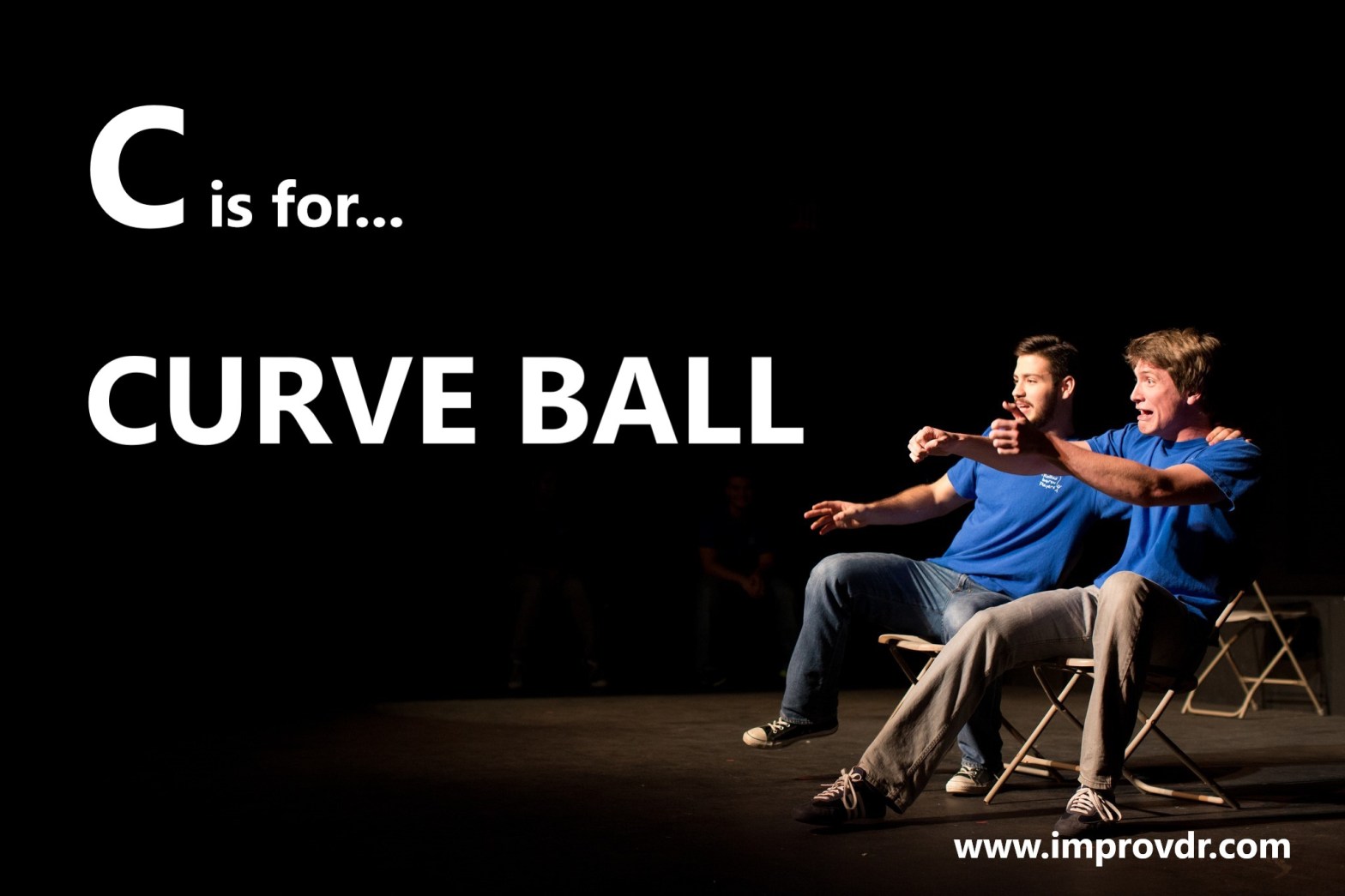
Does anyone remember phonebanks?! This potentially anachronistically titled game works well in both short-form settings as a stand-alone game, as well as in larger long-form productions. I’ve woven it into my Variations on a Theme and ImprOvientation pieces as a featured structural component, as is seen in the picture above. Phonebank thrives on Connections and allows characters to playfully weave together their own stories with those of fellow teammates.

The Basics

I’ve formulated a rather layered and structured approach to this game that has worked well in performance, but you can certainly just play with the general premise and allow the pace to evolve as it will. I’m considering the game in a short-form setting for this entry, so each player should elicit a different premise for their phone conversation such as who is on the other end of the phone, something emotional or unexpected that has just happened, or an urgent need or desire. When played in a long-form setting, these prompts or character motivations have usually evolved organically from prior actions and scene work. Using four players works particularly well in this form, providing sufficient material to develop the interplay without causing overwhelming focus issues.

Phase One: One at a time, the four characters gradually enter the playing field. Each improviser establishes their own phone in a phonebank (or, alternatively, brings on their personal cell phone) and begins a call to an unseen and unheard offstage partner. As each player is crafting this introduction, the next player should enter and physically establish themselves to facilitate a smooth transition so that only one player is actively talking at any given moment. In this manner, all four players should arrange themselves (typically in a straight line) and introduce their imaginary scene partner and basic premise. Once established, players continue to craft new material inspired by their backstory or prompt, working to effectively and generously give and take focus up and down the line as the need arises. This phase is marked by new disconnected material, which only serves the objectives and scenarios of each individual speaker.

Phase Two: Once all the speakers are present and their stories are sufficiently introduced, the game moves into the second phase. This tends to be about 45 seconds to a minute into the game. Characters should now seek to gently weave, echo, or connect to words, ideas, and themes that have been established by their scene partners. This ideally starts off subtly and then gradually increases in its attack as the second phase evolves. Players still maintain the integrity of their individual worlds and conversations, but look for ways that their arcs can be nudged or influenced by other content around them. Gives and takes continue “randomly” and will often increase in pace as well. This phase is the “meat” of the game and generally builds until the scenic climax.

Phase Three: When the conversations and connections have crescendoed, the game moves into its final phase, equivalent to a falling action or denouement. In the order deemed most helpful to the action, players now end their conversations by hanging up their phones and then leaving the space. These moments provide one last opportunity for characters to resolve their story thread (or potentially not resolve it, especially if future scenes await) while perhaps also reflecting on any larger theme or game that has developed. Usually, the scene will then end with one last onstage player making their final retort. I would classify this as the “typical” end of the game while noting that on occasion it can be more effective and dynamic to call the scene down at the pinnacle of phase two if something shocking, exciting, or honest lands particularly well.

The Focus

At its core, Phonebank is a focus workout as players must carefully maneuver and share their narratives. I’ve found the core concept and structure extremely accessible with new players frequently experiencing clear success and joy. This is also a helpful vehicle for exploring how connections work (and don’t work) and how to balance this instinct with other story-telling devices.

Traps and Tips

1.) Share. Phonebank is as much about not talking as it is about talking. Players will, by design, spend a lot of time waiting for their “turn,” so be sure to explore ways to remain actively present and engaged during these soft freezes. Those who enter the space later in the third or fourth positions, in particular, can sometimes get a little less stage time to craft their stories if their teammates aren’t aware. Defer to new speakers and entrances, especially if, as a character, you are “hot” with material flowing easily. Phonebank isn’t generally played in a set order with players speaking consecutively down the line, but if you are speaking every second or third time, then, mathematically, that means someone else is getting shut out. If you fear that you may be talking too much, you probably are.

2.) Focus. The second phase is certainly the most challenging, but this is also the gift of the game. Players should actively listen and engage in clear and deliberate focus gives and takes. Throwing the focus away (as opposed to directing it towards another player) or petering out as a speaker tends to undermine the central dynamic, as does excessive politeness and passively waiting for your turn. Mark the end of sentences clearly if you are intending them as “gives,” using physical or verbal gifts if you want to pitch the narrative to someone in particular. Focus takes need to be well-timed and intentional: clearly shifting your weight prior to speaking can indicate you’re next, as can verbally overlapping – perhaps with an emotional utterance rather than important words – when you sense your teammate is wrapping up their offer and is ready for an edit.

3.) Discover. In addition to the defined game, Phonebank is a great vehicle for discovering and building new dynamics within the broader frame. Perhaps there is a quick run where characters just say one or two words each, a physical game that contagiously moves from one booth to the next, or a resonant theme that starts to pull all the story threads together. In addition to seeking more obvious links, such as repeated words or backstory elements, these more nuanced connections can add exciting facets and dynamism. Once players are secure with the basic principles and the focus exchanges, an eye towards organic discovery will keep the game fresh and evolving. While it’s helpful to have a sense of where your individual story thread is heading, trajectories will and should change based on what is happening around you.

4.) Delve. One of the main reasons I have utilized this game in some long-form work is that the conceit can support an enormous variety of energies and styles, from broad physical comedy to sincere and poignant catharsis. Look for opportunities to bring this wealth of human experience to the stage, whether it is in how your frame your ask-fors or exploring both whimsical and more vulnerable takes on the material. From experience, it can be more difficult for softer hues to thrive if they are late entrances as the momentum of the game may have already become jaunty (although more sincere material needn’t be lethargic by any means). I’ve also found that a more outlandish or overtly silly choice seems to play best in the final position as this allows the audience to learn the gist of the game before upturning the apple cart. And, of course, there’s no reason that a seemingly irreverent energy can’t take a turn into something more poignant (and vice versa).

In Performance

A resilient form that can contain a broad spectrum of styles and energies, Phonebank provides a strong ensemble-based game that both polishes and requires critical improv skills. It’s one of those formats that I’ve seen, taught, and played literally hundreds of times, and yet it still intrigues and entertains me.

Cheers, David Charles.
www.improvdr.com
Join my Facebook group here.
© 2021 David Charles/ImprovDr

Connected Concept: Connections

“C” is for “Connections”

The beautiful craft of recognizing and patiently elevating patterns in our work together.

Opening Ourselves to Deeper Connections

This is just a taste of this entry/concept. Go here for more information.

Related Entries: Callback, Looking Backwards, Reincorporation, Third Thought Antonyms: Randomness, Over-Originality Synonyms: Patterns, Weaving

And check out the ImprovDr search function you can access here.

Cheers, David Charles.
www.improvdr.com
Join my Facebook group here.
© 2021 David Charles/ImprovDr

Connected Game: Phonebank

Game Library: “Alliances”

The exercise Alliances encourages nuanced strategies to get what you want in an improv scene and typically dissuades players from pursuing unproductive Conflict and arguing which, as is the case in most improv scenes and life, are largely ineffective as tactics.

The Basics

Players work in groups of four. A basic premise or scenario is provided and a clear time limit is set (typically two minutes or so works well.) A scene is performed in which players must strive to remain in the majority at all times; that is, three players existing in an alliance with the fourth clearly excluded. Players may (and should) shift alliances at will, but there must always be a clear “in” group and one outsider. When the time limit is reached, those currently in the alliance are declared victors.

Example

A middle-school playground during lunchtime is provided as the scenario. Players A, B, C and D all assume the roles of students as the scene begins.

Player A opens up their lunchbox and begins eating a sandwich while sitting on a bench.

Player B: “Oh, no. I think I forgot my lunch again…”

Players C and D both decide to join A’s activity and begin eating as well. [B is now clearly outside of the alliance.]

Player C: (to A) “I have an extra cookie if you want it.”

Player A: “Thanks! Chocolate chip is my favorite!”

Player D: “Anyone want to trade juice boxes? I don’t like grape, but my Dad always gives it to me.”

Player B has picked up a stone and started playing hop-scotch.

Player B: “Anyone wanna see if we can break our record?”

Player A: (putting their lunchbox away and running over) “Sure! I’m done with my lunch anyway!”

Player D: (quickly running over too) “And you can have my juice box since you don’t have any lunch.”

Player B: (taking the drink and jumping) “You’re such a good friend.” [C is now clearly outside the alliance.]

Player C: (still seated) “I have two more cookies if anyone wants one.”

No-one does…

The Focus

Don’t be surprised if the exercise quickly feels all-too human, especially if you use paradigmatic scenarios such as that above. Kindhearted players might try to “solve” the dynamic by bringing everyone together or working to engineer pairs, approaches that unfortunately undermine the central premise. Side-coaching might prove necessary in these instances to remind everyone that, by definition, someone must always clearly be excluded from the group. Also, while I’m a big fan of complementary characters, this exercise tends to thrive with parallel or homogeneous roles as this provides a level playing field (although it would certainly be of value to see three middle schoolers and their teacher, for example.)

Traps and Tips

1.) Embrace inclusion and exclusion. It’s human nature to fight being left out, and this instinct is central to the game’s conceit, but players should joyfully accept the swift changes in the social status quo. If you are the fourth to the party in this particular exercise, you’ve probably already lost that “round” and doggedly trying to push your way into the clique will rarely work. Enjoy your outside status and take it as an opportunity to formulate a new angle. It’s helpful for the scene and exercise to also physically model this accepted position away from the current alliance so that everyone is on the same page as to who is in and who is out.

2.) Fence sit at your own peril. The ebbs and flows of this dynamic scene tend to run swiftly, and players will quickly learn that if they procrastinate too long, others will often seize alliance opportunities before them. This discovered truth can encourage full-throttled accepting, but be cautious that it doesn’t just become an unfocused scramble. Players should still give each other sufficient room to pitch clear choices and responses as you would in any other scene. There is also no rule or expectation that existing alliances must immediately break at the first sign of pressure, especially if they are still serving the needs of their members well. You just want to make sure that you…

3.) Justify rather than block. “Bad” improv technique can easily sneak into this exercise as players compete for the safety of belonging to the group. Discourage outright blocking and wimping. It diminishes the scenic veracity, for example, if a character offers a cookie only to be met with “That isn’t a cookie.” A reply of “I’m diabetic and can’t have sugar,” on the other hand, accepts the premise while enabling the speaker to keep a distance if that’s their wish. Skillful justification makes all the difference as players look for ways to join the “in” crowd. And if you can’t compose such a rebuttal in a timely fashion, then it’s in the spirit of the game to let your partner “win” and to adjust the existing alliance accordingly. This attitude is particularly important if you’re working with younger players who might be tempted to recreate real-life cliques on the stage and harmfully stick to them.

4.) It’s about tactics. At the end of the day, Alliances is all about tactics and exploring different (often devious or mischievous) ways to get what you want from your scene partners. Sometimes, a simple choice will quickly reap dividends, such as offering up an exciting activity or opportunity; other times, it may quickly fizz without fanfare into the ether. Rarely will one repeated tactic work again and again, so players must continually look for the next potential way to win over their scene partners. Inventiveness and active listening are key. And remember that a new alliance needn’t always be instigated by the fourth outsider character: it might prove strategic to be the first to abandon the current majority group to form a new one if the former is becoming shaky, dull, or vulnerable.

In Performance

In addition to providing regular time warnings, a caller (or instructor) may need to keep an eye out for infractions such as players forming pairs, individuals not accepting outsider status, or egregious instances of blocking or wimping. And, as is always the case on the stage, players should not physically grab or push each other around to achieve their goals. While conflict sits at the center of this dynamic, overt arguing or aggression will quickly prove unsuccessful and unwatchable for any length of time. Instead, players must play at the top of their intelligence and mine more subtle and nimble ways of building and manipulating the tension. I would argue that this increased awareness is one of the more lasting gifts of the game. I’ve exclusively explored this game as an in-class exercise but I’m intrigued by the possibility of using it as a frame for an open scene (in Gorilla Theatre or similar) or perhaps even as a decider – I just haven’t quite figured out those logistics yet!

Cheers, David Charles.
www.improvdr.com
Join my Facebook group here.
Photo Credit: Tony Firriolo
© 2021 David Charles/ImprovDr

Connected Concept: Conflict

“C” is for “Conflict”

An often overused and artificial addition to improv scenes that can result in little more than onstage arguments if you’re not careful.

Underutilized Approaches to Conflict

This is just a taste of this entry/concept. Go here for more information.

Related Entries: Love, Objective, Relationship Antonyms: Agreement, Balance, Stasis. Synonyms: Obstacle, Tension

Cheers, David Charles.
www.improvdr.com
Join my Facebook group here.
© 2021 David Charles/ImprovDr

Connected Game: Alliances

Game Library: “Inner Monosong”

I love musical improv, so there should be no surprise that Inner Monosong ranks as one of my favorite games. When the scene has sufficient time to breathe, it’s also one of those short-form conceits that can start to feel a little more akin to long-form in terms of its patience and expansiveness. What’s more, Inner Monosong provides an excellent delivery system for character Confessions (and CADs in general) due to its exploration of text and subtext.

The Basics

Inner Monosong requires a strong musician, and if you have microphones available, it’s helpful to preset these on either side of the stage. A scene begins with a traditional ask-for, and characters populate the stage, establishing the basic given circumstances. When inspired, a caller announces “Inner monosong [character name]” at which point the action freezes and the nominated player steps away from the action (ideally to a stowed microphone) and sings their innermost thoughts with live accompaniment. When the musical excerpt is completed – perhaps cued once more by the caller with “Back to the scene” or similar – the featured player returns to their initial position, and the scene resumes with conventional dialogue. Several inner monosongs are prompted in this fashion until the scene finds its ending.

Example

A parent (Player A) and their child (Player B) sit in a doctor’s waiting room as a receptionist (C) works diligently behind the counter. B has just returned their paperwork as the lights come up.

Player C: “It shouldn’t be much longer now.”

Player A returns to sit beside their child.

Player A: (with concern) “Is it getting any better?”

Player B: (squirming) “My stomach still feels like it’s on fire.”

Player A: (offering a bottle of water) “Here, honey, have a little of this.”

Player B: “I’m not sure I’m able to…”

Caller: “Freeze. Inner monologue young child”

The action freezes as Player B steps to the stage’s edge, and music begins to play. They sing...

Player B:

“There ain’t an easy way to say
I just didn’t want to go to school today.
Mom brought me here to my surprise,
Now I’m digging myself deeper with all my lies…”

Caller: “And back to the scene…”

The music concludes as Player B returns to their chair.

Player A: “I’ve just never seen you this way before. You’ve got me quite worried…”

The Focus

There is a lot going on in this game technically, such as the crafting of dynamic songs and content, creating sharp contrasts between the spoken and singing portions, and implementing the sung secrets to create interest and tension. Once you have the logistics of the game under your belt, consider the interplay between what the players and audience know as opposed to what the various characters know. The songs provide an effective means for making and shelving strong choices that can enrich a seemingly simple story arc.

Traps and Tips

1.) Build the calling. When you’re calling the game, it’s typically effective to make sure every significant character on the team has one opportunity each at the inner monosong microphone, so you’ll want to pace your calls accordingly. If you sense someone has a really explosive reveal or confession brewing, it’s wise to leave that character until last so as to facilitate a climactic scenic ending. (The same is true if you have a powerhouse voice in your company as starting with this player can set the bar oppressively high for those that follow.) When I play this game in a timed setting, such as Gorilla Theatre, one verse or a verse and chorus per character are typically sufficient, especially if they are getting material out strongly and succinctly. In less constrained formats, able singers could land an entire song. There are certainly gimmicks that the caller can deploy which I am a little hesitant to include here as they typically feel disingenuous if they are jammed into the scene rather than discovered, so use these are inspirational examples rather than mandates. Playing with the length of songs can provide joy, especially once a “norm” has been set. You can also call singers out of dubious or playfully problematic target rhymes. If you have able singers in your ensemble, it can also be dynamic to culminate in an inner duo-song with two singers on opposing microphones (perhaps conducted by the caller to help with the give and take).

2.) Lay the groundwork. Knowing that songs are a-coming, scene work can tend to be a little under-developed if you’re not careful. Invest in clear initiations and endowments to get the scene moving. The most successful Inner Monosong scenes should feel as if they didn’t need the songs to create interest (although interest is certainly increased and polished by their presence). Help out the caller by making sure all onstage characters have known names or relationships as it’s more difficult to cue the songs if everyone’s identity or purpose is vague. As the songs are essentially subtext revealing moments, it’s also important that characters develop some form of mystery, backstory, or ambiguity. It is more difficult to explore subtext at the microphone if there is nothing interesting brewing already, although the music and rhyme can delightfully veer you into new and unexpected terrain.

3.) Mine the contrasts. Few games house such rich inherent potential for contrast as Inner Monosong. In terms of the staging, characters move from frozen scenic tableaux to lively sung solos: a character that might be reserved or modest in the scene could take on a very different mood in the privacy of their sung thoughts. The verbal shifts offer unique contrasts as the scene moves from dialogue to lyric: perhaps the least eloquent speaker comes alive when we hear their accompanied imagination, or characters may face playfully incongruent musical choices that reveal a whole new energy or facet. Similarly, text and subtext can form dynamic tensions: secrets and lies can add flavor and surprise to scenes as the audience (and fellow players) learn that everything may not be as it seems on the surface. While it is certainly possible for a monosong to largely reflect and uphold the known given circumstances, this is probably not the best use of these metatheatrical moments. If you find yourself walking down this improv path, I’d advise heightening the known fact to the nth degree – so rather than just loving someone in your song if this is already known, you reveal that you are completely besotted or obsessed, for example.

4.) Develop the details. This game can certainly thrive with largely independent and disconnected monosongs, but when this element operates on a higher storytelling level, the game can truly soar. Look for connections between the various subtexual elements as they unfold. If the child has lied their way into the doctor’s waiting room, can players accept this greater idea and build upon it creatively? Perhaps the parent is also there under false pretenses as they have developed a crush on the doctor and are using this insignificant illness to manufacture another encounter. Perhaps the receptionist is also lying and fabricated their resume in order to secure a much-needed job in tough times… Subtextual connections, games, and related themes add a whole new finesse. These choices may ultimately be exploded and revealed in the regular dialogue sections or remain loitering under the surface as the scene concludes.

In Performance

If you like the sound of this scenic dynamic but don’t have a musician at your ready disposal (or, perhaps, you don’t enjoy the singing challenge), Inner Monologue operates in largely the same way with a caller inviting characters to reveal their thoughts through unheard asides. It can also prove helpful to play this non-singing version first to gain a better understanding of the logistics at play. Either iteration, sung or spoken, offers a crowd-pleasing way to explore the power and playfulness of character secrets and confessions.

Cheers, David Charles.
www.improvdr.com
Join my Facebook group here.
Photo Credit: Tony Firriolo
© 2021 David Charles/ImprovDr

Connected Concept: Confession

“C” is for “Confession”

Part of the CAD trinity of revelations.

Crafting Your Confession…

This is just a taste of this entry/concept. Go here for more information.

Related Entries: Accusation, CAD, Discovery Antonyms: Balance, Stasis Synonyms: Revelation

Cheers, David Charles.
www.improvdr.com
Join my Facebook group here.
© 2021 David Charles/ImprovDr

Connected Game: Inner Monosong

Game Library: “Gibberish Job Mime”

Few dynamics more fully manifest the import of Complementary Actions than endowing games, and Gibberish Job Mime stands as a helpful example that clearly makes this point. This iteration primarily functions as warm-up or skills-building exercise, but it’s closely related to games like Occupation Endowments if you’re looking for a version more suited to public performance.

The Basics

Players work simultaneously in pairs scattered throughout the workshop space and pre-determine who will assume the role of Player A and Player B. Player A will go first and is instructed to privately select an occupation that they must endow onto Player B so that by the end of the short vignette, B will ideally understand their intended role. In the scene that follows, Player A must only use complementary actions as interactive clues, all-the-while using Gibberish and physical choices to communicate. Player B should respond in English (or the language you are working in) throughout the exploration as they endeavor to ascertain their identity in relation to Player A. If they feel they have a strong sense of the “solution,” they should test their theory in a pointed line of dialogue: “Well, as your doctor, I think you’re going to need some significant bed rest for a full recovery.” If they are, indeed, successful, Player A can signal as much and button the scene. If their assumption is incorrect or incomplete, Player A should continue to offer scenic clues. Once successful or a time limit has been reached, players exchange roles.

Example

Without indicating their secret choice to their partner, Player A decides upon the occupation of waiter as their endowment. Player B stands to the side as A begins by standing patiently and checking their watch.

Player B: (entering) “I’m so sorry to keep you waiting.”

Player A: (slightly irritated) “Dashka bellah tahkackney…”

Player B: “Of course.”

Player A enters the space with confidence and gestures to a chair.

Player B: “That would be great.”

Player A sits, and unfolds a mimed “menu”

Player A: (inquiring) “Lea shatahly kanoogzy?”

Player B: “You’re right. That magazine is terribly old. Let me get you another one…”

The Focus

The critical rule and focus for Gibberish Job Mime is that the endower (Player A in the example above) cannot become or embody the desired occupation as this would serve as a parallel action thereby showing the endowee (Player B) what they should do. Only complementary actions can be deployed as these create more complex relationships between the two characters. In this manner, in our efforts to help Player B understand that they are a waiter, we could act as a customer, a food critic, a head chef, a restaurant manager, a busser…, or if you really want to make it challenging, a devoted spouse helping them de-stress after a long shift. You can essentially be anything other than another waiter.

Traps and Tips

1.) Challenge each other. It’s more than appropriate when first approaching this dynamic to select broad job categories, such as doctor or professor, but as players become comfortable encourage more complex or specific choices, such as a phlebotomist or high school substitute math teacher. This not only makes the exercise more demanding by requiring more thoughtful complements and endowments but typically increases the fun and risk as well. It’s fine if the endowee doesn’t ultimately get the exact intended nuance, as long as all involved were sharpening their skills in the process.

2.) Avoid empty language. When performing in the endower position (Player A), there can be a tendency to nervously fill empty space with nonsensical Gibberish rather than carefully using this language substitute to convey a definitive intent. It can quickly feel overwhelming as Player B if you’re faced with an unbroken wall of sound. Instead, strive to use small bite-sized Gibberish phrases and then allow your partner sufficient space to return the “improv ball” so you can get a stronger sense of what they are and are not understanding. Ultimately, it’s not your Gibberish alone that will help them, but rather your inflection, body language, subtext, gestures, staging, and use of the environment.

3.) Avoid empty responses. There is a similar trap in the endowee (or Player B) position. Although this player is using their own language, the fear of misunderstanding A’s Gibberish can make them stall and wimp as opposed to bravely play along. Avoid asking questions – “What is that you’re holding?” – in lieu of making assumptions – “Sure, I’d love an ice cream.” Remember that the conceit is that both characters are having a conversation: they just happen to be doing so in two completely different languages! Don’t let each scene degrade into a blatant guessing game, or you’ll quickly lose interest. This is particularly problematic if Player B essentially just names a list of possible occupations. It’s generally more helpful to hold off on doing this explicitly until you feel you have a strong sense of the mutually agreed upon given circumstances.

4.) Break it down. While players are focusing on the product of correctly solving the mystery of the occupation, they shouldn’t lose sight of the equally important (if not moreso) process of creating a scene and story. Once Player A has selected a suitable hidden occupation and their initial complementary relationship, they should bring Player B into their world gradually and lovingly. Fully utilize core improv principles such as CROW to construct your narrative. Where are these two characters likely to meet or need each other? Are you inside or outside? Are there any significant props or furniture pieces that Player B will need to conduct their profession? What is the history or relationship between the two players? Is either character wearing anything in particular that defines them? If you try to answer all of these questions at once, you’ll undoubtedly overwhelm the scene and your partner. Rather, make one foundational choice, let them respond, and then weave their reaction into a next, freshly discovered step.

In Performance

In addition to sharpening Gibberish, endowing, justifications, and non-verbal communication skills, Gibberish Job Mime serves as an excellent reminder to focus on the process of creation. Yes, the stated intent of the exercise is to communicate an unknown profession to your scene partner, but scenes are often wildly joyful, entertaining, and successful in spite of the outcome (hence my encouragement not to diminish the challenge once you understand the underlying principles). Encourage players to make sure they are not slipping into parallel actions (they want “B” to serve as a mechanic, so they also become a mechanic). Pantomiming or “teaching” components of the intended job are similarly problematic tactics. (“A” grabs a drill and models putting it in their mouth to show “B” that they should now be a dentist). Exploring the power and fun of complementary actions can often prove quite liberating as players unlock the myriad of ways they can create and communicate relationships on stage.

Cheers, David Charles.
www.improvdr.com
Join my Facebook group here.
© 2021 David Charles/ImprovDr

Connected Concept: Complementary Action

“C” is for “Complementary Action”

Providing a related yet different choice that connects to that of your partner.

How to Get the Most Out of Your Complements

This is just a taste of this entry/concept. Go here for more information.

Related Entries: Breaking Routines, Commandment #7, Endowing, Parallel Action Antonyms: Over-Originality Synonyms: Different, Tilt

Cheers, David Charles.
www.improvdr.com
Join my Facebook group here.
© 2021 David Charles/ImprovDr

Connected Game: Gibberish Job Mime

Game Library: “Act Harder”

Admittedly this is a slightly whimsical choice to partner with the concept of Commitment but Act Harder is a joyful short-form game that utilizes the audience to playfully push the company to higher levels of attack. I consider it one of my improv guilty pleasures! Feel free to indulge as well!

The Basics

A scenic premise is obtained and the audience (or a portion thereof) is instructed that they have the power to make the performers “act harder” if they appear to under-sell a choice or moment. As the scene progresses, it is interrupted sporadically by these calls. The actor currently in focus immediately applies this prodding feedback by repeating or embellishing their earlier contribution with added gusto and flare.

Example

Two friends are driving through a heavy snowstorm. Player A is at the steering wheel while Player B wrestles with the GPS system as the scene begins.

Player A: (anxiously) “I can’t see practically anything. Is it still not working?”

Player B: (irritated) “I’m not a GPS expert. It might be the storm messing with the reception.”

Player A: “I really think we should’ve pulled in at that rest stop.”

Player B: “I know. You’ve said that twice already.”

Audience: “Act Harder”

Player B: (pointed) “That’s the THIRD time you’ve told me that. I’m SORRY that I didn’t agree sooner.”

Player A: “The wipers aren’t doing practically anything.”

Player B: “Just keep the car ahead in your sight.”

Player A: “What do you think I’ve been doing, Shannon?!”

Audience: “Act Harder”

Player A: (with exaggeration) “What else could I possibly do in this ridiculous storm, SHANNON?!?!”

Audience: “Act Harder”

Player A: (on the edge of panic) “Don’t you think that I know THAT CAR AHEAD OF US IS OUR LIFE LINE…!”

The Focus

Vanilla or under-sold choices will rarely survive the delightful lambasting that is Act Harder! It can prove invigorating (and challenging) to receive such immediate feedback. Be sure to accept these nudges with cheerful grace and good faith while working to elevate and navigate the central premise. It’s frequently difficult to sustain a strong story amidst the audience cries, so strive to craft a sound foundation and CROW quickly.

Traps and Tips

1.) Coach your audience. A playful audience will honor how you set up the game, so you’ll want to make your expectations clear. I’ve rarely seen the game excel when anyone in the audience is empowered to yell the prompt – especially right from the get-go – as this tends to push the scene quickly to chaos. Alternatively, consider selecting a handful of representatives from various parts of the auditorium so that you’re not immediately hit with a relentless wall of sound screaming “Act Harder!” (Experience would suggest that you’ll always get a few self-nominated callers so err on the side of a smaller number!) When we’ve used this format in Gorilla Theatre, we’ve often had the scene director bring a volunteer to sit beside them at the coaching microphone to make the pertinent calls, which works really well overall. If you have someone in the role of host or facilitator, you can gradually scale up the dynamic beginning with one to two callers at first, and then signaling that others can join as the scene progresses. (Opposing teammates can serve in this prodding role to similar effect as well.) It’s also helpful to instruct any designated audience callers to give the scene some time to get started. This can be done with a signal, “When I raise my hand you can start coaching…” Once the audience discovers the fun and torture of the calls it’s hard to dial them back, so it’s better to start modestly!

2.) Start smaller but connected. There can be a tendency to almost fish for the “Act Harder” calls which I’d consider a trap of the game. Yes, you’ll certainly want to begin the scene in a way that gives you somewhere to go emotionally and dramatically, but avoid deliberately deadpan or under-energized choices, especially at the top of the scene. I ardently believe that most audiences can spot when we’re undermining a stated contract: if we announce we’re giving them control to raise the heat, then we should truly give them that control. Deliberately poorly delivered choices that almost demand an “Act Harder” feel like needless pandering or moves of desperation. There should be something interesting at stake (although, admittedly, a panicked snowstorm drive as described above certainly offers a rather heightened starting point that will require some careful pacing!) Consider starting your journey connected but small, contained but not lackluster in your delivery.

3.) Craft the escalation. These scenes will burn very quickly and brightly if you’re not careful, which in and of itself isn’t necessarily a problem if you’re looking for a quick energy hit, but generally will hamstring you from building anything of substance. The energy of four improvisers all “acting harder” will likely feel climatic, so work up to this configuration or embrace a smaller scene cast size in general. There is also a tendency to adjust your commitment from 10 to 100 in one step if you’re not patient and extremely self-aware. The scene is inevitably heading towards 100 but probably shouldn’t arrive at that station in the first 30 seconds. To this end, challenge yourself to explore different ways to ramp up the dynamic other than merely more volume and chaotic movement: acting harder needn’t be synonymous with just acting louder! Resetting to a more measured emotional baseline after each escalation further helps the cause – you needn’t make where you ended your last salvo the same intensity or tactic as where you start your next scenic contribution. Although, perhaps, don’t slide back too starkly to an uncommitted stance or attitude that doesn’t honor the freshly discovered truth of your scene or character.

4.) Focus is your friend. As a called game, albeit of a slightly different ilk as these calls are (typically) coming from the audience, Act Harder demands strong focus discipline in order to thrive. A great deal of the fun of the game comes from being the recipient of the titular cue: if everyone is scrambling to get their moment in the sun, however, you tend to get rather clumsy scene work. It’s important to diligently move focus between the onstage characters if for no other reason than to clearly know who is the intended recipient of the prompt. Meandering dialogue, crowded scenes, and a tendency to interrupt or talk over each other all conspire against this greater goal. If you are skillfully crafting clear gives and takes, you’re more likely to maintain the story thread through the ensuing chaos while also giving audience callers clearer windows to contribute as well. (It’s always poor form to invite the audience to help direct the action and then make it unnecessarily difficult for them to do so.) Furthermore, don’t overlook the delight and camaraderie of generously setting each other up for moments to play. As is generally the case, when players compete to individually shine, they rarely do so, and the scene invariably dims instead. If you’re using fellow improvisers as your callers, they can aid in this regard by also naming their intended target with each nudge: “Act harder, Shannon…”

In Performance

The results of this game tend to be unabashedly silly, leaning towards the melodramatic in a way that thoroughly wins over the audience. There’s a real value to be found from pursuing this level of abandon, and on a larger level this speaks to the value of giving full commitment to our scene work. I will confess, however, that I’m also intrigued by the potentials Act Harder may hold for a more earnest or sincere style of play with the audience nudges becoming more synonymous with gentle sidecoachings towards truth and honesty rather than magnified intensity (although that would perhaps be called Act Better!) As a recent experience attests, this is more likely when fellow company members are making the calls and you don’t overcrowd the scene. I’ve also seen “act softer,” “act more intense,” or similar variations offered as an alternate cue, and this provides a broader array of colors to help craft the rising action.

Cheers, David Charles.
www.improvdr.com
Join my Facebook group here.
Photo Credit: Tony Firriolo
© 2021 David Charles/ImprovDr

Connected Concept: Commitment

“C” is for “Commitment”

Giving all of ourselves (healthily) to the art of collaborative creation.

Commitments Worth Pursuing

This is just a taste of this entry/concept. Go here for more information.

Related Entries: Abandon, Commandment #2, Focus, Freshness, Trust Antonyms: Cartooning, Commenting Synonyms: Professionalism

Cheers, David Charles.
www.improvdr.com
Join my Facebook group here.
© 2021 David Charles/ImprovDr

Connected Game: Act Harder